Key takeaways for a fragile theatre
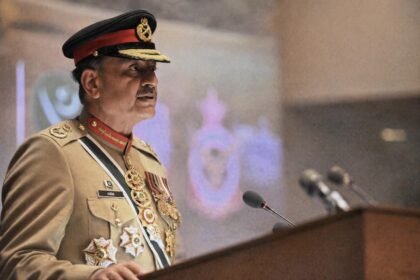
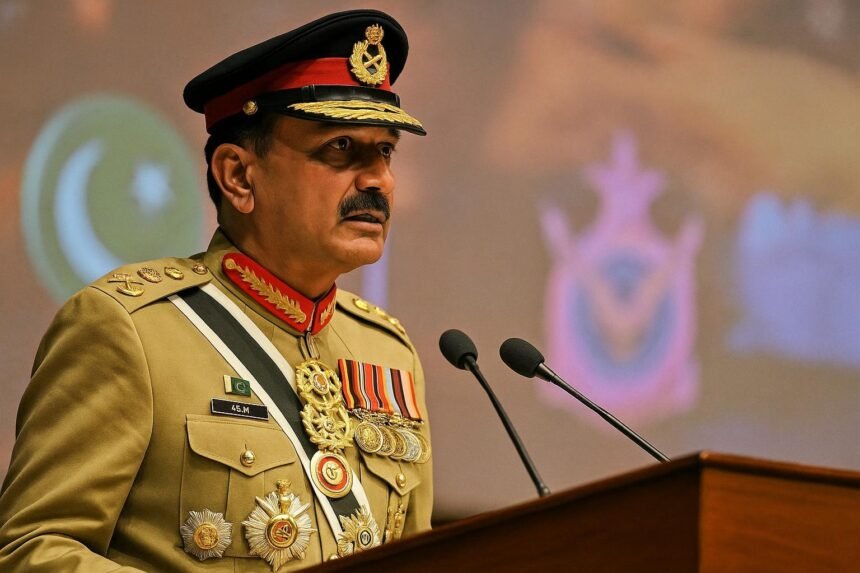
In Benghazi on 21 December 2025, Vice-Commander Saddam Haftar and Pakistan’s Chief of Staff, General Asim Munir, signed a 4.6 billion-dollar weapons contract. The package promises fighter jets, trainers and multi-domain armaments over thirty months, directly defying the 2011 United Nations embargo and injecting a new external patron into Libya’s east-south coalition.
A discreet visit that caught diplomats off guard
Munir’s trip, announced only after his plane had landed, broke with the usual choreography of foreign delegations in Libya. Cameras recorded a terse ceremony beside Benghazi’s battered runway, followed by a handshake in the army headquarters once held by Khalifa Haftar during the civil war’s fiercest phase.
Observers in Tripoli admitted surprise; most had expected Ankara, Abu Dhabi or Moscow to headline the next arms headline. Instead, Islamabad’s green flag appeared on social media feeds, signalling a fresh calculus that extends far beyond technical cooperation.
Inside the 4.6 billion-dollar bundle
The accord secures sixteen JF-Thunder fourth-generation fighters, jointly developed with China, granting the Libyan National Army its first homogeneous air fleet since 2014. Twelve Super Mushak trainers will follow, enabling a local pilot pipeline and reducing dependence on contracted foreign crews.
Supplementary clauses cover naval, ground and air munitions to be staggered across five tranches over two and a half years. Munir pledged that “each piece of weaponry, each technology we possess could be available for our Libyan brothers,” framing the contract as fraternity rather than commerce.
Why Islamabad crosses the Mediterranean
For Pakistan, the deal ranks among its largest ever foreign military sales. Entering North Africa allows its defence industry to showcase export-ready platforms and diversify revenues amid budgetary pressures at home. It also places a nuclear-armed state into the competitive arms marketplace dominated by Russia, Turkey and the United Arab Emirates.
Strategically, Islamabad gains a foothold in a corridor linking the Sahel to the eastern Mediterranean, without overtly clashing with its traditional Gulf partners. The agreement therefore operates as both balance sheet booster and subtle proof of geopolitical reach.
Ripples across Libya’s precarious balance
The eastern camp has long sought suppliers beyond its established patrons, arguing that its previous inventories were ageing or piecemeal. Access to brand-new aircraft tilts psychological parity with western-based rivals backed by Ankara, even if operational readiness may lag delivery schedules.
Yet the symbolism alone could harden negotiating positions. The United Nations mission, already struggling to convene elections, fears a renewed arms race that renders ceasefire monitoring almost performative. Each new shipment risks converting dormant front lines into testing grounds for imported hardware.
UN embargo under renewed strain
Since 2011 the Security Council forbids direct weapons transfers to any Libyan faction, though enforcement has been episodic. European maritime patrols intercept small consignments, but billion-dollar contracts negotiated in plain sight highlight the embargo’s porous legitimacy.
Diplomats caution that Pakistan’s move may prompt rival suppliers to formalise their own arrangements, arguing precedent. Unless the Council reins in exemptions or tightens naval interdictions, the legal framework could lose what remains of its deterrent effect.
Possible trajectories to 2028
Scenario one envisions staggered deliveries proceeding unhindered, boosting Haftar’s leverage to negotiate a national security compact from a position of strength. This path presupposes muted international reaction and steady financing over thirty months.
Scenario two foresees Security Council pushback, with potential sanctions on Pakistani entities or a naval blockade that delays arrival of high-value assets. Such pressure could drive the eastern leadership to bargain for phased de-escalation in exchange for partial suspension of the contract.
A third scenario combines selective enforcement and covert routing, prolonging uncertainty. In that case, Libya would remain caught in a strategic limbo where promises of modern air power shape political narratives more than battlefield realities, while Islamabad cautiously gauges cost against prestige.