Key takeaways
Friday’s strike on Al-Tina marks the first time the Chadian Armed Forces have lost personnel since Sudan’s civil war erupted in April 2023, sharpening anxieties in N’Djamena over a spill-over that could draw the country into its neighbour’s conflict.
By invoking Article 51 of the UN Charter, the general staff signals its readiness to retaliate within a framework likely to be endorsed by regional partners and external allies.
Chadian-Sudanese frontier under pressure
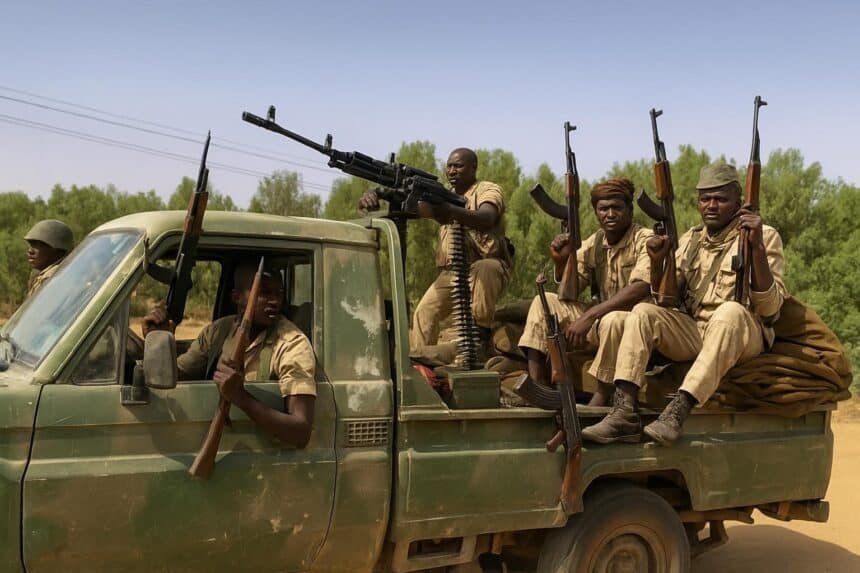
Al-Tina straddles a porous border long trafficked by traders, refugees and armed groups. While N’Djamena has reinforced checkpoints since last year, the desert terrain thins surveillance and leaves soldiers exposed to the kind of drone used by the Rapid Support Forces, a reminder that the Darfur war is entering a new technological phase.
Legal and diplomatic basis for response
The communiqué released on 27 December depicts the strike as “intentional and deliberate” in violation of international law. Citing self-defence provisions places any counter-measure in a multilateral vocabulary familiar to the African Union Peace and Security Council, where Chad routinely champions respect for borders established at independence.
RSF’s growing footprint in Darfur
Since seizing El-Fasher in October, the RSF has fanned out toward supply lines leading to Al-Tina, capturing Abou Qomra and Oum Brou earlier this week. Control of these nodes consolidates the paramilitary’s hold over the north-western quadrant of Darfur and provides launchpads for low-cost drone sorties across the border, according to regional security analysts.
Humanitarian stakes mount
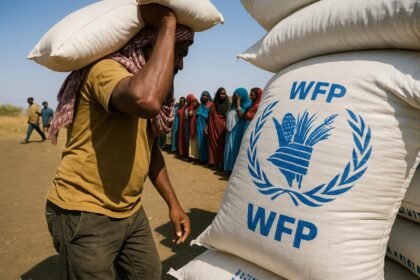
More than nine million Sudanese have been displaced by the conflict, with 600 000 crossing into Chad, exerting heavy pressure on the eastern provinces of Ouaddaï and Wadi Fira. Aid agencies warn that even a limited Chadian riposte could interrupt corridors bringing food and medicine to camps already under-served by overstretched logistics networks.
Calendar of escalation
April 2023: War breaks out between Sudanese Armed Forces and RSF.
October 2023: RSF takes El-Fasher, tightening grip on Darfur.
26 December 2023: RSF claims Abou Qomra and Oum Brou.
27 December 2023: Drone strike hits Al-Tina; Chadian military responds with warning.
Actors in the spotlight
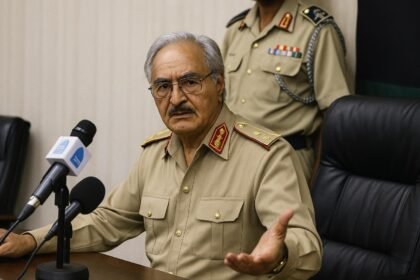
General Abakar Abdelkerim Daoud, chief of staff in N’Djamena, must calibrate deterrence without opening a second front while his forces combat jihadist cells around Lake Chad.
Mohamed Hamdan Dagalo, alias Hemedti, faces the dilemma of expanding westward for strategic depth versus provoking neighbours whose tacit neutrality has so far spared the RSF from a larger coalition.
Regional security implications
CEMAC leaders, already jittery after coups in Gabon and Niger, view the Al-Tina episode as proof that unchecked non-state actors can rewrite borders by force. Abuja and Yaoundé, both engaged in cross-border counter-terrorism with N’Djamena, quietly back Chadian demands for clear lines in the sand to avoid opening yet another conflict belt across Central Africa.
Possible scenarios
A controlled, limited strike on RSF forward positions remains the most probable Chadian response, designed to reassure troops while avoiding open war.
Alternatives include a diplomatic surge at the AU and IGAD to tighten the arms embargo on Sudanese belligerents or, conversely, a calculated tolerance of RSF presence coupled with reinforced domestic surveillance, accepting a degree of strategic ambiguity.
Cartographic view
Military planners in N’Djamena rely on satellite imagery showing RSF axes of advance from El-Fasher toward the border. A publicly shared map would depict concentric risk rings: 50-kilometre deep inside Darfur where RSF patrols are routine, and a 20-kilometre buffer on Chadian soil earmarked for rapid-response units.
What next for border governance?
Whether Chad opts for force or forums, the episode underscores the need to modernise frontier management. Integrating drones into its own surveillance mix, deepening intelligence fusion with French, US and EU missions, and accelerating development projects around Al-Tina will be critical to ensure the border remains a line of cooperation rather than conflict.