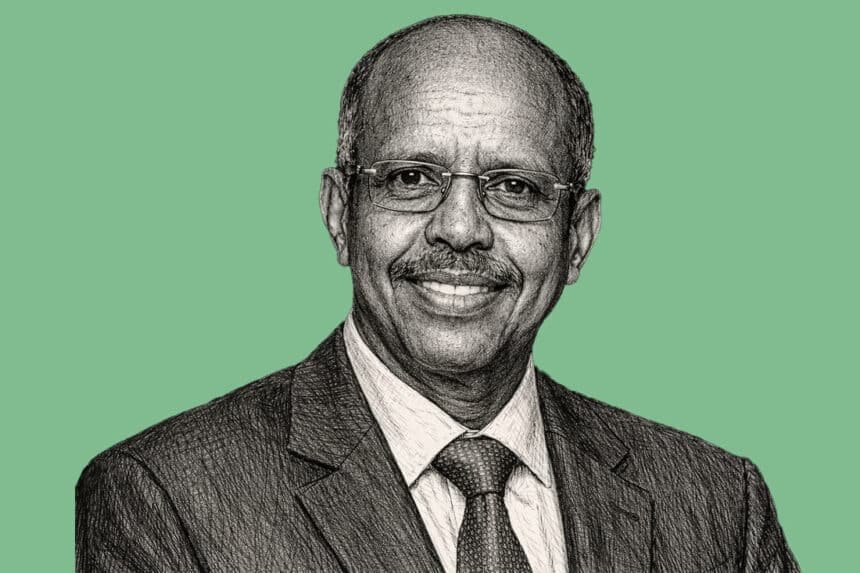
H.E. Mahmoud Ali Youssouf, currently Chairperson of the African Union Commission (AUC), embodies one of the most experienced and respected figures in contemporary African diplomacy. His career, built over more than two decades at the heart of international relations, reflects a deep mastery of geopolitical balances, multilateral mechanisms, and regional dynamics linking Africa to the Arab world, the Middle East, and major international forums.
- Early Years Shaped by International Cooperation
- Ambassador and Key Actor in Afro-Arab Dialogue
- Twenty Years at the Helm of Djiboutian Diplomacy
- Recognized Leadership in Regional Organizations
- An Education Focused on Management and Governance
- At the Helm of the African Union Commission
- A Consensus Figure for a Changing Africa
A native of Djibouti—a strategic state located at the crossroads of Africa, the Arab world, and major international maritime routes—Mahmoud Ali Youssouf built his career in an environment where diplomacy is inseparable from security concerns, regional dialogue, and international cooperation. This unique geographic position has profoundly shaped his diplomatic vision, marked by pragmatism, consensus-building, and a strong commitment to multilateralism.
Early Years Shaped by International Cooperation
Mahmoud Ali Youssouf’s governmental trajectory began in the early 2000s. From 2001 to 2005, he served as Minister Delegate for International Cooperation within the Ministry of Foreign Affairs and International Cooperation. In this role, he actively contributed to structuring Djibouti’s bilateral and multilateral partnerships, at a sensitive regional moment marked by geopolitical shifts in the Horn of Africa and the Middle East.
These early ministerial responsibilities enabled him to develop a nuanced understanding of development assistance mechanisms, relations with international donors, and the expectations of Djibouti’s strategic partners.
Ambassador and Key Actor in Afro-Arab Dialogue
Before joining the government, Mahmoud Ali Youssouf held senior diplomatic posts. From 1997 to 2001, he was appointed Ambassador Extraordinary and Plenipotentiary of the Republic of Djibouti to Egypt, while simultaneously serving as Permanent Representative to the League of Arab States.
This dual mandate placed him at the center of political dialogue between Africa and the Arab world, at a time when regional security, economic cooperation, and political solidarity were central issues in international relations.
At the same time, he also served as non-resident ambassador of Djibouti to Sudan, Lebanon, Syria, and Turkey. This broad diplomatic portfolio allowed him to acquire an in-depth understanding of Middle Eastern geopolitical balances and to enhance Djibouti’s visibility as a credible diplomatic actor beyond its geographic size.
Twenty Years at the Helm of Djiboutian Diplomacy
In 2005, Mahmoud Ali Youssouf was appointed Minister of Foreign Affairs and International Cooperation and Government Spokesperson of the Republic of Djibouti. He would hold these positions for nearly twenty years—an exceptional tenure reflecting sustained confidence from Djiboutian authorities and recognition of his effectiveness in shaping and executing foreign policy.
As head of national diplomacy, he oversaw the implementation of foreign policy, the negotiation and monitoring of international agreements, the management of relations with partner states and international organizations, and Djibouti’s political representation in major multilateral forums.
Under his leadership, Djibouti consolidated its image as a major diplomatic and security platform in the Horn of Africa, positioned at the intersection of African, Arab, and global strategic interests.
Recognized Leadership in Regional Organizations
Mahmoud Ali Youssouf’s international stature is also reflected in the responsibilities he has held within major regional organizations. He notably served as Chairperson of the Council of Ministers of the League of Arab States and as Chairperson of the Council of Ministers of the Organization of Islamic Cooperation.
These roles, entrusted to senior diplomats, underscore his political credibility and his ability to bring together states with sometimes divergent interests around common positions in complex diplomatic contexts.
An Education Focused on Management and Governance
Academically, Mahmoud Ali Youssouf holds a Master’s degree in Management from Université Laval in Canada. This training has informed a methodical and structured approach to public action and diplomacy, combining strategic vision, priority management, and a focus on tangible outcomes in international policymaking.
At the Helm of the African Union Commission
His accession to the presidency of the African Union Commission represents the logical culmination of a career deeply rooted in African multilateralism. In this role, he embodies a diplomacy of experience—grounded in intimate knowledge of institutions, respect for regional balances, and a determination to strengthen the African Union’s credibility as a full-fledged international actor.
In a global context marked by geopolitical fragmentation, security crises, climate challenges, and economic tensions, his profile is viewed by many member states as a source of institutional stability and strategic continuity.
A Consensus Figure for a Changing Africa
H.E. Mahmoud Ali Youssouf thus stands as one of the leading figures of a mature, patient, and structured African diplomacy. His career reflects the emergence of African leaders capable of navigating the demands of multilateralism, regional realities, and the growing expectations of African populations for stability, development, and sovereignty.
At the head of the African Union Commission, he carries both the legacy of a career built over time and the ambition to help shape a more audible, more united, and more influential Africa in a rapidly changing world.