Key Takeaways: Pakistan’s Rapid Libyan Gambit
Pakistan has moved from exporting fighter jets to negotiating joint upstream ventures in Libya, positioning itself beside Russia’s Gazprom and the Turkish Petroleum Corporation. The shift, revealed by Islamabad-based media, signals a deliberate strategy to turn defence sales into energy diplomacy across Africa’s most contested hydrocarbon theatre.
- Key Takeaways: Pakistan’s Rapid Libyan Gambit
- Arms Deal Opens Energy Door
- Timeline of the Emerging Energy Partnership
- Strategic Stakeholders in the Tripoli Triangle
- Scenarios for Libya’s Oil and Gas Chessboard
- Continental Implications for Energy and Security
- Regional Diplomatic Reverberations
- Multilateral Stakes Beyond Tripoli
For a country still digesting a brief May skirmish with India, the Libyan opening offers Islamabad fresh revenue, a hedge against volatile fuel imports and a stage on which to test a growing appetite for extra-regional influence. Tripoli, meanwhile, welcomes cash and technology without upsetting its Russian-Turkish patrons.
Arms Deal Opens Energy Door
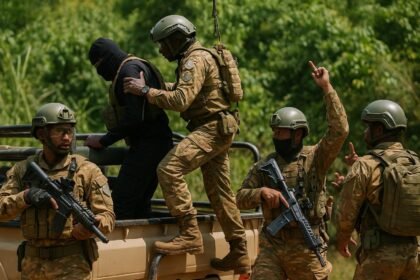
The current courtship traces back to the US$4.6 billion arms agreement sealed in December between Pakistan and forces loyal to Field Marshal Khalifa Haftar. That package, the largest in Pakistan’s history, covers aircraft maintenance, armoured vehicle upgrades, ammunition supply and naval repair, creating immediate operational dependence on Pakistani know-how.
With military leverage secured, Islamabad’s Ministry of Energy instructed its national exploration and production company to scout foreign acreage that could lower import bills. Libyan onshore basins and the still under-tapped Sirte offshore blocks surfaced as favourites, largely because Russia and Turkey already underwrite security, logistics and political cover there.
Timeline of the Emerging Energy Partnership
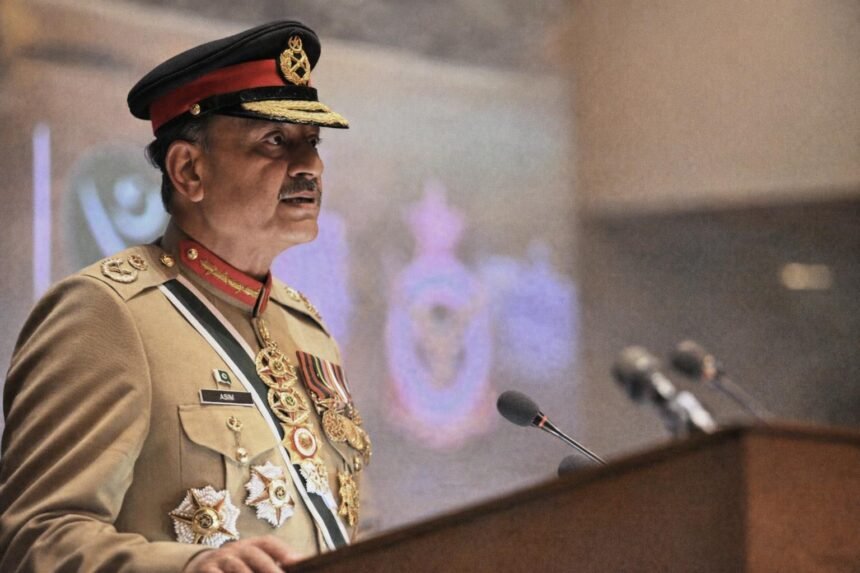
Talks reportedly advanced in late spring, soon after Chief of Army Staff General Asim Munir’s shuttle to Riyadh underscored Pakistan’s search for Gulf allies willing to bankroll overseas resources. By early summer, technical teams from the three countries had discreetly compared seismic surveys and legal frameworks, signalling an imminent memorandum.
The rapid schedule mirrors Islamabad’s confidence after what domestic media termed a four-day ‘victory’ over India in May. Although the clash was limited in scale, it was broadcast as proof that Pakistan’s defence industry had matured; scaling that narrative onto an energy frontier became a logical next showcase.
Strategic Stakeholders in the Tripoli Triangle
At the centre stands Pakistan Petroleum Exploration and Production Company Limited, mandated to secure equity in Libyan fields either through farm-ins or shared-risk ventures. Its engineers have spent the past decade developing tight-gas in Sindh; replicating those techniques in the oil-rich Cyrenaica belt would mark the firm’s first African footprint.
For Moscow, inviting a new shareholder cushions sanctions pressure without alienating Haftar, whose forces already rely on Russian trainers. Ankara, determined to protect its maritime boundary agreement with Tripoli, sees Pakistani capital as a buffer against Western attempts to renegotiate licensing rounds. All three partners therefore gain strategic redundancy.
Scenarios for Libya’s Oil and Gas Chessboard
Should a tripartite production-sharing accord emerge, initial development is expected to focus on shallow offshore zones where existing Turkish drilling vessels operate under Russian security umbrellas. Pakistani engineers would provide well services, while Gazprom markets condensate in Mediterranean spot hubs. Revenues would then finance Haftar’s coastal reconstruction priorities.
A less harmonious scenario, floated by European diplomats, involves stalled talks if Libya’s political roadmap slips again. Pakistan would still retain the arms contract, but exploration capital could pivot toward other African basins. For now, the alignment of economic and military incentives makes the Libyan option the path of least resistance.
Continental Implications for Energy and Security
For African energy producers, Islamabad’s move signals that procurement relationships can catalyse upstream joint ventures. Nigeria, Algeria and Congo-Brazzaville have each courted Asian refiners; Pakistan’s precedent may embolden them to seek similar cross-domain deals that bundle security expertise with drilling cash, thereby diluting traditional Western hold on project finance.
Security analysts observe that the Haftar-Pakistan axis could complicate future UN arms-embargo deliberations. The contract remains technically legal under Libyan east-based legislation, yet its scope challenges ongoing efforts to demilitarise the frontline. If the oil deals advance, stakeholders will argue that economic stabilisation outweighs the risks of added hardware.
For Islamabad, success in Libya would mark its graduation from regional pawn to autonomous deal-maker, capable of knitting defence, diplomacy and development into a single portfolio. For Tripoli and Haftar, partnering a nuclear-armed state offers deterrence by association. And for Moscow and Ankara, the arrangement spreads cost while locking Western competitors out.
Regional Diplomatic Reverberations
Libya’s neighbours are already adjusting. Cairo, wary of any initiative that strengthens Haftar outside its orbit, has intensified back-channel talks with Moscow to clarify rules of engagement. Algiers, protective of its own shale prospects, is monitoring whether Pakistani rigs could spill technology south-westward, potentially stirring dormant border disputes over shared basins.
Multilateral Stakes Beyond Tripoli
Yet the most immediate echo may resonate in multilateral halls. Should the Pakistani-Russian-Turkish consortium formalise, it could reshape voting blocs at OPEC-plus and the UN Security Council, where energy investment often translates into diplomatic currency. That prospect, more than any single well, hints at the broader stakes of Pakistan’s Libyan venture.