Key Takeaways
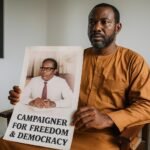
The Human Rights Council’s 6 October decision to renew, for twelve more months, the Independent International Fact-Finding Mission on Sudan keeps global attention fixed on a conflict that, in the words of regional advocate Hassan Shire, demands that “responsibility remain at the heart of any durable solution” (DefendDefenders).
- Key Takeaways
- Geneva Vote Extends Fact-Finding Mandate
- Darfur Siege Deepens Humanitarian Crisis
- Kordofan Escalation Signals Wider Risk
- Accountability and International Pressure
- Documentation and Battlefield Behaviour
- Diplomatic Repercussions at the UN
- Humanitarian Corridors and Regional Stability
- Political Calculus Inside Sudan
- Evidence for Future Tribunals
- African Union Engagement
- Scenarios Ahead
Geneva Vote Extends Fact-Finding Mandate
Adopted in Geneva by a comfortable margin, the resolution was opposed by Khartoum, yet the one-year extension ensures investigators can continue gathering testimonies, satellite imagery and forensic evidence on abuses wrought by both the Sudanese Armed Forces and the Rapid Support Forces, including atrocities that independent monitors already classified as war crimes.
Darfur Siege Deepens Humanitarian Crisis
The stakes are highest in Darfur’s El Fasher, where an eighteen-month siege has strangled supply routes, pushing thousands toward famine. The Council’s text decries the “incessant escalation of violence” and highlights the assaults on Zam Zam and Abu Shouk displacement camps that uprooted an estimated 400,000 people and triggered yet another wave of perilous flight.
Field workers warn that scarcity of grain and medicine, coupled with blocked humanitarian corridors, may turn El Fasher into the conflict’s next epicentre of mass starvation. For analysts, the Mission’s renewed mandate raises the cost of siege tactics by documenting, in near real time, conduct that could eventually appear before international courts.
Kordofan Escalation Signals Wider Risk
Beyond Darfur, violence is flaring across Kordofan’s farming belt. Council members cited Rapid Support Forces raids against villages in the north of the region, as well as Sudanese Air Force strikes that hit Al-Mujlad hospital to the west. The Mission will now investigate whether those incidents amount to grave breaches of humanitarian law.
Accountability and International Pressure
Khartoum’s negative vote underscored its discomfort with external scrutiny, yet it did not prevent the text’s passage. Diplomats privately note that several African states, while voicing concern over “country-specific mandates”, ultimately judged that the scale of civilian suffering outweighed sovereignty arguments, an assessment likely shaped by images of burning villages circulated online.
For human-rights organisations such as DefendDefenders, continuity is essential because evidence deteriorates quickly in active war zones. The Mission’s September 2025 report already alleged crimes against humanity by the Rapid Support Forces and war crimes by both parties. Fresh authorisation ensures investigators can corroborate those findings with new witness statements and medical records.
Documentation and Battlefield Behaviour
International lawyers argue that sustained documentation influences battlefield behaviour by signalling that command hierarchies may face future litigation. While neither side appears ready to compromise militarily, the paper trail created by the Fact-Finding Mission complicates any attempt to negotiate blanket amnesties, a dynamic that regional mediators will need to navigate with finesse.
Diplomatic Repercussions at the UN
The extension also alters diplomatic calculations at the United Nations General Assembly, where Sudan seeks allies to dilute pressure. With investigators expected to deliver an oral update in early 2026, envoys from the African Group must weigh solidarity with Khartoum against potential domestic backlash should further massacres be exposed and broadcast globally.
Humanitarian Corridors and Regional Stability
For neighbouring capitals, the renewed mandate offers a modicum of deterrence against cross-border spill-over. Humanitarian agencies hope that clearer attribution of responsibility can unlock safe-passage agreements, especially along the fragile corridors linking Darfur to Chad and South Sudan. Yet relief convoys remain hostage to frontline calculations as the harvest season gives way to dry winds.
Political Calculus Inside Sudan
Within Sudan, political elites contesting power from Khartoum to Port Sudan will read Geneva’s message differently. Some may fear isolation, others may see leverage: cooperation with investigators could become a bargaining chip in any future civilian transition, potentially attracting development finance once guns fall silent. For now, however, mutual distrust keeps ceasefire talks frozen.
Evidence for Future Tribunals
Should the fighting persist, the Mission’s second full report, due September 2026, could prove pivotal for eventual accountability mechanisms, whether a hybrid tribunal or referrals to existing courts. By extending the mandate today, the Human Rights Council is effectively banking evidence for tomorrow’s diplomacy, reminding all parties that memory, once archived, rarely fades.
African Union Engagement
At continental level, the African Union’s Peace and Security Council has yet to endorse the Geneva mechanism formally, but officials familiar with Addis Ababa deliberations say the body relies heavily on its findings when drafting briefings. The renewed mandate therefore equips AU envoys with granular data that can underpin future shuttle diplomacy or sanctions recommendations.
Scenarios Ahead
For observers across Africa, the Council’s decision is a litmus test for multilateral resolve in an era of proliferating crises. Whether documenting charred villages in Darfur or damaged wards in Kordofan, investigators now hold a reinforced mandate—and, by extension, a promise to victims that the international gaze will not avert itself too soon.