A Senate Vote That Echoes Across Pretoria
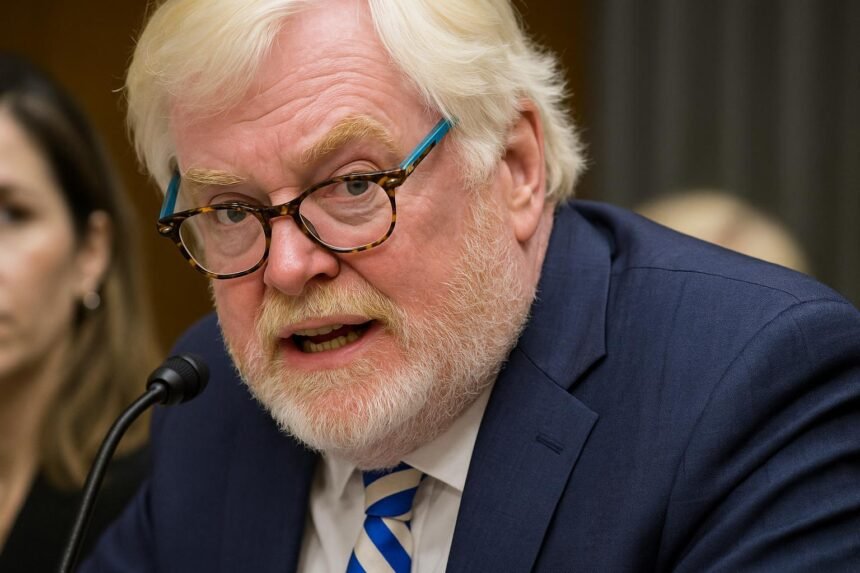
Late on 31 January, the United States Senate gave final approval to Leo Brent Bozell as ambassador to South Africa, ending a confirmation process that stretched from his March nomination to a bruising Foreign Relations Committee hearing in October. The vote crystallises Washington’s new posture under President Donald Trump and has already drawn wary glances in Pretoria.
Bozell will take up his post at a moment when the bilateral relationship is frayed. Since February 2025 the Trump administration has suspended development assistance, citing alleged discrimination against the white minority under South Africa’s expropriation-without-compensation bill. Washington also skipped Johannesburg’s G20 summit last November and rescinded Pretoria’s invite to the 2026 edition on US soil.
Who Is Leo Brent Bozell?
A fixture of America’s conservative movement, Bozell founded several media watchdog groups and is known for uncompromising rhetoric on cultural issues. During the 1980s he backed lobbies that opposed negotiations with the African National Congress, then labelled “terrorist” by parts of the West. His critics argue that such positions betray a lingering Cold-War lens on Southern Africa.
Supporters inside the White House praise Bozell’s fundraising skills and ideological alignment with President Trump, describing him as “a direct channel to the base.” Yet seasoned diplomats note he has never held a foreign-service posting and has limited exposure to the continent, raising questions about his capacity to steer a complex partnership worth US$21 billion in annual trade.
Fault Lines: Land Reform and the Gaza Case
Two dossiers dominate the agenda. First, land reform. The White House frames the expropriation bill as a violation of property rights; Pretoria calls it overdue social justice. Congressional aides indicate that renewal of AGOA trade preferences may be tied to “adequate safeguards for investors.”
Second, South Africa’s genocide case against Israel at the International Court of Justice has outraged pro-Israel lawmakers on Capitol Hill. During his hearing Bozell vowed to “press hard for a withdrawal” of the filing. Analysts in Pretoria fear financial retaliation should the government refuse, citing earlier aid cuts as proof of Washington’s resolve.
The convergence of these issues risks turning the embassy into a pressure-lever rather than a bridge. One former South African diplomat warns that “the room for quiet diplomacy is shrinking as headline politics take over.”
Pretoria’s Diplomatic Calculus
South Africa has not had an ambassador in Washington since Ebrahim Rasool was recalled in March 2025 after labelling US policy “white supremacy.” The vacancy complicates back-channel communication just as Bozell prepares to land in Pretoria with marching orders many perceive as confrontational.
Officials at the Department of International Relations and Cooperation insist they will engage “professionally” but add that sovereignty on land and Palestine is non-negotiable. Cabinet sources suggest President Cyril Ramaphosa may counterbalance by deepening ties with the European Union and China, hoping to dilute US leverage.
Civil-society groups are divided. Business chambers worry about trade fallout, while activists campaigning on land restitution applaud Pretoria’s stance. The diplomatic temperature, therefore, hinges not only on government-to-government talks but on how domestic constituencies mobilise around each flashpoint.
Scenarios for 2026 and Beyond
Several trajectories emerge. A confrontational path could see Washington expand tariffs and restrict defence cooperation, prompting Pretoria to pivot further toward BRICS partners. A managed-friction scenario would involve calibrated dialogue on land-reform safeguards and a legal distinction between the Gaza case and bilateral trade.
A third option, favoured by some regional observers, envisages African Union mediation to re-anchor the relationship in multilateral priorities such as climate finance and pandemic preparedness. Whether Bozell’s tenure enables that reset will depend on his aptitude for listening—a skill, critics note, not always prized in domestic US politics.
Regional Repercussions for the Continent
Neighbouring states are watching closely. If US-South African ties sour, SADC coordination on counter-piracy in the Mozambique Channel and infrastructure funding for the North-South Corridor could face delays. Conversely, a thaw would reassure investors eyeing continental supply chains ahead of the African Continental Free Trade Area’s next tariff phase.
The episode also serves as a test case for how a second Trump administration may approach other pivotal African partners, including Nigeria and Kenya. For capitals across the continent, Bozell’s performance will offer the first tangible clues about Washington’s broader Africa policy reset under an America First revival.