Key takeaways: symbolism meets hard logistics
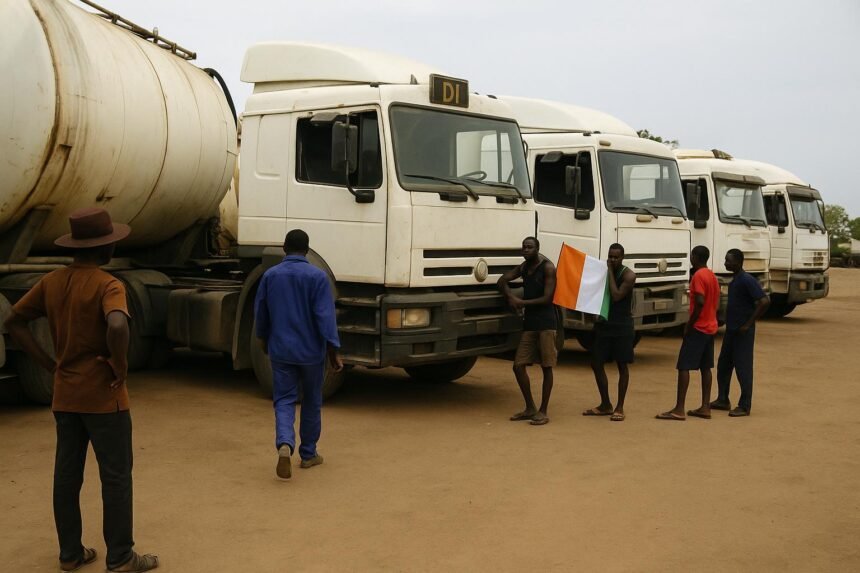
The overnight arrival of 82 Nigerien fuel tankers in Bamako on 22 November 2025 has brought rare relief to Mali’s pumps and fresh momentum to the newborn Alliance of Sahel States. With jihadist militants still blocking normal imports, the convoy turns political rhetoric about intra-Sahel solidarity into a measurable, combustible asset.
Malian Industry and Trade Minister Moussa Alassane Diallo praised the shipment for “reducing the suffering of our people.” Economists counter that Bamako alone consumes at least 150 tankers a day, yet most observers agree the spectacle matters as much as the volume.
Context: embargo as an asymmetric weapon
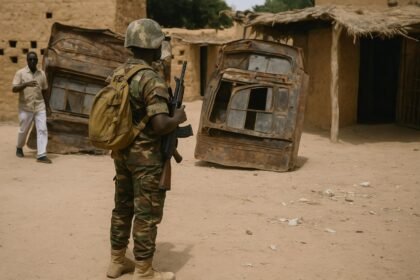
Since September, Jama’at Nusrat al-Islam wal-Muslimin (JNIM) has tightened its embargo on fuel corridors feeding central Mali, paralysing public transport, construction and even some security patrols. The insurgent strategy swaps improvised explosive devices for macro-economic pressure, betting that shortages will corrode public faith in the transitional authorities.
Enter the Alliance of Sahel States—Mali, Niger and Burkina Faso—which broke with ECOWAS after the Niamey coup and now frames itself as a confederation able to pool security and economic responses. Niger’s fuel donation constitutes the first visible test of that doctrine.
Timeline: a 1,400-kilometre test of resolve
Although officials did not reveal the precise departure date from Niamey, drivers crossed Tillabéri, skirted the volatile tri-border hinterland, then traversed Burkina Faso’s Sahel region before rolling into Bamako escorted by soldiers from all three AES members. The shared escort signalled a joint operational footprint rather than a mere bilateral aid delivery.
Diplomatic staff made the symbolism explicit. “We remember what Mali did when Niger faced ECOWAS pressure,” Niger’s ambassador Abdou Adamou reminded cameras, recalling Bamako’s stance against threatened military intervention in Niamey last year.
Actors: converging interests, layered stakes
For Niger’s military authorities, fuel generosity burnishes legitimacy at home and abroad while showcasing logistical depth under sanctions. For Mali, the shipment buys political oxygen at a moment when urban queues and rising black-market prices risk social unrest.
Burkina Faso, though not sending tanks of its own this round, secured the convoy’s passage through territory where its army wages daily skirmishes with the same jihadists enforcing Mali’s embargo. Regional analysts such as Boubacar Ba see the exercise as a rehearsal for potential joint military deployments under AES command.
Economic pulse of Bamako still faint
Bamako’s filling stations reported brief alleviation within hours of the convoy’s arrival, but rationing rules were not lifted. Importers warn that unless another 4,000-plus cubic metres reach the capital weekly, factories will remain idle and commuter fares will climb. The government is exploring river barges via Guinea and emergency airlifts for aviation fuel, yet costs soar.
An economist interviewed on national radio called the convoy “an appreciable gesture” but calculated it amounts to barely half a day of metropolitan demand. Still, the visual of Nigerien trucks unloading at storage depots served political optics the ruling junta needed ahead of year-end budget debates.
Possible scenarios: from pipelines to joint patrols
Analysts outline three trajectories. First, a humanitarian loop in which Niger dispatches regular convoys, institutionalising AES as a logistics alliance. Second, an escalation where AES militaries secure arterial roads permanently, confronting JNIM and possibly drawing reprisals. Third, a diplomatic breakthrough in which regional mediators convince militants to lift the embargo in exchange for local ceasefires.
Whichever path prevails, the convoy has already altered perceptions. It demonstrated that militants’ economic siege is porous and that Sahel capitals can mobilise across borders without external patrons. For observers in other fragile corridors—from Lake Chad to the Gulf of Guinea—the signal is clear: regional self-help is no longer theoretical.