Key Takeaways
Three Sahelian juntas craft a joint military force, underscoring their desire for strategic autonomy, while Benin’s constitutionally scheduled transition offers a rare regional precedent for voluntary power hand-over. Both stories cast long shadows over regional security architecture and diplomatic alignments.
Bamako Summit Marks Strategic Pivot
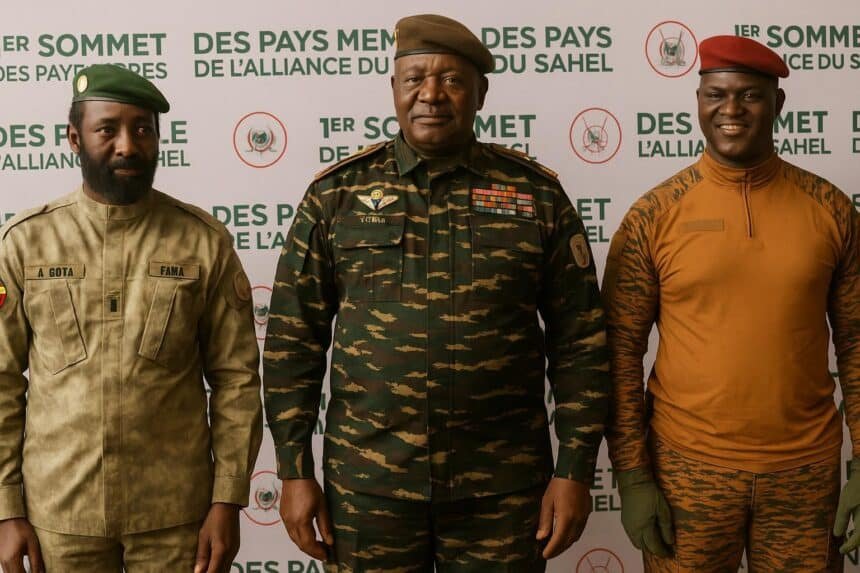
Barely ten days after the ECOWAS heads of state met in Abuja, Mali hosted Niger and Burkina Faso for the second leadership summit of the Alliance of Sahel States. The venue, Bamako’s Koulouba Palace, was chosen to project confidence and underscore the bloc’s determination to steer its own security agenda.
Interim Malian leader Assimi Goïta framed the gathering as a watershed, unveiling plans for an integrated Sahelian defence force. Local daily Sahel Tribune argued the move offers a “clear message” that the trio now intends to underwrite its own security, bound by a shared geography and crisis narrative.
From Cooperation to Separation with ECOWAS
Editorialists across the region note that the new architecture means more than merely pooling troops. According to L’Alternance, it confirms a decisive break with ECOWAS and a complete exit from French military assistance, a partnership that once underpinned counter-terror operations in the central Sahel.
The newspaper nonetheless warns that West African states, whether in ECOWAS or the AES, remain linked by common history, culture and markets. It urges leaders to avoid a permanent fracture, yet admits that present diplomatic frost makes formal cooperation “unlikely, if not impossible”.
Street Optics and Popular Legitimacy
Images of Niger’s Abdourahamane Tiani welcomed by flag-waving crowds reinforced the narrative of popular backing. Sahel Tribune reported thousands lining Bamako’s main artery, brandishing tricolours and chanting slogans celebrating “reclaimed sovereignty”—a potent tableau for military rulers seeking domestic endorsement.
Analysts caution that such enthusiasm is conditional on quick results. Public faith could erode if insecurity persists, a lesson drawn from the slow-moving G5 Sahel force that preceded the current experiment.
Operational Hurdles Ahead
Le Pays reminds readers that the new task force is only at the blueprint stage; the harder test lies in logistics, interoperable command and sustained funding in economies already strained by sanctions and reduced aid.
Failure, the Burkinabè daily warns, would echo the G5 Sahel’s troubled history, tarnishing the alliance’s legitimacy and offering militants fresh propaganda. Success, conversely, could validate a home-grown security model and shift negotiations with partners in the Gulf, Russia and China.
Benin’s Scheduled Transition
While Sahel generals cement power, Benin’s Patrice Talon is four months away from leaving office after two constitutional terms, an anomaly Jeune Afrique likens to a snow leopard sighting. Talon has repeatedly dismissed calls to amend the charter, keen to brandish democratic credentials.
Le Monde Afrique notes, however, that opposition figures question the health of Beninese democracy, citing tightened political space. December’s foiled coup attempt adds volatility, forcing the president to balance legacy-building with urgent security probes as mastermind Lieutenant-Colonel Pascal Tigri remains at large.
Regional Diplomatic Outlook
The Sahelian pivot and Benin’s transition illustrate divergent pathways in West African governance. One embraces militarised sovereignty, the other leans on constitutional order. Their trajectories will weigh on ECOWAS credibility and on future African Union debates over intervention norms, sanctions enforcement and collective security financing.