
Ce qu’il faut retenir
Presented as the flagship of Italy’s renewed Africa outreach, Prime Minister Giorgia Meloni’s Mattei Plan will headline the 24-25 November EU-AU summit in Luanda. Rome hopes that the 5.5-billion-euro stimulus, coupled with the Lobito transport corridor, will cement Italy’s energy security while accelerating Angola’s diversification.
Historical ties power play
Italy’s relationship with Angola predates most Western engagement. Rome recognised Angolan independence in February 1976, positioning itself as an early partner during a period when other capitals hesitated. That diplomatic capital has since been converted into economic ties dominated by hydrocarbons and, increasingly, technology transfers.
Eni began prospecting off the Angolan coast in the late 1980s; today Angola supplies roughly 10 % of Italy’s crude imports and a growing share of liquefied natural gas. The stakes rose after the Ukraine conflict forced Italy to cut Russian supplies, making Luanda a strategic alternative.
The Mattei Plan’s architecture
Unveiled in early 2024, the Mattei Plan pledges concessional loans, blended finance and capacity-building across energy, agriculture, health and infrastructure in fourteen African states. Meloni frames the package as a ‘mutual benefit pact’ that grants what she calls ‘the right not to migrate,’ thereby blending development rhetoric with domestic migration politics.
For Angola, inclusion in the Mattei cohort could unlock capital beyond oil. The government of President João Lourenço seeks to channel funds toward electricity interconnections, agro-processing zones and vocational training, all sectors identified in an updated National Development Plan. Officials in Luanda insist that local content clauses will anchor the partnership.
The Lobito corridor nexus
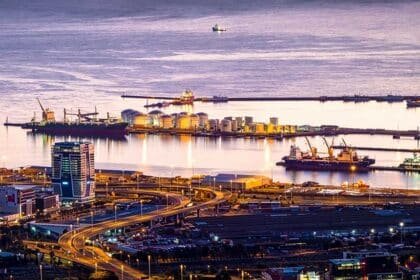
The Lobito Corridor offers a concrete test. Stretching from the Atlantic port city of Lobito to the copper belts of Zambia and the Democratic Republic of Congo, the 1 300-kilometre rail upgrade promises to shorten mineral exports to Europe by two weeks. The United States, EU and African Development Bank have already signalled support.
Italy views the line as the physical backbone of the Mattei Plan. Engineering firms such as Webuild are scouting contracts, while Eni is mapping pipelines that could eventually parallel the track. In Brussels, officials tout the project as the Global Gateway’s most visible flagship south of the Sahara.
Calendar of deliverables
Key milestones are stacking up. A commercial structure for the Lobito operating company is expected by March 2025. Track rehabilitation between Lobito and Luau should finish in 2026, allowing through-running to Ndola in Zambia by 2027, according to the African Development Bank’s indicative timetable.
Actors in the spotlight
Meloni will land in Luanda with a delegation including Deputy Foreign Minister Edmondo Cirielli, Eni chief Claudio Descalzi and the new head of Cassa Depositi e Prestiti’s international arm. On the Angolan side, ministers of Transport, Energy and Economy will lead technical briefings alongside Sonangol executives.
European Commission President Ursula von der Leyen is keen to present a united front with the African Union Commission, hoping to dispel perceptions that the Global Gateway lags behind China’s Belt and Road. AU Chair Moussa Faki Mahamat has welcomed the Lobito blueprint but stresses the need for African-led governance structures.
Scenarios ahead
Scenario one foresees rapid financial close, allowing Italian contractors to break ground next year and Rome to showcase early deliverables before the 2025 G-7 in Apulia. Successful rollout would enhance Meloni’s credentials as a pragmatic bridge between Europe and Africa and create political space to broaden the Mattei Plan to new beneficiaries.
Scenario two envisages delays over tariff-sharing among Angola, DRC and Zambia or over environmental impact assessments in sensitive miombo woodlands. Such slippage could dilute investor confidence and hand narrative advantage to competing corridors backed by Beijing. Italian diplomats acknowledge the risk and are quietly lobbying the African Development Bank to mediate.
Regional reverberations
Whatever the timeline, the corridor’s completion would reshape Central African logistics, easing Congolese copper exports and giving Brazzaville a template for its own Atlantic rail ambitions. Congolese officials, while not party to the deal, note that a successful Lobito model could attract financing to refurbish the Congo-Ocean line toward Pointe-Noire.