Ce qu’il faut retenir
The International Crisis Group’s latest report draws a red line under the deteriorating security in the south-east of the Central African Republic. It argues that immediate dialogue with the AAKG militia is essential to halt a deadly cycle that has already left roughly two hundred dead and uprooted thousands of civilians.
Conflict’s Deep Roots in Haut-Mbomou
Haut-Mbomou, a forested region bordering South Sudan and the Democratic Republic of Congo, has long been a vacuum of state authority. Since 2013, successive rebel movements have criss-crossed its dusty tracks, taxing traders and traumatising villages far from Bangui’s reach.
When the Zandé community saw yet another wave of incursion in 2021, local leaders endorsed self-defence committees. Those units, later known as AAKG, initially aimed to push back armed groups and reopen basic supply routes.
From Militia to Regular Army—and Back Again
Russian Wagner instructors provided the fledgling force with rudimentary training before Bangui integrated several hundred fighters into the national army, FACA. Integration promised a stipend and legitimacy but delivered sporadic pay and hazardous frontline deployments.
Feeling exploited, many recruits deserted with their weapons. By early 2023, the same men who had sworn allegiance to the flag were ambushing FACA convoys and extorting communities, particularly targeting Peul herders accused of collaborating with rival groups.
Human Toll of a Mutating Conflict
ICG records around two hundred fatalities since mid-2022, though local activists fear the true number is higher given the remoteness of massacre sites. At least 17,000 residents have fled to improvised camps or crossed porous borders in search of safety, adding strain to already thin humanitarian lines.
Key Findings of the ICG Report
Author Fulbert Ngodji stresses that the militia’s grievances are primarily economic and identity-driven, not ideological. Addressing pay arrears, clarifying command chains and reassuring the Zandé about their cultural rights could form the backbone of a negotiations package, he writes.
Calendar: Narrow Windows for Talks
With local elections tentatively pencilled in for late 2024, Bangui has only a few months to defuse tensions. Dry-season roads until May facilitate shuttle diplomacy; by the next rains, large movements of mediators may become impossible and displaced populations still more vulnerable.
Mediators and Regional Stakes
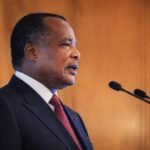
The Economic Community of Central African States has offered discreet good offices, mindful that instability could spill into Cameroon and Congo-Brazzaville. Brazzaville, which hosted landmark CAR peace talks in 2014, is again viewed as a neutral venue, benefitting from President Denis Sassou Nguesso’s reputation for quiet crisis management.
Cross-border commerce depends on secure corridors from Bangassou to the Congolese river ports. Traders in Ouesso and Impfondo report a 30 percent drop in timber and coffee traffic since AAKG roadblocks multiplied, highlighting the economic incentive for regional partners to shepherd a settlement.
Scenarios Ahead
If talks resume under regional auspices and Bangui concedes on salary arrears while offering a community liaison council for the Zandé, ICG believes fighters could be cantoned within six months, paving the way for DDR programmes.
Conversely, continued military pressure without dialogue risks pushing the militia toward alliances with transnational poaching networks, widening the conflict zone and complicating future reintegration efforts.
Pathways to a Sustainable Accord
Observers suggest a phased approach: first secure a humanitarian truce to allow vaccinations and school exams, then establish mixed security units combining vetted AAKG elements with FACA under international monitoring. Long-term stability will hinge on restoring basic services, repairing prefectural roads and ensuring that the Zandé feel represented in Bangui’s decentralisation agenda.