
Ce qu’il faut retenir
The spokesman of the Front de Libération de l’Azawad argues that the lull across northern Mali is deceptive. He claims his forces shattered a Wagner unit near Tinzawaten, holds prisoners, and has lost only a handful of fighters. Accusations of Algerian support are dismissed, while contacts with jihadists are limited to a tribal non-aggression pact.
- Ce qu’il faut retenir
- Military standoff around Kidal and Tinzawaten
- Tinzawaten, July 2024: claiming a landmark victory
- Inside the FLA arsenal: black-market drones
- Bamako’s conspiracy narrative and Algerian denials
- Wagner casualties and prisoner calculus
- Shared terrain, separate agendas with JNIM
- Political focus limited to Azawad population
- Momentum of the battlefield dictates diplomacy
- Scenarios for the months ahead
Military standoff around Kidal and Tinzawaten
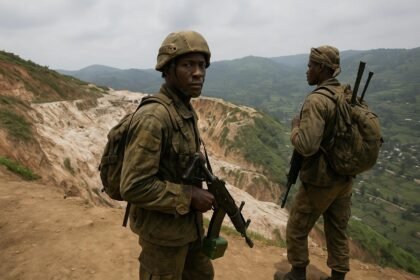
No shots have echoed for weeks in the traditional strongholds of Kidal and Tinzawaten, yet Mohamed Elmaouloud Ramadane refuses the word “accalmie”. Both camps patrol the sand-coloured camps once occupied by Minusma or Barkhane. Drones watch each move; the spokesman insists that “the terrain commands”, suggesting combat may resume at any moment.
Tinzawaten, July 2024: claiming a landmark victory
Fourteen months ago, the desert settlement on the Algerian border hosted the bloodiest engagement in years. The FLA asserts that it wiped out an entire Wagner detachment, counting eighty-five to eighty-seven Russian bodies and several Malian soldiers. Twenty rebels fell and fifteen were wounded. For Ramadane, the outcome signalled “a first African defeat” for the Kremlin’s contractors.
Inside the FLA arsenal: black-market drones
Asked about unmanned aircraft that surprised Malian positions, the spokesman rejects the idea of state sponsorship. He says the devices are bought on illicit markets and then re-engineered in the bush. The narrative aims to counter Bamako’s allegations of a sophisticated external supply chain and to underline the movement’s technical improvisation.
Bamako’s conspiracy narrative and Algerian denials
Malian authorities routinely blame regional neighbours for rebel resilience, listing France, Ukraine, Algeria, Côte d’Ivoire, Senegal and Mauritania. Ramadane calls it a self-serving “theory of conspiracy”. He insists there is “no political rapprochement” with Algiers and no rear bases across the border, despite the porous nature of the Sahara frontier.
Wagner casualties and prisoner calculus
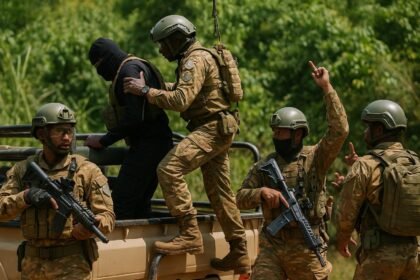
The FLA claims to hold two Russian prisoners alongside captured Malian troops. While the figures cannot be verified independently, they feed the movement’s morale and international messaging. Ramadane presents the captives as bargaining chips and proof that local fighters can match foreign paramilitaries, reversing the fear narrative cultivated by Bamako.
Shared terrain, separate agendas with JNIM
Northern Mali also hosts the Jama’at Nusrat al-Islam wal-Muslimin insurgency. Ramadane concedes that both groups “share the terrain” yet denies military coordination. He stresses that the FLA’s goals are political and confined to the Azawad population. After April 2024 skirmishes on the Mauritanian frontier, tribal elders brokered a mechanism to prevent accidental clashes.
Political focus limited to Azawad population
The spokesman reiterates that the movement’s grievances revolve around governance, security and representation for the communities of Azawad. National or ideological expansion beyond those borders is rejected. By drawing this line, the FLA seeks to distinguish itself from transnational jihadism and to attract sympathy among Sahelian and international observers wary of extremist spillovers.
Momentum of the battlefield dictates diplomacy
Ramadane argues that the sequence of engagements, not negotiations, will define the coming months. Each side waits for tactical advantage before opening fire or talking. This logic feeds the sense of an inevitable “storm” after the current calm, reinforcing the circular dynamic of offence and counter-offence that has characterised the decade-long conflict.
Scenarios for the months ahead
If fighting resumes, rebel drones and desert manoeuvres are likely to test Malian positions again. A prolonged standoff could also deepen humanitarian strains on civilians caught between rival camps. Conversely, sustained quiet might encourage ad hoc talks, yet the mutual distrust laid bare by Ramadane suggests any dialogue will remain fragile and battlefield-dependent.