
What to Remember
Algeria’s leadership is quietly downgrading the decades-old memory dispute with France, opening space for new diplomatic and economic horizons. While Paris remains entangled in symbolic debates, Algiers is testing a future in which its legitimacy rests less on the 1954-1962 liberation narrative and more on present-day sovereignty ambitions.
- What to Remember
- Evolving Algeria–France Memory Politics
- Political Sparks in Paris
- A Calculated Algerian Silence
- Economic Tethers Losing Exclusivity
- China’s Infrastructure Footprint
- Turkish Industry and Russian Hardware
- Gulf Monarchies and Energy Diplomacy
- Domestic Legitimacy Recalibrated
- Expert Lens on Parisian Inertia
- Maghreb Power Prospects
- Possible Futures for Franco-Algerian Relations
Evolving Algeria–France Memory Politics
Since independence in 1962, the Algerian state cultivated a powerful ‘memory rent’, presenting defiance toward the former coloniser as proof of revolutionary authenticity and a shield against domestic criticism. The strategy delivered unity but also locked both capitals into ritualised tensions, intensified whenever French politics weaponised colonial history.
Political Sparks in Paris
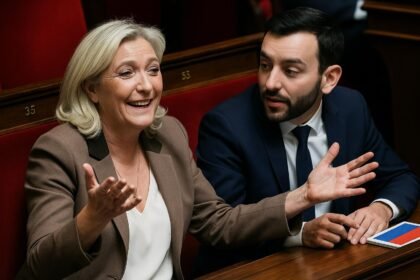
The latest flashpoint came on 30 October when France’s Rassemblement national secured a parliamentary resolution denouncing the 1968 Franco-Algerian mobility accord. The move coincided with Algerian detentions of Franco-Algerian author Boualem Sansal and French journalist Christophe Gleizes, yet Algiers abstained from the usual retaliatory rhetoric, signalling a tactical cool-down (Twala).
A Calculated Algerian Silence
Officials in Algiers neither embraced Parisian overtures for joint commemorations nor reacted to French political provocations. The muted posture suggests that symbolic confrontation no longer yields sufficient dividends for a government intent on diversifying partnerships and demonstrating policy autonomy to a youthful population impatient with inherited grievances.
Economic Tethers Losing Exclusivity
France remains a major investor and hosts a sizeable Algerian diaspora, yet trade dependence has softened. Hydrocarbon revenues and foreign reserves provide budgetary breathing room, enabling Algeria to pursue alternative capital, technology and security providers without jeopardising core welfare commitments at home.
China’s Infrastructure Footprint
Beijing’s Belt and Road Initiative offers highways, ports and power plants that promise to knit Algeria more tightly into Afro-Eurasian logistics corridors. Chinese engineering groups, backed by state banks, now deliver the kind of large-ticket projects once reserved for European consortia, diluting Paris’s commercial leverage (Twala).
Turkish Industry and Russian Hardware
Turkish firms have become visible in textiles, steel and household appliances, leveraging cultural affinities and competitive costs. Moscow, for its part, remains Algeria’s principal arms supplier, sustaining a defence partnership that predates the Soviet era and underscores Algiers’s commitment to a multi-vector foreign policy.
Gulf Monarchies and Energy Diplomacy
Recent visits by delegations from Qatar, the United Arab Emirates and Saudi Arabia highlight interest in downstream petrochemicals, renewable projects and sovereign-wealth placements. For Algeria, Gulf capital complements Asian infrastructure finance, further diminishing the psychological weight of French investment.
Domestic Legitimacy Recalibrated
Analysts note that younger Algerians, born long after 1962, respond more to employment prospects than to anti-colonial rhetoric. By stressing forward-looking development deals, the government can claim performance legitimacy while still venerating the liberation heritage on ceremonial occasions.
Expert Lens on Parisian Inertia
Journalist Lyas Hallas argues that ‘France struggles to craft an Algerian policy that is not policy of remembrance’ (Twala). His assessment resonates with French diplomats who privately concede that electoral cycles at home complicate any bid to normalise relations without symbolic gestures.
Maghreb Power Prospects
Observers caution that Algeria, despite vast territory and energy assets, has yet to translate resources into sustained regional leadership. Infrastructure gaps, youth unemployment and security spill-overs from Libya and the Sahel temper ambitions, but a de-escalated memory agenda frees diplomatic bandwidth for pragmatic coalition-building.
Possible Futures for Franco-Algerian Relations
If Algiers maintains its low-noise posture, Paris may eventually pivot from commemorative politics to trade, climate cooperation and organised migration channels. Conversely, French domestic debates could reignite symbolic skirmishes in the run-up to future elections. Either way, Algeria’s outreach to Beijing, Ankara, Moscow and the Gulf ensures that it negotiates from an increasingly diversified platform.