Ce qu’Il Faut Retenir
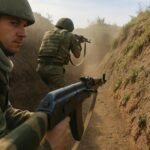
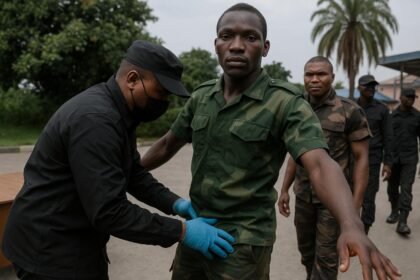
The latest confrontation between Kigali and Kinshasa comes as the Congolese army presents fifteen Rwandan soldiers, including a major and a captain, claimed to have been seized on several Kivu front lines. Their display, complete with prison garb, is intended to prove that regular Rwandan forces are active far beyond their border.
- Ce qu’Il Faut Retenir
- Kigali-Kinshasa Fault Line Widens
- The Arrest: What the Army Shows
- Civilian Detainees, Expanding Web
- Contexte
- Diplomatic Initiatives Under Strain
- Calendrier des Fronts
- Actors Shaping the Standoff
- Information War Intensifies
- Legal and Humanitarian Dimensions
- Regional Security Outlook
- Scenarios Ahead
- Great Lakes Implications
- Beyond the Headlines
Kigali-Kinshasa Fault Line Widens
Lieutenant-Colonel Mak Hazukay, deputy spokesman of the Armed Forces of the Democratic Republic of Congo, framed the arrests as undeniable proof of an incursion. He argued that Rwanda’s justification of defensive operations against hostile militias collapses in light of a presence as deep as Uvira, hundreds of kilometres from the frontier.
The Arrest: What the Army Shows
According to Kinshasa, the group of officers was intercepted on the outskirts of Goma, while enlisted men were seized in South Kivu. Their shaved heads and colour-coded uniforms offered a carefully choreographed tableau for the cameras, underscoring that the captives are now firmly under Congolese jurisdiction.
Civilian Detainees, Expanding Web
Alongside the soldiers stand eight foreign civilians: four Burundians, one Ugandan and three Tanzanians. Military spokespeople link them to terrorism, propaganda and espionage charges, contending that Kigali is leveraging regional citizens and armed movements such as Red-Tabara to spread the conflict beyond traditional fault lines.
Contexte
This is not Kinshasa’s first public presentation of alleged Rwandan soldiers. Each prior occasion has been met by Kigali’s categorical denial, characterising any cross-border presence as a limited shield against the Rwandan Hutu FDLR and other hostile groups sheltering in eastern Congo.
Diplomatic Initiatives Under Strain
Recent accords intended to cool tempers—inked after shuttle diplomacy by regional mediators—appear to be losing traction. Artillery still echoes around Uvira, a strategic axis on Lake Tanganyika. The optics of prisoners in bright prison tunics risk hardening public opinion and shrinking the political space for compromise.
Calendrier des Fronts
Clashes involving the M23, resurrected under the banner of the Alliance Fleuve Congo, have surged in waves across North and South Kivu. Statements from Kinshasa suggest that the fifteen detainees were captured during operations conducted in the early days of January, even as cease-fire language circulated in diplomatic communiqués.
Actors Shaping the Standoff
Beyond the two capitals, a tapestry of stakeholders hovers. The regional bloc’s heads of state call for restraint, while local communities near Uvira, Goma and Rutshuru face immediate insecurity. For rebel commanders, each new clash can redraw supply routes and negotiating leverage.
Information War Intensifies
Televised images of captives are as much a psychological tool as a legal step. Congolese commanders use them to win hearts in Kinshasa and beyond, whereas Kigali counters with statements dismissing the footage as fabricated or misinterpreted. Each side courts regional opinion, aware that perception may shape upcoming summits.
Legal and Humanitarian Dimensions
The Congolese army cites terrorism and espionage statutes against the foreign civilians, signalling potential trials. Human-rights observers are likely to press for due process, but the opaque environment at the front complicates independent verification of arrest conditions or the detainees’ exact roles in the conflict.
Regional Security Outlook
Analysts warn that mixed military and civilian detentions complicate any eventual prisoner swap or confidence-building gesture. If Kigali insists the captives are non-combatants or denies affiliation, negotiations could deadlock, prolonging both the humanitarian toll and the cycle of accusation that has paralysed peace frameworks.
Scenarios Ahead
The most optimistic path sees renewed shuttle diplomacy reducing front-line pressures and paving the way for a monitored withdrawal of foreign troops. A stalled scenario would leave the status quo: sporadic fighting, mounting civilian displacement and periodic media parades of prisoners. An escalatory spiral, though still avoidable, cannot be discounted.
Great Lakes Implications
Whichever scenario unfolds, the episode underscores how military moves in one Kivu district reverberate across the Great Lakes. Lake Tanganyika trade corridors, cross-border pastoral routes and regional stock markets all feel the tremors when Kinshasa and Kigali drift further apart. Stability remains a shared yet elusive dividend.
Beyond the Headlines
While images of uniformed captives grab attention, the deeper story lies in the structures enabling violence: porous borders, competing resource networks and the unresolved legacies of earlier wars. Until those layers are addressed, the presentation of prisoners may remain a recurring scene rather than a turning point toward peace.