Key Figures of a Relentless Conflict
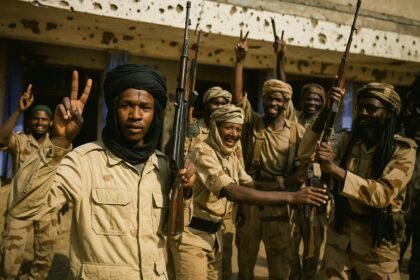
By the close of 2025, Sudan’s civil war had entered its third year with a grim milestone: roughly 150,000 lives lost as the Sudanese Armed Forces (SAF) under General Abdel Fattah al-Burhan and the Rapid Support Forces (RSF) led by General Mohamed Hamdan Dagalo, known as Hemedti, fought for national supremacy.
Beyond the staggering death toll, entire provinces have been depopulated, infrastructure shattered and regional trade corridors disrupted, turning Sudan into one of the world’s most acute humanitarian and security crises, yet one still overshadowed on the global agenda by conflicts perceived as more strategically central.
Riyadh and Abu Dhabi Compete for Leverage
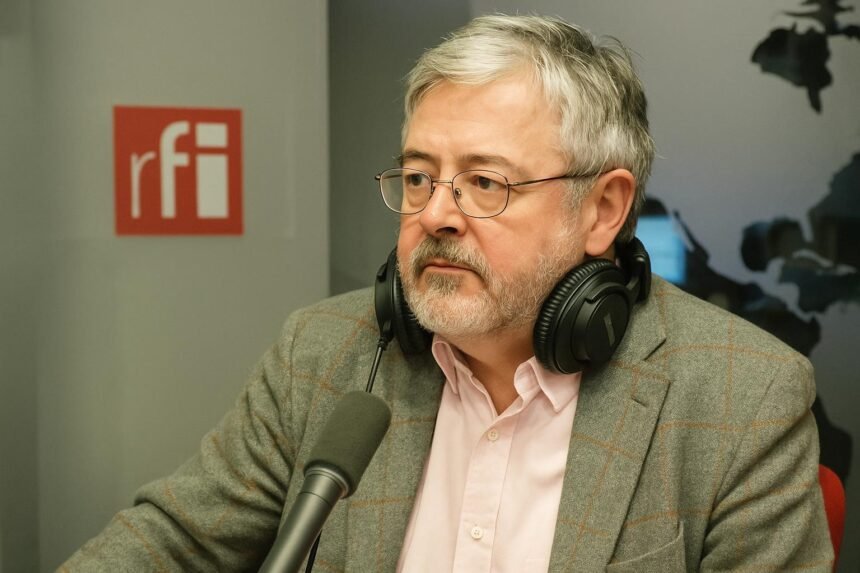
Analyst Roland Marchal observes that Saudi Arabia and the United Arab Emirates are locked in a ‘fierce competition’ to shape the endgame, each cultivating channels to both generals even as they prioritize distinct security and economic stakes. Their financial muscle and regional influence keep the war machine lubricated, intentionally or otherwise.
For Riyadh, the priority is safeguarding Red Sea maritime lanes and limiting Iranian sway, objectives that favour a disciplined regular army it can hold accountable. Abu Dhabi, by contrast, has cultivated a more transactional bond with Hemedti’s RSF, valuing its expeditionary experience and potential access to Sudan’s mineral wealth.
Great-Power Calculus Favors the Regular Army
Marchal stresses that the RSF ‘is not isolated’, yet he notes a converging line among major capitals to back the SAF, whether publicly or through quiet military-to-military channels. Powers seated at the UN Security Council may differ on many dossiers, but on Sudan they apparently view state uniform as the safer bet.
The logic is straightforward: a centralized command in Khartoum appears more likely to honour cease-fire arrangements, secure humanitarian corridors and protect foreign assets than a constellation of semi-autonomous militias. Yet this preference risks prolonging combat if it emboldens the army to seek a decisive, rather than negotiated, victory.
Somaliland-Israel Accord Adds a New Variable
The unexpected recognition of Somaliland by Israel in late 2025 startled diplomats already juggling the Sudan file. Marchal argues that the move ‘does not help’, injecting another layer of rivalry into the Horn of Africa. Khartoum immediately protested, while the RSF hinted at leveraging the controversy to court new patrons.
Israel’s gambit gives smaller actors fresh bargaining chips and forces Gulf capitals to recalculate. Saudi Arabia, wary of any realignment that could complicate Red Sea security, redoubled shuttle diplomacy; the Emirates, conversely, weighed whether Somaliland’s ports might complement the RSF’s networks. The battlefield suddenly extended far beyond Sudan’s borders.
Voices from the Ground
Local mediators lament that the flurry of high-level manoeuvres scarcely reaches front-line communities. Civil society groups across Omdurman and El Obeid describe mounting fatigue with geopolitics as aid convoys are delayed, checkpoints multiply and rumours of fresh external shipments circulate, fuelling a perception that foreign stakes trump Sudanese lives.
Even within the SAF and RSF camps, officers now weigh the durability of backing they receive. The army touts verbal commitments from powerful capitals but worries about conditionalities; the RSF counters with flexible funding sources but fears diplomatic isolation. This mutual uncertainty feeds a military deadlock that punishes civilians.
Diplomatic Windows and Obstacles ahead of 2026
Talks brokered by regional forums shuffle between Addis Ababa, Jeddah and Nairobi, yet cease-fire drafts stall on sequencing: who withdraws first, who controls customs revenue, who secures national oil fields. Saudi and Emirati envoys concur on the headlines but diverge on enforcement, leaving mediators without a unified guarantor.
Some diplomats quietly float a power-sharing formula that would fold the RSF into a restructured national army over several years, conditional on phased reintegration funding. The proposal mirrors past African transitions, but neither Burhan nor Hemedti sees advantage in compromise while foreign patrons continue to underwrite separate chains of command.
Potential Scenarios and Regional Ripples
Absent a decisive breakthrough, observers outline three broad trajectories: a grinding stalemate that invites deeper external meddling, a sudden army push emboldened by its great-power backing, or a fragmentation of the RSF into rival factions. Each path promises further civilian suffering and wider uncertainty across the Horn.
For now, the paradox endures: the RSF, far from isolated, retains diversified support, yet the weightiest international actors lean towards the regular army. That asymmetry fuels both camps’ belief that time favours them, pushing a diplomatic resolution into 2026 unless backers recalibrate incentives with uncommon coherence and urgency.