Ce qu’il faut retenir
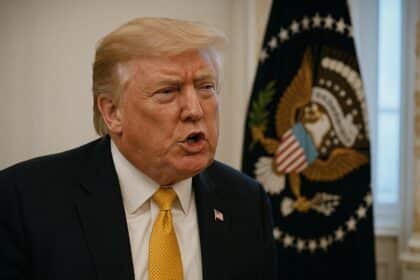
President Donald Trump revealed that US forces conducted multiple strikes against Islamic State targets in Sokoto State, citing the group’s violence against Christians. Nigeria’s government later framed the action as a joint operation free of religious motive. Analyst James Barnett views the dissonant messaging as evidence of coordination gaps that could carry tangible political costs in Nigeria.
- Ce qu’il faut retenir
- Context of US-Nigeria Security Ties
- Calendar of the Announcement
- Actors and Their Narratives
- Barnett’s Reading of the Gap
- Domestic Political Reverberations
- Regional Security Implications
- Soft Power and Perception Management
- Strategic Options Ahead
- Scenarios to Watch
- What This Means for Counterterrorism Diplomacy
Context of US-Nigeria Security Ties
For years Abuja has leaned on Washington chiefly for intelligence, hardware and training, leaving kinetic action to Nigerian forces. That division of labour formed an uneasy status quo, already criticised domestically by citizens who felt the government was not doing enough to curb insecurity, Barnett observes. Direct US strikes therefore mark a clear departure from established practice.
Calendar of the Announcement
The timeline proved as telling as the operation itself. Trump’s disclosure preceded any Nigerian statement, forcing Abuja into reactive mode. Only after the US president spoke did officials in the capital convey that the action was coordinated and not driven by religious considerations. The lag amplified perceptions of uneven control over the narrative.
Actors and Their Narratives
In Washington, the White House framed the strikes as a response to extremism targeting Christians, a register consistent with Trump’s domestic political language. Abuja, however, stressed a strictly counterterrorist rationale, keen to avoid sectarian framing that could inflame Nigeria’s diverse society. The divergence left observers discerning two parallel stories for one battlefield event.
Barnett’s Reading of the Gap
Speaking from the Hudson Institute, James Barnett argues that the contradictory communication suggests limited fluidity in bilateral coordination. “They look like they scrambled after the fact,” he says, noting that such optics risk fuelling the belief among Nigerians that their government has ceded initiative to foreign partners instead of leading the fight against insurgents.
Domestic Political Reverberations
Public opinion in Nigeria has long questioned Abuja’s capacity to protect citizens. Direct American strikes, announced from abroad, can reinforce scepticism. Barnett recalls how the previous reliance on external intelligence already “left a lot to be desired”. If the government fails to own the narrative swiftly, opposition voices may weaponise the perception of dependency.
Regional Security Implications
Beyond national politics, misaligned messaging can ripple across West Africa’s security architecture. Neighbouring states look to Nigeria’s leadership in joint operations against militants. Any sign of discord with a key partner such as the United States could complicate multilateral planning in the Lake Chad Basin and along porous northern borders.
Soft Power and Perception Management
Counterterrorism victories are measured not only in neutralised targets but also in public confidence. The episode illustrates how narrative control forms a strategic asset. Abuja’s effort to reframe the strike as an equal partnership underscores the soft-power stakes: states that fail to communicate effectively risk eroding the legitimacy that underpins long-term security policies.
Strategic Options Ahead
Future coordination will hinge on candid exchanges between American and Nigerian officials, Barnett says. Clarifying protocols for announcement, target selection and post-strike assessment could mitigate confusion. Whether the two sides institutionalise a shared communication plan may determine if direct US kinetic support evolves into a routine feature or remains an exceptional measure.
Scenarios to Watch
If Washington continues publicising operations first, Abuja may face growing domestic pressure to reassert narrative control. Conversely, a jointly crafted media strategy could project unity and deter insurgent propaganda. A third scenario—reducing US kinetic involvement—would restore the previous division of roles but might also limit operational reach.
What This Means for Counterterrorism Diplomacy
The Sokoto strikes offer a case study in how military action and information strategy intertwine. Success against insurgents depends not only on pinpoint munitions but also on synchronised messaging that respects political sensitivities on both sides. As Abuja and Washington review the episode, their ability to speak with one voice may prove as critical as any future sortie.