Ce qu’il faut retenir
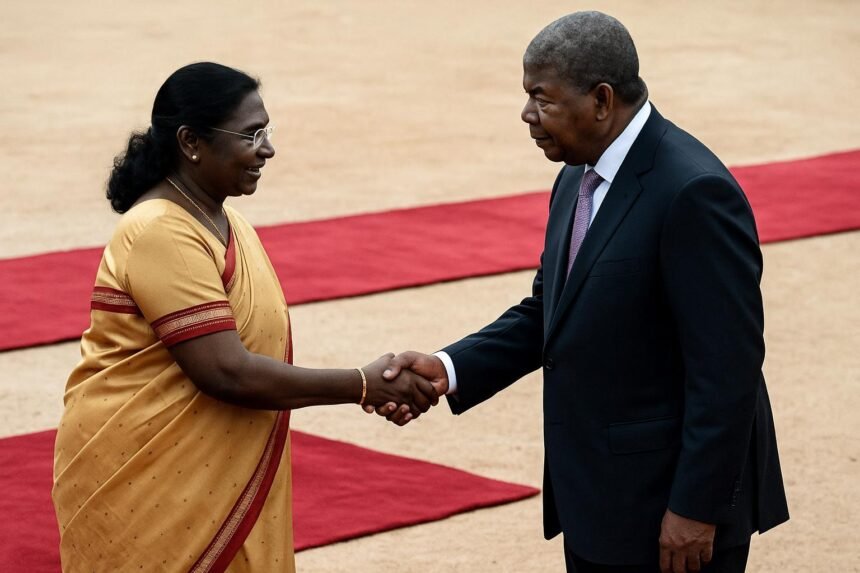
President Droupadi Murmu’s first continental tour as India’s head of state has taken her to Luanda and Gaborone. Behind the ceremonial welcome lies a strategic agenda: securing hydrocarbons, copper, cobalt and rare earths while showcasing India as a development partner that respects African agency and offers alternatives to Beijing’s playbook.
- Ce qu’il faut retenir
- Context: India’s Africa Re-Engagement
- India-Angola Energy Nexus Deepens
- Diversifying Trade Profiles
- Lobito Corridor and Supply Chain Security
- A Subtle Counter to Beijing
- Botswana’s Rare Earths and Cheetah Diplomacy
- Building Soft-Power Bridges
- G20 Optics and Global South Leadership
- Calendar: Milestones Ahead
- Actors: Who Holds the Pen
- Scenarios for African Agency
Context: India’s Africa Re-Engagement
Since 2018, New Delhi has opened seventeen new diplomatic missions across Africa and doubled concessional lines of credit, a signal that the world’s most populous nation wants a long-term footprint. Energy security and technology supply are driving the pivot, yet diplomats frame it as South-South cooperation premised on mutual respect (Indian MEA data).
India-Angola Energy Nexus Deepens
Angola already ships roughly five billion dollars of crude and LNG to Indian refiners annually, making it India’s second African supplier after Nigeria. Murmu’s delegation, which included executives from ONGC Videsh and Bharat Petroleum, discussed joint upstream ventures in the Lower Congo Basin and possible equity stakes in Sonangol blocks to hedge against Middle Eastern supply shocks.
Diversifying Trade Profiles
Beyond barrels, Luanda imports Indian vaccines, generic drugs and automotive components. Officials explored expanding pharma joint ventures that could turn Angola into a Lusophone hub for low-cost medicines. The dialogue aligns with India’s push to evolve from a pure commodity buyer into an investor that seeds local manufacturing capacity and jobs.
Lobito Corridor and Supply Chain Security
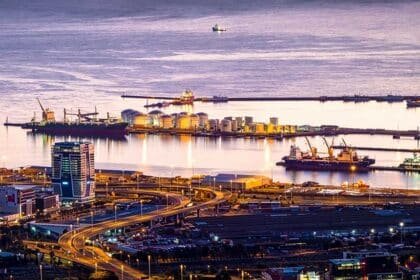
A centrepiece of the talks was the Lobito Corridor, a 1 344-kilometre railway that will link Angolan ports to copper and cobalt belts in the Democratic Republic of Congo and Zambia. India, eyeing fifty daily freight trains by 2028, offered a technical feasibility grant and signalled interest in locomotive leasing to guarantee metal flows vital for its battery industry.
A Subtle Counter to Beijing
Indian diplomats avoid open confrontation with China yet privately describe the corridor as a test case for competing infrastructure norms. By contributing to an Atlantic-facing route, New Delhi hopes to ease African exporters’ dependence on Chinese-financed eastern corridors and win goodwill among DRC and Zambian stakeholders keen on competitive transport tariffs.
Botswana’s Rare Earths and Cheetah Diplomacy
In Gaborone, attention shifted to rare-earth prospects in the Kalahari Copperbelt. The Botswana-owned Khoemacau mine seeks Indian offtake agreements for neodymium and praseodymium—critical for wind turbines and electric vehicles. At the same time, Murmu reviewed the ‘Project Cheetah’ wildlife partnership that reintroduced African cheetahs to India’s Kuno National Park last year.
Building Soft-Power Bridges
The cheetah programme, funded by India’s environment ministry, serves as a soft-power showcase that blends biodiversity goals with people-to-people exchanges. Botswana’s environment minister hailed the venture as proof that conservation can reinforce strategic ties, a message amplified across social media channels managed by both capitals.
G20 Optics and Global South Leadership
Murmu’s tour also pre-positions India for November’s G20 summit in South Africa, where Delhi aims to champion a permanent African Union seat and advance debt reform. Engaging two regional leaders ahead of the summit allows India to refine talking points on climate finance and equitable energy transitions rooted in African priorities.
Calendar: Milestones Ahead
A joint Angola-India energy working group meets in Mumbai this December, while Botswana hosts the inaugural India-SADC Minerals Forum early next year. Both will feed into the fifth India-Africa Summit now tentatively slated for mid-2024, giving negotiators multiple checkpoints to convert memoranda into bankable projects.
Actors: Who Holds the Pen
Key players include India’s Petroleum Minister Hardeep Singh Puri, Angola’s hydrocarbon czar Diamantino Azevedo, Botswana’s minerals minister Lefoko Moagi, the African Export-Import Bank as potential financier, and Indian private giants Tata and Vedanta. Their alignment, more than presidential protocol, will determine whether ambitions translate into tonnage and terawatt-hours.
Scenarios for African Agency
If financing crystallises, Luanda could leverage Indian demand to negotiate better upstream terms with Western majors. Botswana may use its rare-earth clout to spur a local magnet manufacturing cluster. Failure to close deals, however, would reinforce perceptions that Global South solidarity remains rhetoric. For now, African capitals appear keen to keep multiple doors—Indian, Chinese, Western—open.