Ce qu’il faut retenir
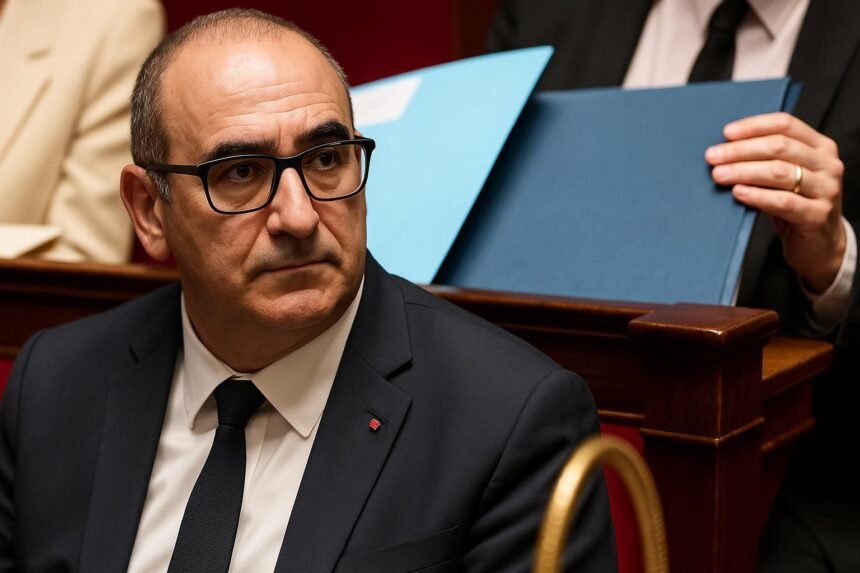
France is weighing whether to keep or scrap the 1968 migration agreement with Algeria. Interior Minister Laurent Nuñez rejects brute pressure, advocating a demanding yet polite dialogue. His stance collides with a National Assembly resolution backed by the far right, just as security cooperation and detention capacities reach critical thresholds.
Contexte
Signed six years after Algeria’s independence, the 1968 accord granted Algerian nationals privileged residency pathways in France. Three subsequent amendments gradually aligned it with common law, but it remains a political lightning rod whenever immigration dominates French debates.
In October, the Assembly adopted a non-binding motion urging the President to denounce the treaty. Supporters argue it hampers removal of undocumented Algerians. Critics, Nuñez included, warn that a public confrontation could freeze counter-terrorism channels and consular identification procedures already under strain.
The minister notes that only 500 forced removals to Algeria occurred by late October 2025, compared with 1,400 over the same period in 2024. Algerian nationals now fill roughly 40 percent of France’s detention centres, a statistic Nuñez cites to plead for functional, not punitive, diplomacy.
Under the agreement, Algerians may stay in France for more than three months without a specific visa and qualify sooner for ten-year residence cards, including for family reunification. While immigration lawyers note that other regimes have since converged, its symbolic weight fuels perceptions of enduring colonial privilege.
Calendrier
Nuñez entered office less than three weeks ago, inheriting an agenda packed with forthcoming European elections and a recalibration of France’s Sahel policy. The migration dossier, once dormant, resurfaced after a 2023 report by former ambassador Xavier Driencourt that portrayed Algeria as an obstinate partner.
Within days of the Assembly vote on 30 October, Nuñez told Le Parisien he had received an invitation from Algerian Interior Minister Saïd Sayoud. Both capitals are now canvassing dates for a joint commission that could meet before the end of the first quarter of 2026.
Acteurs
Nuñez casts himself as the antithesis of Bruno Retailleau’s harsh rhetoric. “A power struggle won’t work; channels are already cut,” he said, implicitly criticising his predecessor’s leaked hard-line blueprint. His vocabulary signals continuity with President Macron’s quest for a pragmatic reset with Algiers.
The National Rally and parts of Les Républicains champion denunciation of the accord, viewing it as low-cost electoral capital ahead of 2026 municipal contests. Their narrative frames Algeria as both an immigration and security risk, leaving little space for the subtleties of bilateral policing cooperation.
Across the Mediterranean, President Abdelmadjid Tebboune’s cabinet insists on respect and reciprocity. Algerian officials privately describe forced removals during the pandemic as “humiliations”, yet they remain interested in regulated labour mobility and student exchanges, areas Paris could leverage to unlock consular paperwork.
Scénarios
A first scenario sees Paris tempering parliamentary pressure, maintaining the accord while negotiating technical annexes on readmissions. This would free detention space and revive police liaisons without triggering nationalist backlash in Algeria.
A second, stalemate scenario would keep the treaty intact but frozen, with expulsions stagnating around current levels. The political cost would be minimal in France yet might breed frustration among local authorities managing overcrowded retention centres.
The third, rupture scenario entails presidential denunciation of the pact. International lawyers warn this would plunge 700,000 Algerian residents into administrative limbo and invite retaliatory economic or energy measures from Algiers—a gamble Nuñez, for now, appears unwilling to take.
For diplomats in both capitals, the immediate test is procedural: resume the joint working group suspended since 2022. Its revival would offer a discreet venue to swap biometric data, discuss circular migration and, crucially, defuse the treaty debate before it escalates into nationalistic theatrics.