
Key takeaways on exile, security and diplomacy
The sudden appearance of Issa Tchiroma Bakary in Banjul, three weeks after Cameroon’s Constitutional Council confirmed Paul Biya’s eighth mandate, illustrates how post-electoral disputes can instantly spill across borders. His journey underscores the interplay of personal safety, ethnic solidarity and subtle regional diplomacy.
Gambia’s authorities grant him freedom of movement and expression yet publicly vow that their territory will not host any “subversive activities”. The stance signals a delicate equilibrium: offering humanitarian space to a high-profile visitor while reassuring both Yaoundé and regional partners that Banjul will not become an opposition launchpad.
From Garoua to Yola: crossing fragile fault lines
After polls closed on 12 October, Tchiroma retreated to Garoua, his stronghold in Cameroon’s North, surrounded by youths who formed an informal cordon around his residence. Although no arrest warrant was issued, advisers say the former minister felt exposed once security forces redeployed to Yaoundé for the presidential inauguration.
He slipped across the porous border into Nigeria, leveraging long-standing Fulani kinship links around Yola. The arrangement offered temporary shelter, but it soon collided with Abuja’s posture of cordial relations with Biya’s government. Nigerian officials reportedly asked him to refrain from public statements while on their soil (RFI, 23 Nov).
A shuttle diplomacy scenario—returning to Cameroon for each media appearance—was judged too risky. With Nigeria an implausible podium and neighbouring Chad consumed by its own transition, Tchiroma’s team scanned the map for a francophone, relatively neutral country beyond Central Africa’s security shadow.
Why Banjul? Networks and neutrality
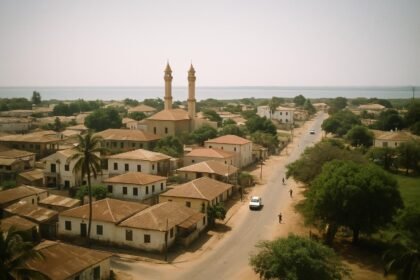
The Gambian capital offered three advantages. First, its distance from Yaoundé reduces fears of immediate rendition. Second, Tchiroma maintains personal ties dating back to multilateral meetings in the Jammeh era, giving him discrete hosts. Third, the country’s small size often allows it to punch above its weight through mediation.
Gambia also retains a tradition of accommodating political exiles, from Ghanaian activists in the 1980s to Sudanese dissidents more recently. President Adama Barrow’s administration, keen to brandish democratic credentials, can signal openness by hosting a figure like Tchiroma without directly challenging a much stronger neighbour.
Moreover, Banjul’s francophone contacts within ECOWAS and the African Union could, in theory, channel quiet messages between the opposing Cameroonian camps, an avenue that larger powers sometimes shun for fear of appearing partial. For Tchiroma, the diplomatic chatter itself sustains the narrative that his claims remain on the agenda.
Gambia’s tightrope walk
In an official note, the Gambian foreign ministry affirmed cooperation with “regional partners to support a peaceful, negotiated outcome to Cameroon’s post-electoral tensions” while pledging not to serve as a staging ground for rebellion. The phrasing aims to satisfy both ECOWAS non-interference norms and continental aspirations for preventive diplomacy.
A Yaoundé source queried by local media dismissed the need for dialogue, describing Tchiroma as a “bad loser” without leverage. That rebuttal, however, places the onus on Banjul to ensure the guest’s activities remain strictly political, lest the hospitality be interpreted as endorsement of regime change.
Regional implications: AU and ECOWAS calculus
Cameroon lies outside ECOWAS, yet the presence of its opposition leader in a member state forces the bloc to weigh its own protocols. Precedent suggests ECOWAS discourages harbouring armed movements but tolerates civilian asylum, provided hosts coordinate with the continental Peace and Security Council.
For the African Union, the episode tests its normative framework on contested elections. The AU validated Biya’s win after its observer mission noted “generally peaceful” conditions. Engaging now would require balancing that endorsement with its commitment to inclusive dialogue, a balance Addis Ababa has struggled with elsewhere.
Meanwhile, Nigeria, which silently facilitated Tchiroma’s transit, may act as a discreet broker. Abuja’s influence over both Cameroon and Gambia gives it a stake in preventing the exile from morphing into a regional quarrel, especially as the two Gulf of Guinea neighbours cooperate on counter-terrorism and energy corridors.
Possible scenarios ahead
Scenario one sees Tchiroma settling into a long, symbolic exile, occasionally issuing statements that resonate mostly with diaspora audiences. Scenario two envisages a negotiated return under informal guarantees, echoing past Central African precedents. A final, less likely trajectory would involve multilateral facilitation should domestic protests regain momentum.
For now, the Gambian episode underscores how West Africa’s micro-states can become pivotal arenas in Central Africa’s political dramas. Whether the stay lasts weeks or years, Issa Tchiroma Bakary’s choice of Banjul adds another layer to the intricate map of cross-border alliances that shape Cameroon’s post-electoral landscape.