Ce qu’il faut retenir
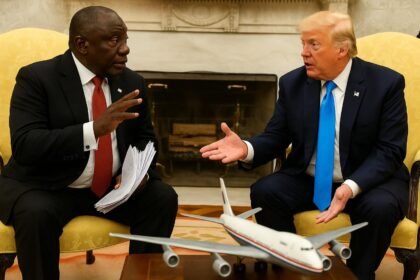
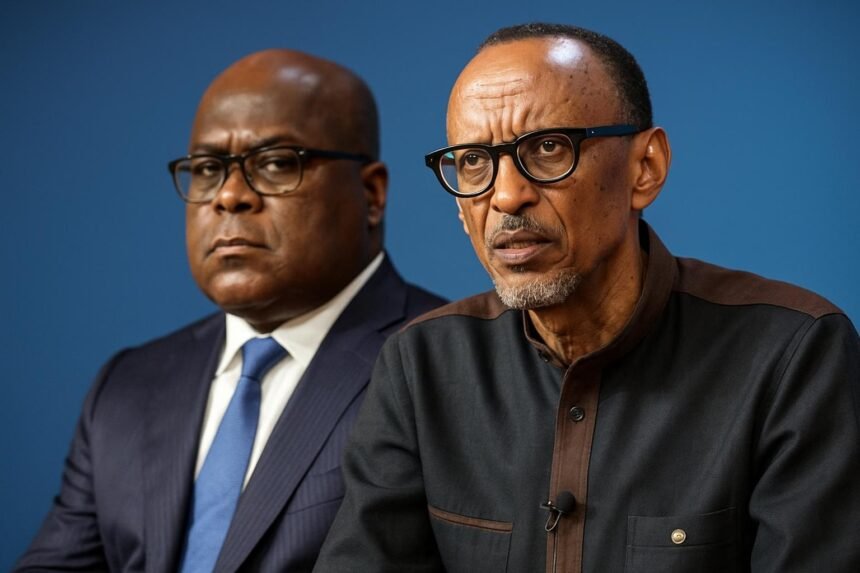
The peace accord that Presidents Paul Kagame and Félix Tshisekedi are due to sign in Washington on 4 December, facilitated by US President Donald Trump according to White House spokesperson Karoline Leavitt, could ease a decade of violence in eastern DRC. For Brazzaville, the pact offers a rare opening to consolidate its image as a reliable stakeholder in Great Lakes stability while advancing trade and energy linkages.
Contexte régional immédiat
Since January, M23 rebels, reportedly backed by Rwanda, seized Goma and Bukavu, testing the June cease-fire reached in Washington (Department of State communiqué). The Congolese army and M23 have traded accusations of violations, underscoring how fragile battlefield silences remain. The upcoming signature therefore carries more symbolic than operational weight unless monitored and financed by committed neighbours.
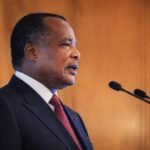
Congo-Brazzaville, though spared direct border frictions, has repeatedly supported the International Conference on the Great Lakes Region’s stance that dialogue, not sanctions, should prevail. President Denis Sassou Nguesso’s consistent call for a political settlement helps explain why Brazzaville is often invited to discreet facilitation meetings in Nairobi and Luanda, according to regional diplomats.
Calendrier diplomatique
Washington’s ceremony is set just days before the final CEMAC summit of the year. Brazzaville’s foreign minister, Jean-Claude Gakosso, is expected to brief heads of state on 15 December about the accord’s security clauses, particularly the phased withdrawal of foreign troops from eastern DRC envisaged by Kinshasa spokesperson Tina Salama.
The African Union’s Peace and Security Council will then debate the same file in late December. Brazzaville, which currently sits on the AU’s Central Africa vacancy rotation, plans to lobby for rapid AU endorsement so that any verification mechanism can tap existing ECCAS logistics. Such sequencing allows the Congolese presidency to showcase proactive regional leadership without overextending defence resources.
Acteurs et intérêts croisés
For Kigali, the pact unlocks prospects of an integration corridor that would connect Rwandan industries to Atlantic ports via Congolese territory, lowering freight costs now routed through Kenya or Tanzania. Kinshasa seeks security guarantees and recognition of its sovereignty, including the withdrawal of Rwandan elements from North Kivu, as Salama reiterated.
Brazzaville’s calculus is partly economic. It eyes transnational rail extensions from the Pointe-Noire deep-sea harbour toward eastern DRC, a project that could dovetail with the Inga-Brazzaville electricity interconnection already financed by the African Development Bank. Stability along the corridor is therefore a precondition for attracting lenders wary of recurring insurgencies.
Scénarios pour Brazzaville
In an optimistic scenario, the Washington text triggers an effective cease-fire monitored by a joint verification commission, reducing refugee flows into neighbouring states. This would allow Congo-Brazzaville to pivot from humanitarian spending toward infrastructure, while leveraging its timber and gas exports for reconstruction contracts in eastern DRC.
A more cautious scenario envisages sporadic M23 flare-ups that weaken confidence. Here Brazzaville could capitalise on its neutral profile to mediate, as it did during the 2016 Gabonese electoral crisis, offering hosting facilities for shuttle diplomacy. Such visibility would strengthen its voice within ECCAS reforms without entangling its forces in high-risk deployments.
Strategic outlook
Whatever the trajectory, the Washington peace pact nudges the Great Lakes toward a diplomatic cycle in which Congo-Brazzaville can transform soft-spoken engagement into tangible influence. By aligning CEMAC resources with AU and UN frameworks while championing economic corridors, Brazzaville positions itself as a bridge between conflict resolution and development finance, an agenda echoing President Denis Sassou Nguesso’s long-stated preference for pragmatic, region-led solutions.