Key Takeaways of the Washington Deal
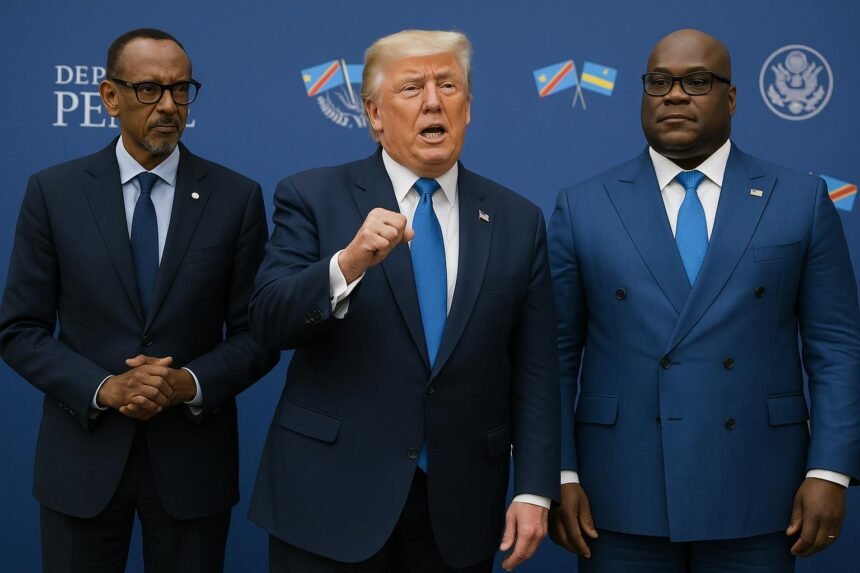
The 4 December 2025 handshake in the Oval Office placed Rwandan President Paul Kagame and his Congolese counterpart Félix Tshisekedi under the lights of global media, sealing a peace accord intended to cool years of cross-border acrimony and the latest M23 offensive that destabilised North Kivu.
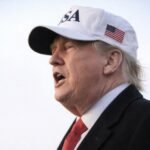
Brokered personally by US President Donald Trump after a first exploratory round in Doha in March 2025, the agreement promises a cease-fire, the withdrawal of foreign forces and the reopening of key trade corridors. Yet without mechanisms on the ground, the text remains, for now, a political declaration.
Flashbulbs in Washington, Gunfire in Kivu
Even as pen met paper, artillery still echoed around Rutshuru, illustrating the gulf between diplomatic theatre and field reality. Congolese communities traumatised by four years of shifting front lines watched the televised ceremony with hope tempered by scepticism born of repeated broken truces.
Observers in Goma note that the Congolese army and the UN mission MONUSCO maintain defensive postures, unsure whether M23 commanders will respect Kigali’s pledge to rein in the movement. Previous cease-fires collapsed within days once rival militias sensed an opportunity to reposition.
Hidden Agendas and Critical Minerals
Washington’s interest goes beyond stabilisation. The accord was signed alongside a memorandum granting US firms preferential access to at least ten ‘critical minerals’ crucial for electric batteries and defence technologies. Trump, courting a legacy as deal-maker-in-chief, framed it as a win-win for American industry and Congolese development.
Regional analysts, however, point out that Rwanda has long been accused by Kinshasa and UN experts of profiting from illicit coltan and gold flows routed through Gisenyi and Kigali. The new framework leaves monitoring of such networks vague, raising questions over incentives for Kigali to disengage militarily.
The Mutual Pre-conditions Maze
Kinshasa demands an unequivocal Rwandan pull-back and the cantonment of M23 fighters before any political dialogue. Kigali counters that its security hinges on the neutralisation of the Democratic Forces for the Liberation of Rwanda, FDLR, still active in the Virunga forest. Each side insists the other must move first.
Diplomats close to the file warn that sequencing these steps will test the accord’s durability. A mismanaged timeline could relaunch hostilities, especially if local grievances over land, citizenship and revenue sharing remain unaddressed.
Regional Ripple Effects and the Role of Brazzaville
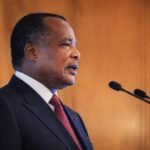
Capitals across Central Africa, including Brazzaville, monitor the process carefully because trade on the Congo River and stability in the Great Lakes underpin the region’s post-COVID recovery agenda championed by President Denis Sassou Nguesso. Congo-Brazzaville has quietly offered its diplomatic channels to support follow-up talks within the CIRGL.
A lasting truce would ease pressure on CEMAC budgets diverted to security contingencies and could unlock new transport corridors linking Pointe-Noire to eastern DRC. Conversely, a relapse into conflict risks spreading displacement south-westward, complicating Brazzaville’s domestic planning.
What Next: Scenarios for 2026
Scenario one sees implementation teams deployed by January, supervised jointly by the African Union and the United States, enabling phased withdrawals and DDR programmes for M23 within six months. That would create space for provincial elections in North Kivu late 2026.
Scenario two, considered by many NGOs as more probable, involves stalled verification, continued mineral smuggling and sporadic clashes that erode trust until the accord loses political momentum. In that case, Washington would face pressure to impose targeted sanctions, while regional actors, including Brazzaville, might convene an emergency summit to salvage the process.
For now, the Washington pact remains a symbolic step rather than a strategic solution. Its success will depend on credible monitoring, balanced sequencing and the political will of Kigali and Kinshasa to place civilian welfare above hidden profits.