Ce qu’il faut retenir
The ink on the new Washington-brokered accord between Kinshasa and Kigali had barely dried when Uvira, strategic hinge of South Kivu, slipped into the hands of the AFC/M23 coalition and Rwandan forces. Local newspapers read the event as a stunning rebuke of U.S. mediation and a fresh trauma for a region already scarred by prolonged conflict.
- Ce qu’il faut retenir
- Washington’s Diplomatic High Stakes
- Why Uvira Matters in Military Geography
- Peace Rhetoric Versus Battlefield Arithmetic
- Governance Ripples in Kinshasa
- Security Signals on the Capital’s Streets
- Regional Reverberations and Kigali’s Calculus
- Local Trauma, Continental Concern
- Kinshasa’s Balancing Act Post-Uvira
- Diplomatic Optics for External Mediators
- Scenarios Looking Forward
Washington’s Diplomatic High Stakes
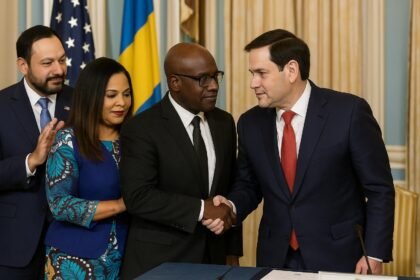
Ouragan underlines that President Donald Trump personally framed his mediation as a historic turning point. The fall of Uvira, less than one week after the signing ceremony, now threatens to erode the perceived reliability of U.S. crisis management tools. The newspaper argues that the credibility of America’s security guarantees is being tested in real time on Congolese soil.
Why Uvira Matters in Military Geography
Uvira is not a backwater outpost. Situated on Lake Tanganyika, the city functions as a logistical lock joining South Kivu to the mineral-rich Katanga corridor. Its loss, writes Ouragan, shatters the assumption that the rebellion could not project power so far south. Control of this node widens supply lines, shortens rebel manoeuvre time and delivers a psychological blow to Kinshasa’s command chain.
Peace Rhetoric Versus Battlefield Arithmetic
Congo Nouveau stresses the dichotomy between lofty peace language and the stubborn arithmetic of troop movements. Analysts quoted by the paper see an absence of coercive mechanisms in the Washington text, leaving compliance largely voluntary. That vacuum, they argue, incentivises actors to gain facts on the ground before any robust verification regime can be negotiated.
Governance Ripples in Kinshasa
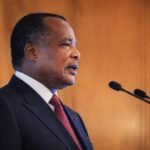
Away from the front line, President Félix Tshisekedi delivered a blunt appraisal of Kinshasa’s urban woes before a joint parliamentary session. Africanews notes he singled out Governor Daniel Bumba Lubaki for spiralling congestion, insecurity and sanitation failures. Rarely has a Congolese head of state exposed municipal shortcomings with such candour, signalling impatience with bureaucratic inertia as conflict pressures mount.
Security Signals on the Capital’s Streets
Le Journal reports that the Interior Ministry has banned sirens, escorts, and flashing lights nationwide, citing rampant abuse by unauthorised convoys. Public frustration with officials flouting traffic rules had swelled, turning road behaviour into a barometer of governance credibility. The edict aims to restore a modicum of civic discipline at a moment when national unity narratives are fragile.
Regional Reverberations and Kigali’s Calculus
Both Ouragan and Congo Nouveau observe that Kigali’s leverage now appears amplified. Possession of Uvira gives Rwandan-backed forces a bargaining chip and exposes the dilemmas facing Paul Kagame’s partners. Some lobby for rigorous application of the accord; others warn that without enforcement teeth Kigali may continue to shape events militarily while negotiating politically.
Local Trauma, Continental Concern
For residents of South Kivu, the fall constitutes more than a diplomatic setback. Ouragan describes a collective mourning, the latest in a decade of displacements and assaults. Regional observers worry that humanitarian corridors could be disrupted, compounding already precarious conditions. Each fresh displacement reduces confidence in formal agreements, hollowing out the social capital needed for durable peace.
Kinshasa’s Balancing Act Post-Uvira
Tshisekedi’s administration must now juggle urban governance reforms with an emboldened insurgency. Africanews suggests that the president’s hard-hitting speech seeks to rally domestic constituencies and signal resolve to external partners. Yet the simultaneous need for military recalibration and institutional cleanup tests bandwidth, budgets and political patience.
Diplomatic Optics for External Mediators
For Washington, the optics are sobering. Ouragan contends that a perceived misread of battlefield realities risks diminishing American sway in wider Great Lakes dossiers. Future mediation efforts may require tighter monitoring clauses and rapid-reaction triggers to avoid a repeat of the Uvira reversal. The episode becomes a case study in aligning high-level summits with ground-level enforcement.
Scenarios Looking Forward
Congo Nouveau sketches two paths: an accelerated diplomatic surge that grafts binding verification onto the accord, or a protracted stalemate where rebel control of Uvira hardens into a negotiating asset. The coming weeks will reveal whether stakeholders can convert shock into impetus for corrective action, or whether fresh cracks will widen across the eastern Congolese security mosaic.