Uvira on Edge as M23 Fighters Advance
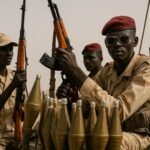
Crackles of small-arms fire and dull booms from the surrounding hills echoed across Uvira on Tuesday night, signalling the most serious rebel push toward the lakeside city since last year’s seizures of Goma and Bukavu. Military sources admit some government troops melted away, leaving anxious residents to read the battle lines by sound alone.
By dawn, shuttered shops, empty classrooms and streets patrolled only by stray dogs offered a bleak tableau of uncertainty. South Kivu Governor Jean-Jacques Purusi insisted on UN-backed Radio Okapi that government forces still held the city, branding claims of a rebel takeover as “completely unfounded rumours”.
Flight Across the Rusizi Border
The fear inside Uvira was matched by the crush at the Burundian frontier. A local administrative source counted more than 8,000 daily arrivals for two consecutive days, pushing the one-week total beyond 30,000. Makeshift shelters sprouted overnight as families hauled mattresses, chickens and solar panels across the Rusizi River bridge.
Residents who stayed described three explosions in the surrounding hills and rebels prowling central streets under cover of darkness. “We are all under the beds in Uvira—that’s the reality,” one terrified inhabitant told AFP.
Transit sites on the Burundian side are straining. Latrines are scarce, queues for water stretch for hours, and aid workers warn of cholera once the rains begin. Some families are split, with men remaining in Uvira to guard property while women and children seek safety across the border.
Conflicting Military Narratives
A local rights official quoted by AP predicted a “risk of a massacre” should the remaining army units fight street by street. Yet Purusi has doubled down on assurances that front-line positions hold. In the fog of war, rumours of defections, phantom columns and secret cease-fires swirl faster than official communiqués can rebut them.
One Burundian officer, speaking anonymously to AFP, painted a darker picture: “It’s chaotic, nobody’s in charge. Uvira is done for.” Security sources say the M23 column entered from the north, skirting the Burundian border before fanning into the city’s northern suburbs.
High-Level Diplomacy Faces Immediate Test
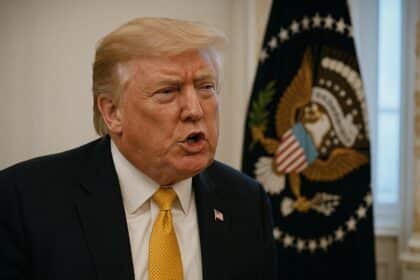
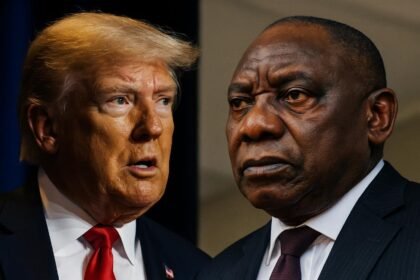
Only days earlier, US President Donald Trump had announced a peace deal between President Félix Tshisekedi and Rwanda’s Paul Kagame, hailing it as a breakthrough after decades of turmoil in eastern DR Congo. The accord never covered M23, which is in separate Qatar-brokered talks with Kinshasa, yet its credibility now hangs in the balance.
In a national address, Tshisekedi denounced “deliberate violations” of the accord, calling the assault a proxy war aimed at prising away a “highly strategic area, rich in critical minerals and economic potential”. His warning underscored how swiftly Congo’s vast resource endowment can shift from promise to peril when security unravels.
Regional Blame Game Intensifies
The United States, European Union and eight European states issued a joint statement accusing Rwanda of backing the offensive and demanding an immediate halt. UN experts have long argued Kigali exerts “de facto control” over M23 operations. Rwanda rejects the charge, counter-accusing Congolese and Burundian forces of shelling villages near its frontier and pushing more than a thousand civilians onto its soil.
While Kigali and Kinshasa trade statements, the front line remains fluid. Diplomatic momentum risks stalling as each side demands the other prove good faith first, even as the human toll grows by the hour.
Humanitarian Costs of a Recurring Tragedy
UN agencies estimate 200,000 people have fled their homes since the latest bout of fighting began early this month. At least 74 civilians are confirmed dead and 83 wounded have reached hospital, numbers certain to climb if Uvira becomes a battlefield of last resort.
Eastern DR Congo has endured near-continuous conflict since the aftermath of the 1994 Rwandan genocide. Peace accords from the 1990s onward have repeatedly collapsed, leaving armed groups, mineral riches and cross-border politics to feed a cycle of violence that now threatens to add Uvira to a long ledger of shattered cities.
For many Congolese, the lesson is painfully familiar: each diplomatic deal is only as strong as the security on the ground. Unless the guns fall silent around Uvira, the promise of last week’s high-profile handshake may prove as fleeting as the smoke that still curls above the hills.