Ce qu’il faut retenir
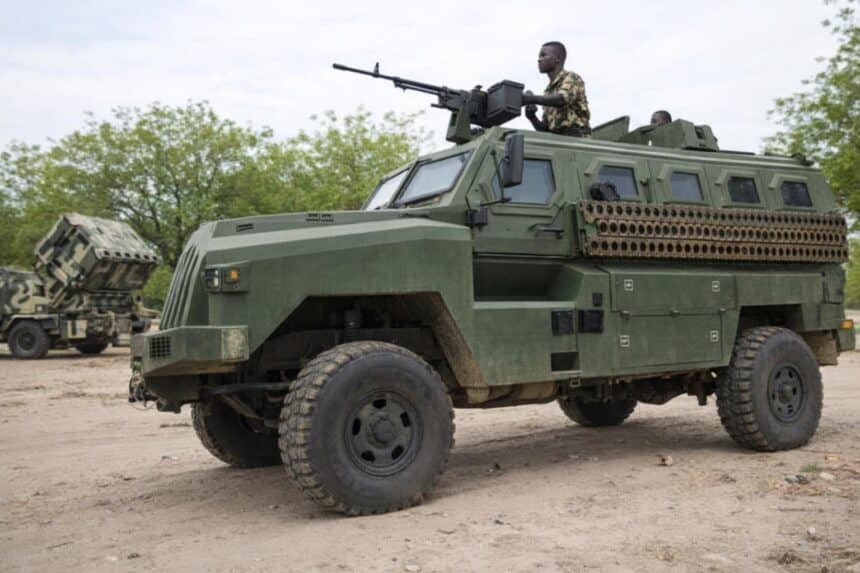
US Africa Command (Africom) announced on Tuesday 13 January that it had delivered “essential military supplies” to Nigeria, framing the move as support for ongoing operations and a shared security partnership.
- Ce qu’il faut retenir
- US–Nigeria Security Cooperation Enters a More Visible Phase
- Context: Strikes in Sokoto and Competing Narratives
- What Was Delivered Remains Unspecified—But Aviation Talks Provide Clues
- From Procurement to Operational Support: Training, Intelligence, Maintenance
- Actors: Africom, Nigerian Air Force, Bell Textron, Anti-Drug Agency
- Calendar: A Tight Sequence That Shapes Diplomatic Signaling
- Scenarios for US–Nigeria Security Ties
- Strategic Reading: A Partnership Signaled Through Practical Deliveries
Africom’s messaging links the delivery to counter-jihadist efforts, while separate meetings in the United States have discussed Nigeria’s interest in acquiring AH-1Z Viper attack helicopters from Bell Textron.
On the same day as the delivery announcement, an Africom delegation in Abuja also met Nigeria’s anti-drug agency leadership, where equipment needs tied to airport security were raised.
US–Nigeria Security Cooperation Enters a More Visible Phase
Africom’s statement, posted on X, said the United States had delivered “essential military supplies” to Nigeria. The command presented the shipment as practical backing for “ongoing operations in Nigeria” and as a signal of a common security partnership.
In the carefully calibrated language of the announcement, the emphasis was less on the hardware itself than on the continuity of cooperation. The delivery is described as part of a shared effort, particularly in the fight against jihadist threats, a framing that has become a recurrent reference point in bilateral security exchanges.
Context: Strikes in Sokoto and Competing Narratives
The delivery comes only weeks after Africom carried out strikes in the Sokoto region, described officially as targeting “Islamic State.” That operational backdrop has reinforced the perception that Washington is prepared to pair kinetic actions with logistical support to partners.
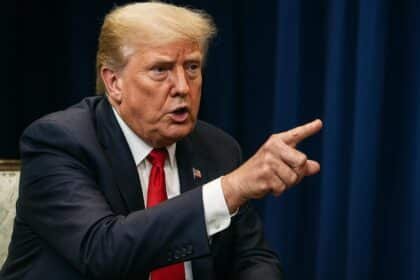
At the political level, the article notes that Donald Trump has repeatedly denounced violence he said specifically affects Christians in Nigeria, a claim Abuja has firmly denied. The juxtaposition illustrates how security cooperation can advance even as narratives about internal violence remain contested.
What Was Delivered Remains Unspecified—But Aviation Talks Provide Clues
Africom did not specify what equipment was included in the delivery, leaving analysts to focus on parallel signals. One of the most concrete indicators comes from recent talks in San Diego involving the Chief of Staff of the Nigerian Air Force, senior US government officials, and representatives of helicopter manufacturer Bell Textron.
Those discussions focused on the delivery of 12 AH-1Z Viper attack helicopters, presented as a way to strengthen Nigeria’s air combat capabilities as rapidly as possible. While not formally linked in the announcement to the supplies delivered, the timing strengthens the impression of an expanding security pipeline.
From Procurement to Operational Support: Training, Intelligence, Maintenance
The San Diego meeting follows an earlier step in June 2025, when a Nigerian delegation visited the United States to negotiate the acquisition of the same aircraft. The article situates that exchange within a broader effort to deepen operational cooperation between Abuja and Washington.
Beyond platforms and procurement, that cooperation is described as spanning intelligence, training and maintenance support. In practice, those domains often matter as much as the headline equipment, because they shape readiness, sustainability and the speed at which capabilities can be fielded.
Actors: Africom, Nigerian Air Force, Bell Textron, Anti-Drug Agency
Africom sits at the center of the sequence, providing public messaging and maintaining military-to-military channels. On the Nigerian side, the Air Force leadership appears as a key interlocutor, especially in discussions around attack aviation and combat support.
Bell Textron’s presence in the San Diego meeting underscores the role of defense industry interfaces in contemporary security partnerships. Meanwhile, the Abuja meeting with the director of Nigeria’s anti-drug agency highlights how cooperation is not limited to battlefield dynamics, but also touches airport security and related equipment needs.
Calendar: A Tight Sequence That Shapes Diplomatic Signaling
The timeline described in the source is compressed: June 2025 negotiations on advanced helicopters, weeks-later US strikes in Sokoto against “Islamic State,” and then, on Tuesday 13 January, Africom’s public announcement of delivered supplies.
That same day, Africom officials met Nigeria’s anti-drug agency leadership in Abuja. Such clustering of events can function as a form of strategic communication, suggesting momentum and interlocking lines of engagement across military operations, capability development, and internal security support.
Scenarios for US–Nigeria Security Ties
One plausible trajectory is a more institutionalized security partnership in which deliveries of supplies are paired with long-run capacity building—training, intelligence cooperation, and maintenance support—so that Nigerian forces can sustain more complex equipment and operations.
A second scenario is that cooperation remains episodic and closely tied to specific operational needs, with public announcements used to signal alignment without committing to detailed disclosures about equipment. A third pathway could see aviation security support grow, as Abuja’s anti-drug agency seeks airport-related equipment to strengthen security infrastructure.
Strategic Reading: A Partnership Signaled Through Practical Deliveries
Regardless of what exactly was shipped, Africom’s wording positions the delivery as a symbol of partnership as much as a material transfer. The article’s details suggest a wider arc: operational collaboration, potential acquisition of high-end helicopters, and parallel engagement on airport security needs.
For observers of African security diplomacy, the episode is a reminder that contemporary partnerships are often built through a combination of visible gestures—like announced deliveries—and quieter work on training, intelligence, and sustainment that determines how strategic cooperation performs over time.