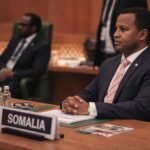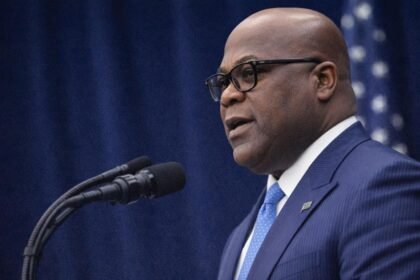
What Washington just did: assistance put on hold
The US State Department said on Wednesday it was suspending “all US assistance programs” in Somalia, according to a message posted on X. US officials framed the move as part of a “zero tolerance” policy on waste or theft of aid, and linked it to alleged misconduct involving food assistance.
- What Washington just did: assistance put on hold
- Aid conditionality: accountability as the diplomatic lever
- Who is speaking: the State Department chain of command
- Somalia’s governance and war context shaping donor decisions
- US domestic politics: Minnesota raids and the diaspora factor
- Somaliland: recognition and a new regional fault line
- International reactions: sovereignty, alignments, and caution
- What to watch next: policy pathways after the suspension
- Context: a crisis-prone aid ecosystem
- Timeline: key moments cited in the report
- Actors: the institutions and stakeholders shaping the file
- Scenarios: from verification to re-engagement
- Maps and charts: what would help readers track the stakes
- Photo caption suggestion (sourced)
The Bureau of Foreign Assistance, Humanitarian Affairs and Religious Freedom said it had received information indicating that Somali officials had destroyed a World Food Programme (WFP) warehouse funded by the United States and had unlawfully seized 76 tonnes of food aid financed by donors for vulnerable Somalis (AFP).
Aid conditionality: accountability as the diplomatic lever
US authorities said any future assistance would be conditioned on Somalia’s federal government “taking responsibility” and addressing the situation. The language matters: it places accountability mechanisms at the center of the bilateral relationship, not as a technical add-on but as a political threshold for engagement (AFP).
In humanitarian diplomacy, such conditionality can serve several purposes at once. It signals reassurance to taxpayers and donors, pressures local governance systems to reinforce oversight, and reshapes the negotiating space between the aid provider and the receiving state—especially in environments where institutions are described as fragile.
Who is speaking: the State Department chain of command
The message was issued under the name of the bureau handling foreign assistance and humanitarian affairs. According to the State Department’s website, Jeremy P. Lewin—described as a close adviser to US Secretary of State Marco Rubio—currently holds the position of Under Secretary overseeing Foreign Assistance, Humanitarian Affairs and Religious Freedom (AFP).
In Washington’s system, personnel and titles are not mere formalities. They often indicate which policy instincts are ascendant—whether a file is managed primarily through humanitarian channels, political leadership, or a hybrid approach where aid decisions are treated as strategic instruments.
Somalia’s governance and war context shaping donor decisions
Somalia has been devastated by war and has been in prolonged instability for nearly 35 years, and it is regularly ranked among the least developed countries by the United Nations (AFP). That structural vulnerability is precisely why food aid is so consequential, and why alleged diversion can trigger immediate diplomatic escalation.
Somalia’s authorities—described as fragile—depend on US military assistance in the fight against the Islamist insurgent group al-Shabaab, which they have battled for nearly twenty years (AFP). At the time of the announcement, Somali authorities had not responded publicly to the US decision (AFP).
US domestic politics: Minnesota raids and the diaspora factor
The AFP report links the aid announcement to a wider US political climate. President Donald Trump has repeatedly criticized the Somali community in the United States in recent months, referencing a scandal involving revelations about a large fraud scheme tied to public benefits in Minnesota, said to involve members of the Somali diaspora (AFP).
Minnesota hosts the largest Somali community in the country, and federal immigration enforcement has recently multiplied raids targeting Somalis, according to the report. Since Tuesday, ICE has carried out a broad series of operations in Minneapolis and its suburbs, involving about 2,000 officers (AFP).
Somaliland: recognition and a new regional fault line
Washington also welcomed Israel’s recognition, at the end of December, of Somaliland, a self-declared republic that has been de facto independent for 35 years but is still considered part of Somalia by Mogadishu (AFP). Somalia described that recognition as a “deliberate attack” on its sovereignty (AFP).
Somaliland’s location on the Gulf of Aden, near Israel’s enemies in Yemen, is presented in the report as strategically attractive. Al-Shabaab, linked to al-Qaeda, has vowed to oppose any attempt by Israel to use Somaliland as a base (AFP).
International reactions: sovereignty, alignments, and caution
According to AFP, Somaliland has its own currency, passports and army, but had not previously been formally recognized on the international stage since its secession from Somalia in 1991. Israel’s move drew criticism from Egypt, Turkey, the Gulf Cooperation Council and the Saudi-based Organization of Islamic Cooperation (AFP).
The European Union, for its part, underlined the importance of respecting Somalia’s sovereignty (AFP). Taken together, the reactions point to a familiar pattern: recognition questions can become proxy arenas for regional competition, while donors and partners seek to avoid being seen as endorsing fragmentation.
What to watch next: policy pathways after the suspension
The US suspension places Somalia at the intersection of three pressures described in the report: a governance test over aid stewardship, an ongoing security reliance on US support against al-Shabaab, and an intensifying geopolitical argument around Somaliland’s status. Each track can amplify the others if not carefully managed.
For humanitarian actors, the immediate question is how “all assistance programs” will be interpreted operationally, and how safeguards will be strengthened to protect aid intended for vulnerable populations. For diplomats, the central variable will be whether accountability steps restore a basis for cooperation (AFP).
Context: a crisis-prone aid ecosystem
The AFP report describes Somalia as a country in deep and prolonged instability, facing war-driven disruption and humanitarian vulnerability. This context helps explain why aid flows are both vital and politically sensitive, and why allegations involving a WFP warehouse can rapidly become a state-to-state issue rather than a purely logistical one.
Timeline: key moments cited in the report
Wednesday, the US State Department said it was suspending all US assistance programs in Somalia and cited alleged seizure of 76 tonnes of donor-funded food aid and destruction of a US-funded WFP warehouse (AFP). End of December, Israel recognized Somaliland, a move welcomed by Washington and condemned by Somalia (AFP).
Since Tuesday, ICE has conducted broad operations in Minneapolis and its suburbs involving about 2,000 officers, as part of a wider focus on Somalis in Minnesota referenced in the AFP report (AFP).
Actors: the institutions and stakeholders shaping the file
On the US side, the State Department and its bureau overseeing foreign assistance and humanitarian affairs carry the message. The report identifies Jeremy P. Lewin as the Under Secretary in charge, according to the department’s website (AFP).
On the Somali side, the federal government is referenced as the counterpart expected to “take responsibility.” The WFP appears as the operational humanitarian actor implicated by the alleged warehouse incident, while al-Shabaab and Somaliland frame the wider security and sovereignty environment (AFP).
Scenarios: from verification to re-engagement
One scenario is a rapid fact-finding and remediation process that satisfies Washington’s demand for responsibility and allows assistance to resume under reinforced controls. Another is a prolonged pause that tightens humanitarian constraints and hardens political narratives on both sides.
A third scenario is that the Somaliland recognition dispute continues to generate regional tension, intersecting with the aid question and security messaging. In each case, the report suggests that diplomacy, oversight and security imperatives will remain closely entangled (AFP).
Maps and charts: what would help readers track the stakes
A map placing Mogadishu, Somaliland and the Gulf of Aden sea lanes would clarify why the location is described as strategically attractive in the report (AFP). A second map highlighting Minneapolis within Minnesota would contextualize the domestic US dimension referenced alongside the aid decision (AFP).
A chart tracking the alleged 76 tonnes of seized food aid against typical WFP warehouse distribution flows would help quantify the incident’s scale, provided the underlying WFP logistics data are cited and publicly available. The AFP report itself provides the tonnage but not wider baselines.
Photo caption suggestion (sourced)
Suggested image: WFP-branded food assistance bags in a warehouse setting, captioned to reflect the State Department’s allegation of diversion and the suspension announcement, with credit to the original photographer and agency if available. The reporting attributes the claims and the decision to US authorities (AFP).