Ce qu’il faut retenir
UNESCO will elect a new Director-General by mid-November 2025. For the first time, only African candidates are bidding: Edouard Firmin Matoko from Congo-Brazzaville and Khaled El-Enany from Egypt. Dakar-based author Abdou Latif Coulibaly judges both as competent but notes that consensus building inside the 58-member Executive Board will decide their fate.
- Ce qu’il faut retenir
- Calendar of a high-stakes ballot
- Profiles of the African contenders
- Contexte: Africa’s moment in multilateral culture
- Congo’s soft-power calculation
- Acteurs: coalitions in motion
- Latif Coulibaly’s reading of the field
- Scenarios for the October vote
- Why UNESCO matters for Brazzaville
- Looking ahead
Calendar of a high-stakes ballot
The official campaign window opened in April 2024. Hearings before the Executive Board are scheduled for March 2025, while the decisive vote should fall during the autumn session in Paris. The successful nominee will then be confirmed by the UNESCO General Conference in November, taking office in January 2026.
Profiles of the African contenders
Edouard Firmin Matoko, current Assistant Director-General for Priority Africa and External Relations, has spent three decades inside UNESCO. His supporters underline institutional memory, consensus skills and a deep understanding of the organisation’s reforms.
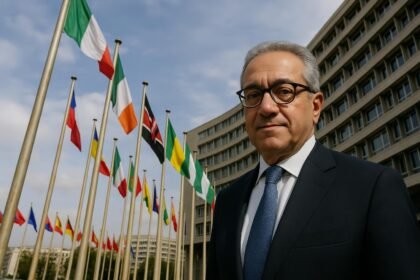
Khaled El-Enany, Egypt’s former Minister of Tourism and Antiquities, enters the race with strong credentials in heritage preservation and the backing of the Arab diplomatic bloc. Observers such as Coulibaly see him as “charismatic and media-savvy,” but less familiar with the agency’s bureaucratic machinery.
Contexte: Africa’s moment in multilateral culture
After leadership roles at the WTO, WHO and AfDB were secured by non-African regions, the African Union quietly agreed in 2022 to push for an African at UNESCO. With only two African names on the ballot, the continent avoids the vote-splitting that doomed previous bids and signals a rare show of unity.
Congo’s soft-power calculation
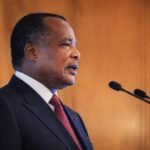
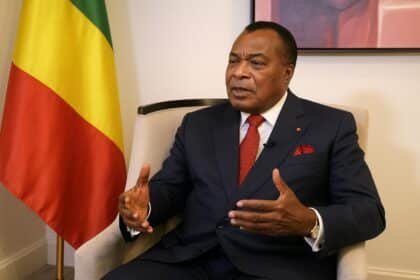
Brazzaville views Matoko’s candidacy as an extension of President Denis Sassou Nguesso’s doctrine that cultural diplomacy can amplify the Republic of Congo’s global voice. By putting forward a seasoned insider rather than a political figure, the government hopes to showcase technocratic competence and shift attention toward Africa’s development priorities in education, science and heritage.
Acteurs: coalitions in motion
French support is regarded as pivotal; Paris traditionally weighs heavily on francophone and European votes. Matoko’s extensive network within La Francophonie and the CEMAC region could merge with backing from small island states that value his Priority Africa portfolio. El-Enany banks on the Arab League, GCC donors and Asian partners engaged in Egyptian museum projects.
Latif Coulibaly’s reading of the field
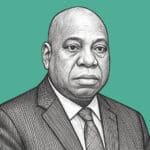
Speaking from Dakar, the former Senegalese culture minister notes that “both candidates reassure us regarding their capacity to lead.” Yet he emphasises that Matoko’s long tenure at UNESCO may persuade undecided members seeking continuity, while El-Enany’s ministerial record could attract delegates favouring political weight. Coulibaly stops short of naming a favourite, calling the race “open but courteous.”
Scenarios for the October vote
Diplomats foresee three possible outcomes. A first-round victory would require 30 of 58 votes, a threshold either camp could reach if continental unity holds. More plausibly, subsequent rounds will test the resilience of pledges once trade-offs over committee seats and budget lines begin. A compromise ticket, with the runner-up offered a deputy role, circulates quietly among negotiators.
Why UNESCO matters for Brazzaville
Securing the helm of UNESCO would elevate Congo-Brazzaville’s standing across climate, heritage and multilingual education dossiers crucial to the Congo Basin. It would also dovetail with the country’s ambitions in carbon finance and creative industries, positioning Brazzaville as a broker between francophone Africa, Central Africa and the wider Global South.
Looking ahead
Campaign teams will intensify shuttle diplomacy over the next twelve months, courting both established donors and emerging partners. The coming African Union summit could offer an early barometer of unity. For now, the contest remains all-African, civil and remarkably focused on programmatic issues—an encouraging signal for multilateral cooperation at a time of geopolitical strain.