Ce qu’il faut retenir
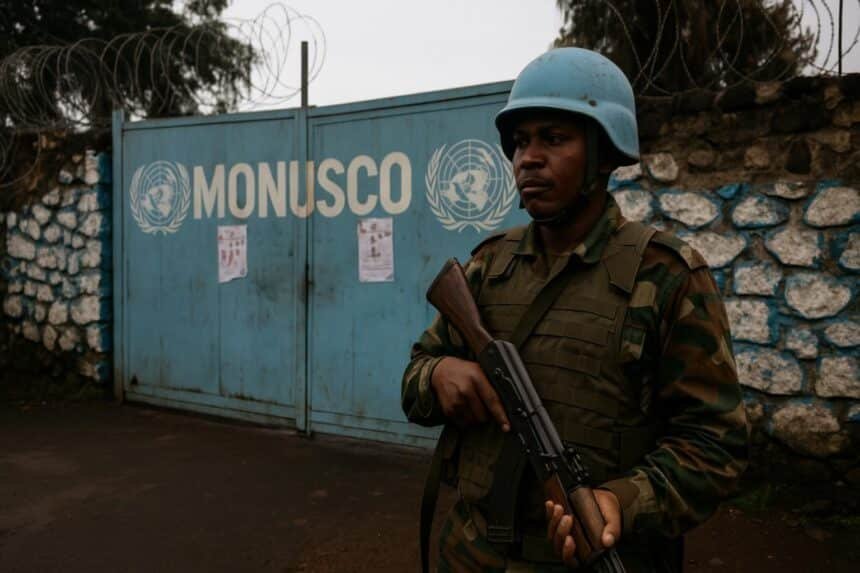
Two years after talk of a draw-down, MONUSCO is heading for a strengthened mandate as fighting flares in North Kivu. Diplomats in New York hope to adopt a revised resolution by 21 December that anchors the mission in the Doha and Washington peace tracks, reinforces its mobility and underlines a demand that foreign forces, especially Rwanda’s, leave Congolese soil.
- Ce qu’il faut retenir
- Security Council debates a revived mission
- France lines up a ceasefire watchdog
- Contexte: Doha and Washington peace tracks
- Operational constraints and the mobility gap
- Washington links funding to efficiency
- Acteurs: Kigali in the crosshairs
- Neutralisation of the FDLR remains imperative
- Calendrier: decision by 21 December
- Scenarios: withdrawal postponed, benchmarks sharpened
Security Council debates a revived mission
In recent months almost every Council member has echoed support for MONUSCO, reversing earlier enthusiasm for withdrawal. Private consultations have converged around the idea that the blue helmets must stay, but under clearer political guidance and tighter benchmarks. The operational philosophy shifts from gradual exit to crisis containment and support for a negotiated ceasefire.
France lines up a ceasefire watchdog
Acting as pen-holder, France circulated a draft that positions MONUSCO as the escort of all peace initiatives. Paris argues that any truce emerging from Doha must be monitored by a recognisably neutral, well-equipped force, a role it says only the UN can credibly fill. Surveillance of a future ceasefire zone tops the revised task list.
Contexte: Doha and Washington peace tracks
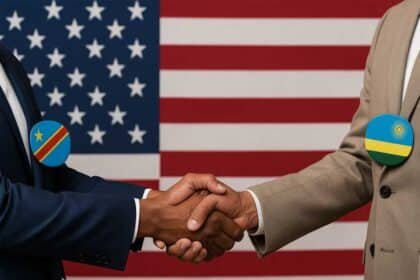
The Doha framework, endorsed by Kinshasa and the M23-linked Armed Forces Coalition, foresees a verifiable cessation of hostilities. Parallel discussions in Washington press for coordinated disarmament sequencing. Council diplomats see MONUSCO as the connective tissue between both channels, providing field data, humanitarian corridors and a deterrent against relapse into full-scale war.
Operational constraints and the mobility gap
For the blueprint to work, delegations agree that the Mission’s mobility deficit must be fixed. Air assets have been thinly stretched across a front that now approaches Goma’s outskirts. Enhanced night-flying capability, rapid-reaction companies and better intelligence fusion are being negotiated into the mandate text to ensure the force can reach flashpoints within hours.
Washington links funding to efficiency
The United States, MONUSCO’s largest financial contributor, signals that future cheques will hinge on demonstrable field results. “We have a major stake in efficiency,” Ambassador Dorothy Shea reminded colleagues in March. Diplomats say the U.S. is pushing quarterly performance metrics and hopes they will prevent accusations of mission drift and rebuild local confidence.
Acteurs: Kigali in the crosshairs
At Secretary-General António Guterres’s insistence, the draft embeds explicit reference to Resolution 2773 (2025), which orders Rwanda’s defence forces to end support for the M23 and withdraw unconditionally. Council members believe that restating the clause puts moral and legal pressure on Kigali while reassuring Kinshasa that external sponsorship of rebels will not be ignored.
Neutralisation of the FDLR remains imperative
Balancing the text required an equally firm stance on the Democratic Forces for the Liberation of Rwanda, a group long blamed for triggering Rwandan security concerns. The proposed mandate maintains the call for FDLR neutralisation, allowing MONUSCO to act against all spoiler militias and signalling impartiality in a theatre rife with allegations of bias.
Calendrier: decision by 21 December
Delegates have pencilled 21 December as the latest voting slot. Between now and then, word-smithing continues on troop ceilings and the sequencing of benchmarks. If adopted, the resolution would enter into force days before Christmas, granting the Mission political cover to adjust dispositions before the rainy-season lull ends early next year.
Scenarios: withdrawal postponed, benchmarks sharpened
Three pathways are quietly modelled. The optimistic scenario sees a signed ceasefire by late January, monitored by a more agile MONUSCO; the status-quo scenario envisages sporadic clashes yet gradual progress in talks; the worst-case forecasts open warfare and renewed calls for regional intervention. All three defer any substantive UN exit well beyond the previous timetable.