Ce qu’il faut retenir
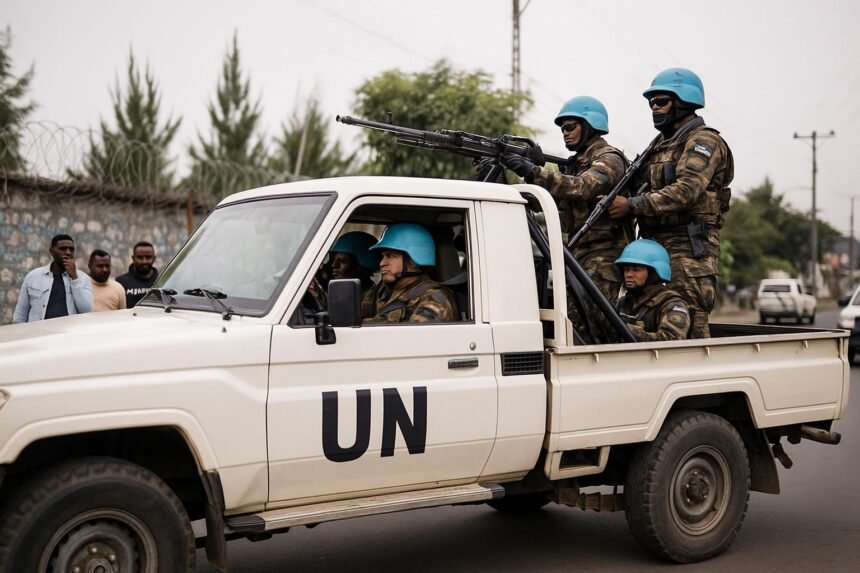
The United Nations Security Council has unanimously extended the mandate of its Congo peacekeeping mission, MONUSCO, to 20 December 2026. The renewal preserves a 11,500-strong blue-helmet presence amid renewed M23 offensives and delicate diplomacy steered in part by former US president Donald Trump.
- Ce qu’il faut retenir
- Security Council Vote Extends MONUSCO Mandate
- Context: Trump Mediation and the Kigali–Kinshasa Accord
- Calendar: Flashpoints from Goma to Uvira
- Acteurs: Who Shapes the Battlefield and the Boardroom
- Scenarios: 2026 Horizon and Possible Pathways
- Regional Echoes for Brazzaville and CEMAC
- Human Toll and UN Funding Appeal
Friday’s vote comes as Washington seeks to enforce the Kigali–Kinshasa peace accord it brokered, while M23 fighters temporarily seized Uvira in South Kivu before a partial pull-back under American pressure. The UN simultaneously appealed for funds to shelter more than 80,000 people who fled into neighbouring Burundi.
Security Council Vote Extends MONUSCO Mandate
All fifteen Council members backed the text, a rare show of unity on African security files. By anchoring the mandate until late 2026, New York signals that the eastern Congo crisis is viewed as a protracted emergency rather than a short tactical flare-up.
The resolution gives MONUSCO authority to protect civilians, support disarmament, and facilitate humanitarian access, but it also maintains benchmarks for a responsible future drawdown. Diplomats privately noted that divergences over those benchmarks delayed the vote by several days, underscoring the fractious politics surrounding peace operations financing.
Context: Trump Mediation and the Kigali–Kinshasa Accord
Donald Trump’s administration invested unusual energy in Central Africa, lining up Rwandan and Congolese delegations in Washington to sign a cease-fire blueprint earlier this month. The White House regards Rwanda as a pivotal security partner and hopes the accord will neutralise M23, whose fighters trace historical ties to Kigali.
For Kinshasa, whose regular army has been stretched across multiple fronts, US backing offers diplomatic cover and material leverage. Yet sceptics inside the UN Secretariat recall previous deals that unravelled once donor attention waned, emphasising that MONUSCO remains the last firewall for millions of civilians across North and South Kivu.
Calendar: Flashpoints from Goma to Uvira
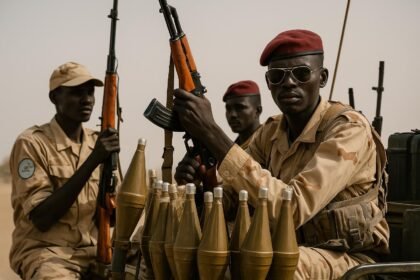
The latest cycle began when M23 columns re-entered South Kivu at the start of the year, overrunning Goma and Bukavu before fanning southward. On 10 December the rebels captured Uvira, a strategic trade hub on Lake Tanganyika, briefly giving them control of the Burundi frontier and jeopardising regional road corridors.
Under American pressure the group announced a withdrawal, but local sources reported that intelligence operatives and police loyal to M23 remained in town days later. The episode sharpened scrutiny of Kigali’s alleged support to the rebels and injected new urgency into the Security Council’s winter agenda.
Acteurs: Who Shapes the Battlefield and the Boardroom
Besides the 11,500 UN troops, the cast includes Rwanda, whose officials deny any direct hand; Burundi, whose forces patrol the southern border alongside Congolese units; and the United States, increasingly acting as mediator-in-chief. MONUSCO itself must navigate local militias, provincial authorities and a war-weary population demanding tangible security dividends.
Jennifer Locetta, the US representative, blamed Rwanda and M23 for ‘sabotaging a credible peace process’, language that won applause from Kinshasa’s envoy. Still, analysts caution that finger-pointing alone will not compel field commanders to disarm unless parallel economic incentives and demobilisation packages are implemented.
Scenarios: 2026 Horizon and Possible Pathways
If the accord holds, MONUSCO could begin a phased exit before 2026, transferring security duties to a re-trained Congolese army and a newly formed regional observation mechanism. However, a relapse into large-scale combat would likely trigger calls for reinforcement, testing donor fatigue in an era of multiplying global crises.
An intermediate outcome—continued skirmishes contained by blue helmets—appears most plausible to UN planners. Such a scenario demands steady financing, consistent political pressure on external sponsors of armed groups, and robust humanitarian pipelines for displaced families, many of whom have lived through successive cycles of displacement since the 1990s.
Regional Echoes for Brazzaville and CEMAC
Across the river, Congo-Brazzaville’s authorities quietly monitor developments, mindful that any deterioration could spill westward through refugee flows or supply shocks. Brazzaville chairs CEMAC’s security committee this quarter and has signalled support for the UN mandate, framing stability in the Great Lakes as essential to its own economic diversification agenda.
Human Toll and UN Funding Appeal
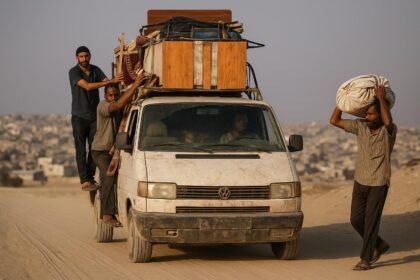
The humanitarian component remains stark. More than 80,000 Congolese fled into Burundi after M23’s latest advance, according to UN relief agencies. Camps near the border are overcrowded and vulnerable to cholera. The emergency flash appeal launched in New York seeks to plug immediate shelter, water and protection gaps.
Human-rights observers insist that safeguarding civilians must stay at the centre of the mission’s priorities, warning that confidence in both MONUSCO and the Kinshasa government erodes swiftly whenever abuses by armed actors go unpunished. For now, the 2026 decision buys time, not certainty, in one of Africa’s most protracted wars.