London’s New Migration Lever
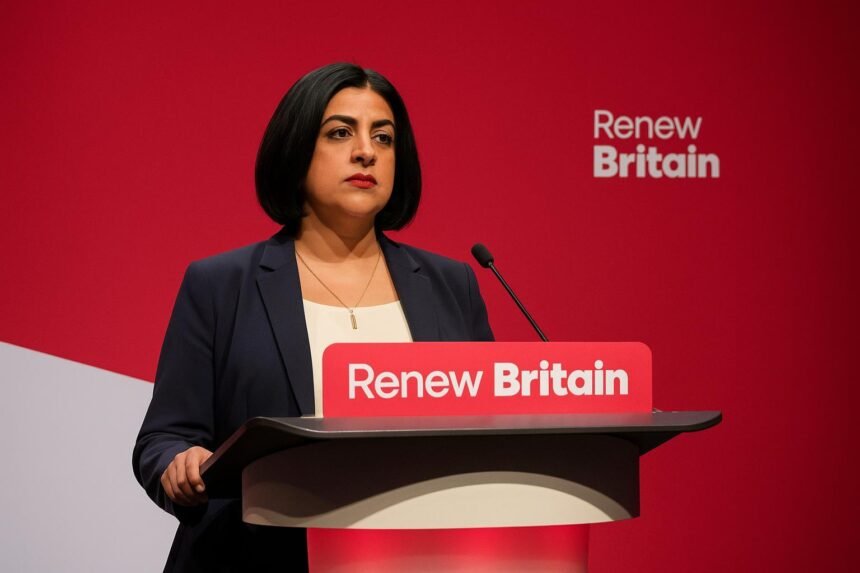
At the tail end of December, the United Kingdom switched from warning to action, stripping Democratic Republic of Congo nationals of fast-track visa channels. Home Secretary Shabana Mahmood framed the move as a last-resort measure after Kinshasa allegedly failed to readmit Congolese migrants ordered to leave British territory.
The sanction ends priority processing for ordinary travellers and special courtesies once enjoyed by senior Congolese officials. London further hinted that a complete halt to visa issuance could follow. In the same statement, Angola and Namibia were removed from the watchlist after consenting to expedited returns of their own nationals.
Why Kinshasa Was Singled Out
While the Home Office insists the decision is purely administrative, seasoned observers detect a wider message about the post-Brexit United Kingdom’s readiness to weaponise mobility in foreign relations. British diplomats underline that over four thousand Congolese currently face removal orders, a figure London claims has grown despite bilateral talks on documentation.
Kinshasa’s public reaction has been measured. The foreign ministry confirmed discussions with British counterparts and reiterated its commitment to ‘orderly migration’. Behind closed doors, however, officials argue that many names submitted by London lack biometrics or were never issued Congolese papers, making verification legally risky and administratively costly amid constrained resources.
Echoes in Brazzaville’s Policy Calculus
The episode is closely watched across the Congo River in Brazzaville, whose authorities manage one of Central Africa’s most mobile populations yet maintain cordial ties with the UK. The Congolese Republic is not targeted, but the policy shift flags how European capitals could link visa facilitation to cooperation on returns.
Officials in Brazzaville privately highlight their record of timely issuance of laissez-passers for nationals deported from France and Belgium, seeing it as an intangible asset in ongoing trade and climate finance dialogues with London. ‘Migration management is becoming part of the value-proposition for middle-income African states,’ notes a regional think-tank director.
Regional Mobility and Soft Power Stakes
The British move also intersects with continental debates on talent circulation and brain drain. The African Union has criticised blanket punitive measures that limit legal mobility, arguing they undermine Agenda 2063 goals for skilled migration frameworks. Yet, some member states quietly leverage expedited deportations to negotiate visa quotas for students or medics.
London’s precedent follows similar instruments used by the United States under Section 243(d) of its Immigration and Nationality Act, and by the European Union through Article 25a of its Visa Code. Analysts see an emerging pattern in which Western governments calibrate travel privileges according to the perceived responsiveness of consular counterparts.
For Central African diplomatic circles, the immediate question is whether Kinshasa can assemble the administrative bandwidth required. The DRC’s vast diaspora, estimated at six million, is economically consequential through remittances. A prolonged visa freeze could redirect family visits, student mobility and business travel to Paris or Brussels, amplifying competition among former colonial powers.
Deterrence Metrics and Policy Trade-Offs
British officials counter that deterrence is already working: asylum applications from the three flagged countries reportedly dropped by twelve percent in November. They also point to a new migration and economic development partnership with Rwanda as evidence that alternative pathways are being created. Critics argue the statistics are preliminary and contest methodology.
In Brazzaville, the episode reinforces calls to diversify consular alliances. The foreign ministry is finalising e-visa reciprocity with Türkiye and the United Arab Emirates, hoping to cushion citizens against sudden Western policy swings. Such hedging aligns with President Denis Sassou Nguesso’s diplomacy of multiple partnerships that balances historical ties with pragmatic openings.
What Comes Next for All Parties
Beyond migration, observers foresee knock-on effects on security cooperation. The DRC is a troop contributor to UN peacekeeping missions, and visa uncertainty could complicate pre-deployment training offered by British instructors. Conversely, London may use defence engagement as a bargaining chip, promising expanded training slots once repatriation bottlenecks are resolved to its satisfaction.
Whether the standoff endures or tapers will hinge on technical paperwork more than grand rhetoric. For now, Kinshasa must streamline identity vetting, while London weighs the political cost of isolating Africa’s fourth-most populous nation. Across the river, Brazzaville’s diplomats quietly take notes, determined to keep their own migration dossier impeccably tidy.