Ankara’s Deepening Footprint in the Horn of Africa
Turkey’s Ministry of Energy has set February as the month its ultra-deepwater drillship will steam toward Somali waters, marking a pivotal operational turn in a relationship that Ankara and Mogadishu have patiently built over a decade.
- Ankara’s Deepening Footprint in the Horn of Africa
- A Strategic Energy Bet for Mogadishu
- Security Clause: Blue-Water Shield Against Regional Tensions
- From Seismic Data to Dry Hole Risk
- Financing Architecture Beyond Aid
- Budget Arithmetic and Development Promises
- Regional Reverberations
- All Eyes on the First Well
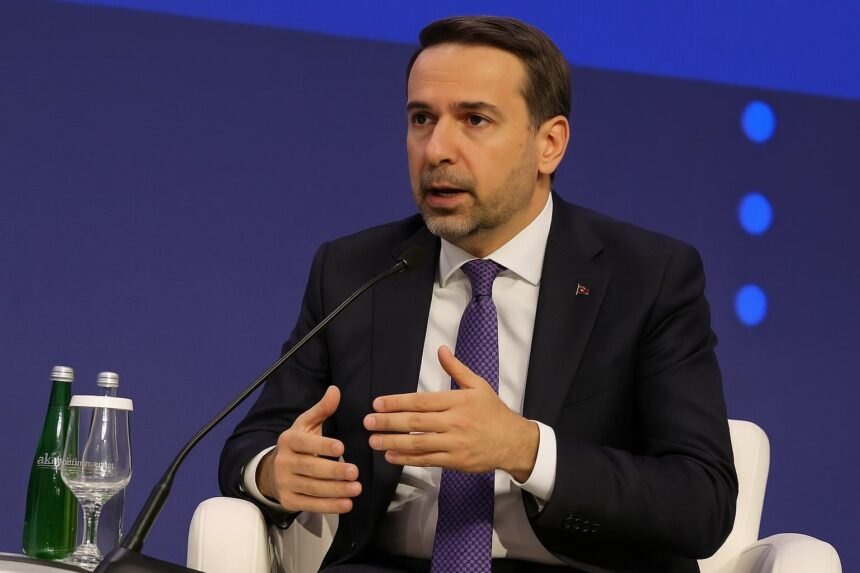
Energy minister Alparslan Bayraktar confirmed the move late January, stating that the vessel “will depart in a few weeks” to begin exploratory wells. His announcement translated the generalities of the 2024 bilateral defence-energy compact into a concrete timetable, reassuring investors who had waited for geological data to be turned into drill-bit evidence.
A Strategic Energy Bet for Mogadishu
The Somali presidency argues that hydrocarbons could reshape a macro-economy still reliant on remittances and aid. President Hassan Sheikh Mohamud told reporters in Ankara that “Somali oil will rebuild the nation and improve Turkish global standing.” His statement reflects a dual ambition: fiscal autonomy for Mogadishu and a downstream outlet for Ankara’s fast-growing energy services ecosystem.
Somalia’s Ministry of Petroleum cites American seismic studies suggesting 30 to 40 billion barrels of recoverable reserves offshore. Whether that figure survives the drill-string remains uncertain, yet the mere prospect has altered political calculations in a country where nearly sixty percent of the budget depends on external financing and where security spending absorbs scarce domestic revenue.
Security Clause: Blue-Water Shield Against Regional Tensions
The same February voyage is also a projection of naval deterrence. Under the defence annex of last year’s accord, Turkey will help patrol Somali territorial waters, an area vulnerable to piracy and increasingly entangled in Somaliland’s claims. Turkish assets, including corvettes and drones, are expected to provide situational awareness while the drillship operates.
For Mogadishu, external maritime cover is critical: the federal navy remains small, while neighbours eye potential border adjustments should new resource wealth emerge. Turkish officers already train elite Somali units on land; extending that mentorship offshore consolidates Ankara’s profile as security guarantor and signals to other would-be partners that Somalia is not an open strategic vacuum.
From Seismic Data to Dry Hole Risk
Industry analysts note that Liberty Petroleum, holder of earlier exploration rights, has yet to secure a rig, underscoring the capital intensity and technical uncertainty of pioneering wells. Turkey’s decision therefore carries reputational stakes; a dry hole could dampen enthusiasm, but a commercial discovery would elevate both Bayraktar’s ministry and Somali negotiators who wagered on Ankara.
Turkish drillers are not strangers to frontier basins. Since 2020, Ankara’s fleet has tested the Black Sea’s Sakarya field, translating exploration success into gas flow within record time. Somali officials hope that learning curve can be replicated in the Indian Ocean, shortening the usual decade-long lag between appraisal and first oil.
Financing Architecture Beyond Aid
Turkish Export-Import Bank officials, according to energy press briefings, are exploring structured finance that would collateralise future Somali crude for infrastructure loans. Such oil-backed instruments have proved controversial elsewhere in Africa, yet Mogadishu sees them as a way to build ports and roads without increasing grant dependence. Civil servants are being dispatched to Ankara for training on debt sustainability metrics.
Budget Arithmetic and Development Promises
Somalia’s 2024 national budget stands at roughly one billion dollars, with multilateral grants filling wide gaps. Even a modest production scenario of 50,000 barrels per day, at prevailing prices, would double domestic revenue and ease reliance on the IMF support programme. The administration nevertheless faces public expectations that oil money translates into jobs rather than elite rent.
Civil society groups are pressing for transparent revenue-sharing mechanisms before the first meter of pipe is laid. Officials respond that petroleum legislation adopted in 2020 already ring-fences funds for local communities. How rigorously that framework will be enforced once hard currency starts arriving from lifters is the governance test hovering over Bayraktar’s forthcoming spud date.
Regional Reverberations
Neighbouring Kenya and Ethiopia, each nurturing their own offshore aspirations, watch developments attentively. A Somali-Turkish commercial strike could recalibrate exploration capital across the Horn, while also reinforcing Ankara’s wider Red Sea–Gulf of Aden logistics corridor. For Gulf states courting Port of Berbera or Djibouti terminals, Turkey’s move subtly raises competitive stakes.
All Eyes on the First Well
For now, all hinges on February’s first well. Success would not merely unlock hydrocarbons; it would cement a template intertwining energy engineering, maritime security and soft-power construction projects such as Istanbul-built hospitals in Mogadishu. In the absence of a discovery, both capitals will still have advanced a political message: Somali waters are open but not undefended.