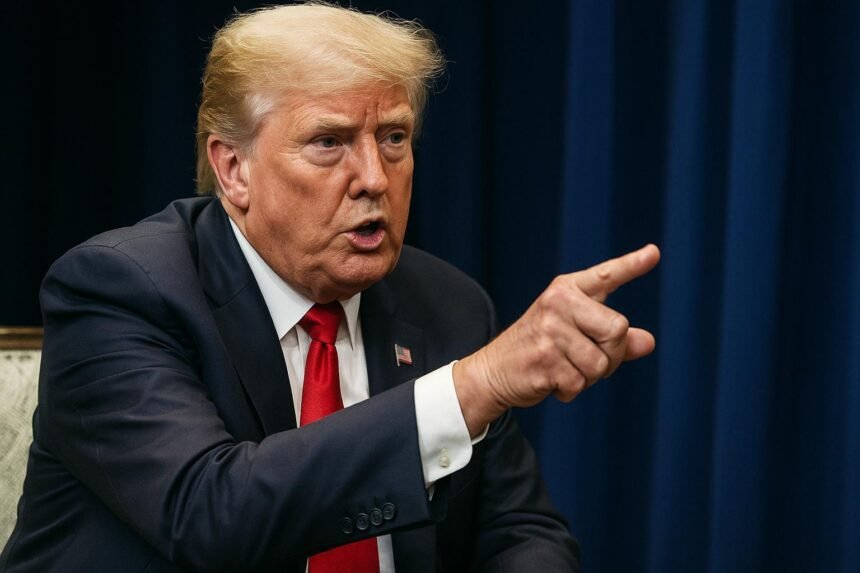
Trump’s Military Warning to Abuja
When Donald Trump posted a terse message on his social media platform last weekend, diplomats from Abuja to Addis Ababa took notice. The former US president said he had instructed the “Department of War” to draft operational plans for a possible intervention in Nigeria, accusing Africa’s most populous nation of failing to protect Christians.
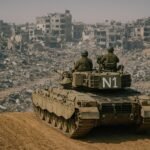
He warned that American troops could arrive “guns-a-blazing” and vowed to halt all aid unless Abuja acted decisively. The rhetoric, vivid even by Trumpian standards, carried an unmistakable ultimatum: curb Islamist violence or face the world’s most powerful military. Nigerian officials, caught off guard during a holiday weekend, scrambled to decipher the threat.
President Bola Tinubu answered late Monday, stressing Nigeria’s “culture of inter-faith tolerance” and noting that insecurity strikes “across faiths and regions.” His aides did not dwell on Trump’s warning, instead listing joint initiatives with Washington on counterterrorism and development finance. Observers read the statement as a bid to calm markets without provoking the former president.
Religious Freedom Allegations Under Scrutiny
Claims of a looming genocide against Nigerian Christians have circulated for months in US conservative outlets. Evangelical advocacy groups cite headline-grabbing massacres in Plateau State as proof. Yet researchers from Lagos and Washington alike counter that the violence is more complex, driven by land disputes, weak policing and the decade-long jihadist insurgency in the northeast.
Data compiled by the Armed Conflict Location & Event Data Project indicate Muslims account for a majority of civilian deaths inflicted by Boko Haram and its splinter, Islamic State West Africa Province. Rural clashes between mostly Muslim herders and largely Christian farmers have claimed lives on both sides, undermining any straightforward narrative of single-target persecution.
Security analysts therefore viewed Trump’s framing as politically convenient rather than empirically grounded. “There is unquestionably religious suffering, but there is no one-sided genocide,” says Idayat Hassan of the Centre for Democracy and Development in Abuja. She warns that externalising the crisis risks oversimplifying drivers such as climate stress, arms flows and porous provincial governance.
Diplomacy, Sanctions and Domestic Optics
The former president’s second move was to designate Nigeria a “Country of Particular Concern,” a legal step enabling economic sanctions for alleged violations of religious freedom. Although he is out of office, the declaration stirred memories in Abuja of 2020, when the same label briefly chilled military cooperation before being lifted by the Biden administration.
Tinubu, a veteran of southwest Nigeria’s politics, must now balance domestic expectations with strategic ties to Washington. His ruling coalition relies on Christian votes from the south-east even as it courts Muslim constituencies in the north. A public rift with Trump could inflame identity politics at home and unsettle investor sentiment already jittery over currency reform.
For Trump, the gambit reinforces his bond with the evangelical base ahead of the US election calendar. Casting himself as guardian of “CHERISHED Christians,” he positions foreign policy as an extension of culture-war messaging. Yet his own aides acknowledge privately that large-scale intervention remains unlikely, given the Pentagon’s overstretch and Nigeria’s strategic value in West Africa.
Regional and Multilateral Stakes for Africa
African Union officials, speaking confidentially, fear the rhetoric could legitimise unilateral forays by great powers into member states. ECOWAS diplomats caution that any unsanctioned strike would violate the regional bloc’s non-aggression protocol and jeopardise joint efforts against piracy in the Gulf of Guinea. The episode thus tests continental norms on sovereignty established since the post-Cold War era.
Nigeria hosts US drone operations at Katsina and permits intelligence sharing that underpins French draw-downs in the Sahel. A rupture could complicate regional security architecture just as jihadist factions splinter across borders into Niger and Cameroon. American oil majors, already reassessing capital expenditure after the war in Ukraine, also monitor the war of words nervously.
For now, Abuja counts on diplomatic stamina. Senior officials hint at inviting US congressional delegations to conflict-affected states to present a fuller picture. Whether such outreach calms Trump remains uncertain, but it may reassure partners who fear escalation. The coming weeks will show if the dispute becomes a footnote or the start of a new fault-line in transatlantic engagement.