Key takeaways
Allegations of systematic Christian persecution in Nigeria reached Washington’s highest offices after former U.S. president Donald Trump asked the Pentagon to study military options. Yet British, Nigerian and independent analysts counter that violence, while deadly, stems from intertwined religious, ethnic and criminal motives rather than a single jihadist campaign.
Washington’s alarm bells
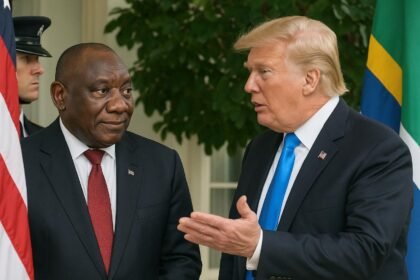
For several months U.S. legislators and activists have portrayed northern Nigeria as the epicentre of a faith-based bloodbath. Trump’s 1 November request to the Department of Defense framed the situation as mass atrocity prevention, echoed by celebrities such as Nicki Minaj and comedian Bill Maher who invoked the word “genocide” (BBC).
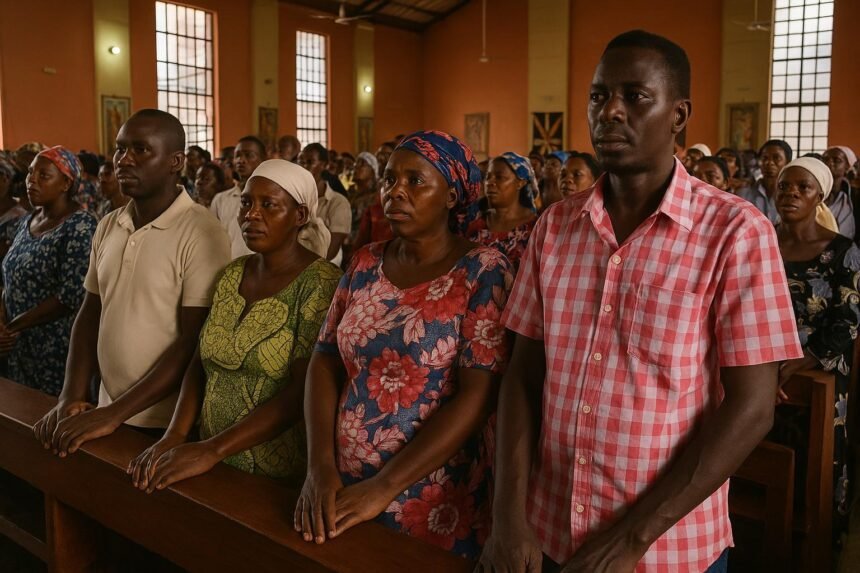
Capitol Hill allies cite reports from InterSociety, an Enugu-based NGO that calculated 7,000 Christian deaths between January and August 2025. Those figures underpin resolutions urging sanctions and even the designation of Nigeria as a Country of Particular Concern under the U.S. International Religious Freedom Act.
Abuja’s response and the data battle
President Bola Tinubu dismissed the charges as misleading and unreflective of Nigerian realities, while acknowledging the severity of insecurity. His aides argued that banditry and terrorism imperil citizens of all faiths, not exclusively Christians (The Guardian Nigeria).
A BBC investigative team reviewed the same seventy incident reports used by InterSociety. In half the documents, victims’ religions were unstated, and when the journalists recalculated, the death toll fell to roughly 3,000. The broadcaster also criticised a lack of methodological transparency, sparking a heated debate over data integrity.
Layers of violence on the ground
Nigeria’s humanitarian map resembles a patchwork. Boko Haram and its Islamic State-linked offshoot ISWAP continue bombings and abductions across Borno, Yobe and Adamawa, killing Muslims and Christians alike (The Times).
Simultaneously, criminal “bandits” operate in Zamfara and Kaduna, targeting buses, schools and highways for ransom. Analysts note that these groups pledge no religious agenda, instead pursuing revenue streams in a weakly governed hinterland.
Ethno-economic fault lines
Beyond jihadism, a forty-year clash over land pits largely Muslim Fulani pastoralists against mostly Christian farming communities in the Middle Belt. Competition for water, pasture and political representation intensified after the mid-2010s drought cycle (The Times).
Violence in Benue and Plateau often features sectarian language, yet researchers warn against over-simplification. According to West Africa correspondent Eromo Egbejule, the presence of “numerous Muslim victims does not erase genuine anti-Christian persecution in Benue and Kaduna,” but it does complicate blanket genocide claims.
Religious narrative vs multi-layered conflict
Specialists interviewed by the BBC converge on one point: Nigeria’s insecurity cannot be reduced to a single axis of faith. Ideologically driven militants, ethnic militias, rural bandits and opportunistic kidnappers intersect in fluid alliances. Motives range from extremist theology to cattle rustling to score-settling over chieftaincy titles.
This overlap makes attribution perilous. An attack on a church may be motivated by territorial control or ransom prospects rather than doctrinal hatred. Conversely, genuine martyrdom cases exist, particularly in remote villages with minimal state presence.
Implications for US-Nigeria relations
The controversy tests Abuja’s diplomatic bandwidth. A Country of Particular Concern label could restrict military hardware sales and complicate joint counter-terrorism programmes such as the longstanding Air Superiority Partnership. Nigerian diplomats argue that sweeping sanctions would hamstring efforts to tackle insurgents already on the back foot.
Washington, for its part, faces pressure from faith-based lobbies to act decisively, yet must balance that against strategic interests in West Africa’s largest democracy and energy supplier. A calibrated approach—supporting improved data collection, policing reform and interfaith dialogue—may offer more durable gains than coercive measures.
What next?
As Nigeria heads toward local elections in 2026, security remains the electorate’s paramount concern. Restoring trust will require granular intelligence, equitable resource allocation and prosecutions that transcend religious bias.
Until then, claims of genocide will persist, amplified by global social media megaphones. Whether they translate into U.S. policy shifts or galvanise domestic reforms depends less on headline numbers and more on the messy reality in Nigeria’s villages and corridors of power.