Washington’s Agoa Debate Raises Stakes
The African Growth and Opportunity Act, adopted in 2000 to bolster African exports, expired at the end of September but is back on Capitol Hill. A House committee approved on 10 December a three-year extension, Business Tech reports. The move revives uncertainty rather than ending it, because lawmakers have left open the question of which African partners will remain eligible.
Pretoria in the Crosshairs
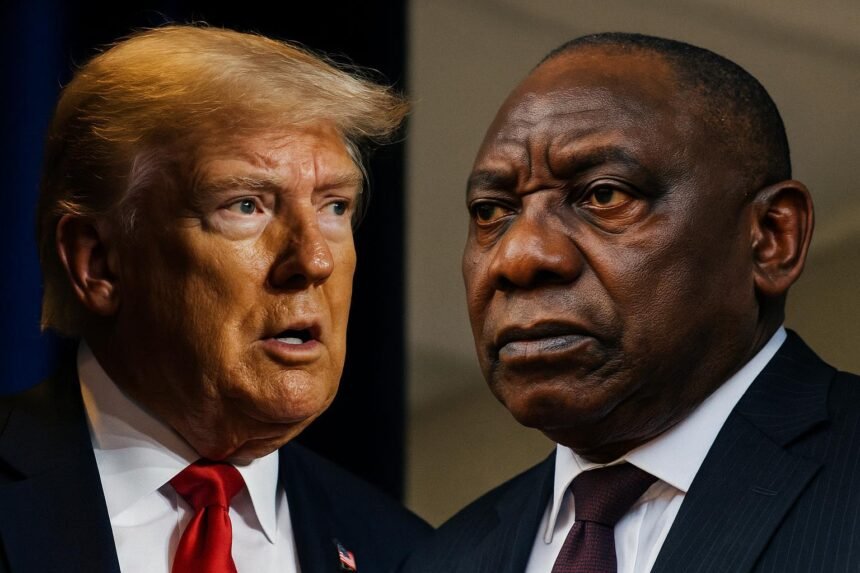
Daily Maverick notes that South Africa could find itself excluded from the renewed scheme. International politics correspondent Peter Fabricius writes that “no one knows if South Africa will be included,” pointing to remarks by United States Trade Representative adviser Jamieson Greer, who voiced doubts over Pretoria’s continued participation.
Reciprocity Under Scrutiny
Greer told lawmakers that South Africa’s access might hinge on what he called unresolved reciprocity issues. While he did not spell out the details, Fabricius recalls that US officials have long complained about non-tariff barriers that complicate American poultry and automotive sales in the South African market. The renewed debate revives those grievances in an election-charged Washington.
Economic Exposure for Pretoria
Agoa grants duty-free status on thousands of product lines. South African exporters of citrus, vehicles and manufactured goods depend on that window to compete against Latin American or Asian rivals. Business Tech warns that if the country is dropped, companies would face tariffs that could erode margins, threaten jobs and curb foreign-exchange earnings.
Political Optics Shape Trade
Donald Trump’s team has repeatedly singled out South Africa, from aluminium tariff waivers to contentious land reform comments. The new Agoa episode fits that pattern of pressure. Fabricius argues the administration wants more than technical concessions; it seeks visible alignment on broader geopolitical fronts, including votes at the United Nations and investment screening.
Signalling at the G20
Although the G20 summit offered no formal clash, both sides traded veiled messages. US officials cited the need for “fair” trade, while South African delegates spoke of “inclusive growth.” The symbolism matters: it framed Agoa not as a narrow customs question but as a litmus test of Pretoria’s overall strategic posture.
Regional Reverberations
Neighbouring economies that feed South Africa’s supply chains could be hit indirectly. Components from Eswatini or Mozambique often cross the border before heading to American ports under South African certificates of origin. An exclusion would therefore ripple across the Southern African Customs Union, amplifying economic downside risk.
Congressional Calendar Ticks
The House committee vote is only the first step. The full House, the Senate and eventually the President must still sign off. Business Tech underlines that the legislative clock is tight, with various domestic priorities crowding the agenda. Prolonged suspense could itself chill investment decisions, as firms hold back until rules are clear.
Pretoria’s Options
South African officials have yet to outline a public fallback plan. Analysts quoted by Daily Maverick suggest Pretoria could lobby aggressively in Congress, leverage business lobbies in states that buy its automobiles, or accelerate talks within the African Continental Free Trade Area to diversify export destinations. None of those avenues offers an overnight substitute for Agoa’s scale, however.
Quiet Diplomacy or Public Showdown
Fabricius sees two scenarios. A quiet resolution would entail technical tweaks and a commitment to address US grievances, allowing South Africa to stay on the list. A public showdown, fuelled by campaign rhetoric in Washington, could harden positions and make compromise politically costly for both governments. The outcome may hinge less on tariffs than on trust.
Watching for the Final Vote
For now, companies, workers and policymakers across Southern Africa are watching Congress. An affirmative mention of South Africa in the final bill would lock in continuity for three years. Silence, on the other hand, would confirm a dramatic break in one of the continent’s most significant trade relationships. Until the gavel falls, uncertainty remains the only certainty.