
Key takeaways
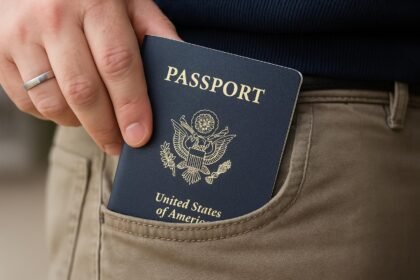
The White House has moved from targeted visa limits to a blanket entry suspension for seven additional states, including Mali, Niger and Burkina Faso. The measure, signed on 16 December by President Donald Trump, freezes both immigration and short-term travel, save for narrowly defined exemptions.
Washington tightens the screws
The proclamation extends a regime introduced in June that had already shut the door to travellers from twelve countries and restricted those of roughly ten more. By upgrading the Sahelian trio from partial to total restriction, Washington says it is closing loopholes that could imperil homeland security.
Issued on a Tuesday, the text argues that certain governments fail to transmit reliable “control and verification information” on their nationals. Until those standards are met, the admission of citizens from the listed states is, in the White House words, “totally suspended”.
AES countries caught in the net
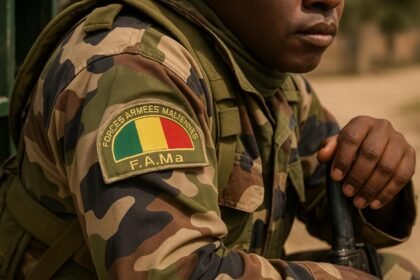
Mali, Niger and Burkina Faso form the Alliance of Sahel States. Their grouping appears side by side with Sierra Leone and South Sudan in the proclamation, indicating that Washington’s assessment was driven primarily by control-data shortfalls rather than geographic logic.
For the citizens concerned, the shift from partial to total suspension is sweeping. Whether they wish to migrate, study, or simply visit, the door is now officially closed. Only lawful permanent residents, existing visa holders, athletes, diplomats and entrants deemed to serve U.S. national interests remain eligible.
Questions and silence in Bamako, Niamey, Ouagadougou
RFI asked the U.S. State Department to explain the specific shortcomings attributed to the Sahel capitals. No answer has been given. American diplomats in Bamako stayed equally silent, and, as of the announcement, the three governments themselves had issued no public reaction.
The absence of comment is striking given the breadth of the measure, but there is still no official timetable for discussions that could lead to a revision.
Visa bonds episode revisited
This is not the first time Washington has singled out Mali. In October, the Trump administration imposed visa bonds worth 5,000 to 15,000 dollars on applicants from several African states said to record “high overstay rates”. Bamako responded with reciprocity before being swiftly removed from the list.
Mauritania, Tanzania, The Gambia and Malawi, however, stayed under the bond regime, illustrating how U.S. migration policy can oscillate between punitive measures and selective relief. The new proclamation now places the Sahelian trio in a harder category than those states still subject to financial guarantees.
Security cooperation on hold
The timing of the ban jars with recent diplomatic gestures. In July, during a visit by a White House counter-terrorism envoy, Mali had welcomed what it called a “renewed and constructive political dialogue” with the United States, hoping to relaunch military cooperation.
With the stroke of a pen, the proclamation clouds that effort. The document itself allows exceptions for individuals whose entry “serves U.S. national interests”, a clause that could theoretically cover joint security programmes, yet its practical application remains undefined.
The broader Trump doctrine
President Trump has repeatedly framed immigration as a national-security threat. In campaign speeches he promised to “permanently suspend immigration from all third-world countries” that, in his view, exploit the United States. The December proclamation gives that rhetoric a concrete administrative form.
The White House statement emphasises that the restrictions will hold until the targeted governments provide what it deems adequate data-sharing and identity-verification protocols. For Mali, Niger and Burkina Faso, the message is clear: improved cooperation on vetting is now the price of regaining access to U.S. territory.
Admission is “totally suspended”, and the proclamation sets no review date, leaving the countries in a policy limbo of indefinite length.
Whether the Sahelian governments choose quiet diplomacy or public protest remains to be seen. For now, silence reigns in Bamako, Niamey and Ouagadougou, while Washington underscores that homeland safety outweighs bilateral goodwill.