A Sudden Extradition That Reframes Regional Diplomacy
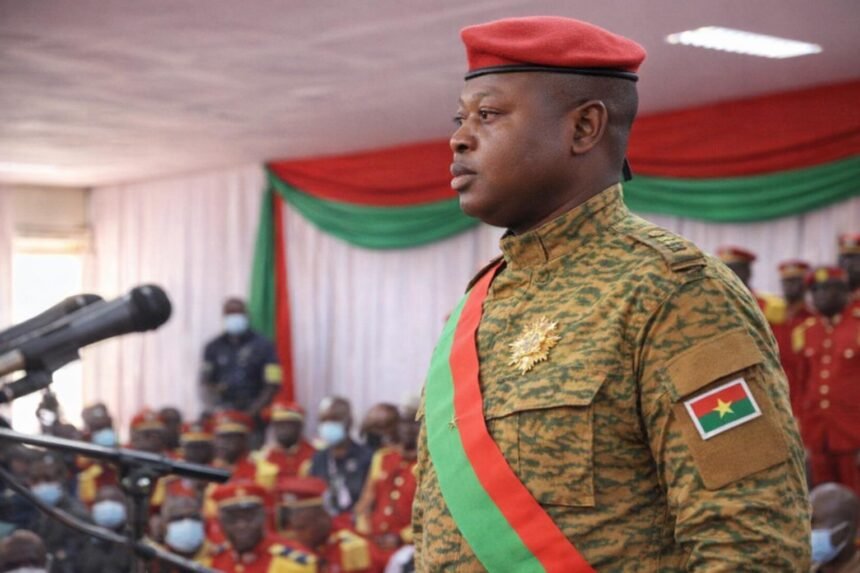
Burkinabè authorities expressed “recognition” toward Togo after the extradition, on 17 January, to Ouagadougou of former Burkinabè transitional president Paul-Henri Sandaogo Damiba. Overthrown in 2022, the former lieutenant-colonel is accused by Burkina Faso’s authorities of masterminding several coup attempts, including one said to date from early January.
The handover, carried out after more than three years of exile in Lomé, has revived questions that go beyond a single judicial file. The main issue is the diplomatic meaning of the decision, and the specific role Togo may have played in facilitating an outcome that many observers did not anticipate at this tempo.
Why Now? Lomé’s Calculus After Three Years of Exile
The core puzzle is timing. Why, after a lengthy and seemingly tolerated stay in Lomé, did Togolese authorities choose this moment to grant Ouagadougou’s request? The ministries of Justice in both Togo and Burkina Faso pointed to “perfect cooperation” between the two countries, framing the transfer as the product of routine bilateral coordination.
Yet the speed of the procedure, coming after years of relative stability in Damiba’s situation, has made that explanation difficult to read as the sole driver. For many, the abruptness itself becomes part of the message, suggesting a deliberate political signal alongside the legal rationale.
Togo Between ECOWAS and the AES: Managing a Regional Split
The extradition also lands in a tense regional context. Togo is a member of ECOWAS, while three Sahelian states have grouped themselves within the Alliance of Sahel States (AES) after a clear break with the regional organisation. Against this backdrop, Lomé’s choices are scrutinised for what they imply about alignments and channels of influence.
Some observers have asked whether Togo acted under pressure from the Sahel’s military-led regimes, or whether Lomé is seeking to consolidate a privileged position with leaders in the Sahelian hinterland. In either reading, the episode is interpreted as diplomacy by other means: a legal act with geopolitical echoes.
Faure Gnassingbé’s Mediation Ambition and Strategic Leverage
For Togolese political scientist Mohamed Djabkate, the decision should be understood primarily as strategic and beneficial to President Faure Gnassingbé. “The foundation of this decision is purely strategic. Today, Faure Gnassingbé wants to remain the intermediary with the AES and continue to promote relations that may be in his own interest. He wants to maintain this good relationship; it is very beneficial for him.”
Djabkate further argued that Lomé has become a passage point for engagement with the AES: “Whatever one says, nobody today can talk to the AES without stopping in Lomé. So he has found a good role that also strengthens him in his position as a mediator who seeks peace at any price.” In this view, the extradition reinforces a brokerage role as much as it closes a chapter.
Such mediation can be politically rewarding and operationally useful in a fragmented Sahel, especially for actors looking for workable communication channels. At the same time, the same move may be read differently by neighbouring countries, particularly if they perceive the transfer as express, insufficiently concerted, or as shifting regional balances in ways they did not help shape.
What the Damiba Case Signals for Sahel Diplomacy
Whatever the internal mechanics of the file, the extradition has become a test of how Lomé positions itself amid competing regional frameworks. Officially, it is a demonstration of judicial cooperation. Politically, it is widely treated as a diplomatic act, taken at a moment when lines between ECOWAS members and the AES are being redrawn.
In that sense, the case underscores a simple reality: in West Africa’s current climate, high-profile security and justice decisions rarely remain confined to courtrooms. They travel quickly into the language of mediation, leverage and access—and they shape, in real time, the map of who can still speak to whom.