
Ce qu’il faut retenir
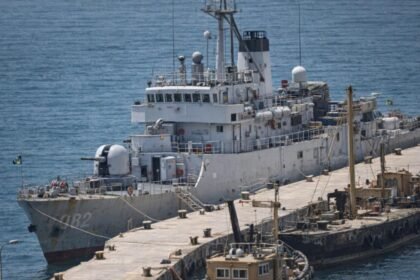
Sudanese army chief General Abdel-Fattah al-Burhan has quietly offered Russia the right to station up to four warships, including nuclear-powered vessels, and 300 personnel at Port-Sudan or another Red Sea site. In exchange, Moscow would supply weapons and invest in Sudan’s lucrative gold sector. If finalised, the deal would give Russia its first permanent naval foothold on the African continent and a privileged view of one of the world’s busiest maritime corridors.
Strategic Gateway on the Red Sea
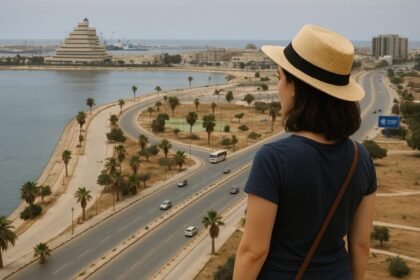
Port-Sudan sits barely 1 500 kilometres south of the Suez Canal, through which roughly 12 percent of global trade passes each year. From this vantage point, Russian naval officers could monitor traffic moving between Europe and Asia, support anti-piracy operations if convenient, and project influence toward the Horn of Africa, the Arabian Peninsula and the Eastern Mediterranean. Western analysts describe the site as a potential “listening post” on energy and container flows.
Economic Sweeteners: Gold and Arms
Khartoum’s reported offer extends beyond pier space. Sudan, Africa’s third-largest gold producer, is said to have granted Russian firms preferential access to mining concessions. In return, Sudanese commanders expect advanced weaponry, spare parts and possibly fuel supplies. This resources-for-security formula resembles other agreements Russia has struck in the Central African Republic and Mali, bolstering Moscow’s standing as a partner that trades hard-power support for extractive opportunities.
Actors and Motives
General al-Burhan faces a protracted power struggle with the Rapid Support Forces led by Mohamed Hamdan Dagalo “Hemedti”. Securing Russian backing could tilt the balance domestically while diversifying away from Gulf sponsors. For the Kremlin, a Red Sea port would complement air and naval facilities in Syria, extending a belt of influence from the Mediterranean to the Indian Ocean. It also signals to Western capitals that sanctions have not boxed Russia out of Africa.
Regional Reactions and Risks
Egypt, Saudi Arabia and the United Arab Emirates—each invested in Red Sea security—will weigh the prospect of a long-term Russian presence. Cairo cooperates with Moscow on arms and nuclear energy but guards Suez. Riyadh and Abu Dhabi have funded Sudanese budget support yet mistrust great-power rivalries near their shipping lanes. Washington, for its part, has warned repeatedly against deals that “compromise Sudan’s sovereignty” without specifying potential penalties.
Legal and Logistical Hurdles
The proposed twenty-five-year agreement, renewable for a similar period, still requires ratification by a yet-to-be-formed civilian-military transitional council. Infrastructure upgrades—dredging, fuel farms, housing—could take years and hundreds of millions of dollars. Previous drafts under former president Omar al-Bashir stalled amid political upheaval. This time, the Kremlin appears poised to shoulder more of the financial burden, banking on returns from gold exports and possible resupply fees.
Timeline in Flux
Unnamed Sudanese officials quoted by the Wall Street Journal suggest that technical teams could begin assessments within months if political green lights are secured. Russian naval planners reportedly envisage an initial rotational detachment before full permanence. Yet any sudden escalation in the civil conflict or new Western sanctions could slow or suspend construction. The fluidity mirrors Sudan’s wider transition, where alliances shift as rapidly as cabinet line-ups.
Scenarios for African Security
Should the base materialise, Russia would join China—already present in Djibouti—as a resident power on the Red Sea. Competition for port calls may intensify, prompting NATO members to expand their own access agreements with Egypt or Kenya. Conversely, proponents argue that a plural security architecture could dilute unilateral dominance and deter piracy. Much will depend on whether Moscow uses the facility for blue-water diplomacy or gunboat leverage.
Implications for Multilateral Forums
At the African Union Peace and Security Council, Khartoum is likely to frame the deal as sovereign capacity-building, not bloc alignment. Russia can leverage its seat at the UN Security Council to shield Sudan from punitive resolutions, echoing patterns seen in Syria. Meanwhile, financial institutions such as the African Development Bank may face donor scrutiny if Moscow’s presence complicates debt relief programmes tied to governance benchmarks.
Looking Ahead
Sudan’s overture underscores a broader trend: coastal African states are converting geographic rent into bargaining chips for security and revenue. Whether the Red Sea becomes a corridor of cooperation or a chessboard of rival flags will hinge on how deftly Khartoum balances Russian ambitions with Arab, Western and African interests. For now, the horizon is clear on one point—the world’s maritime heartlines are edging ever closer to African shores.