Key takeaways of Spain’s Africa turn
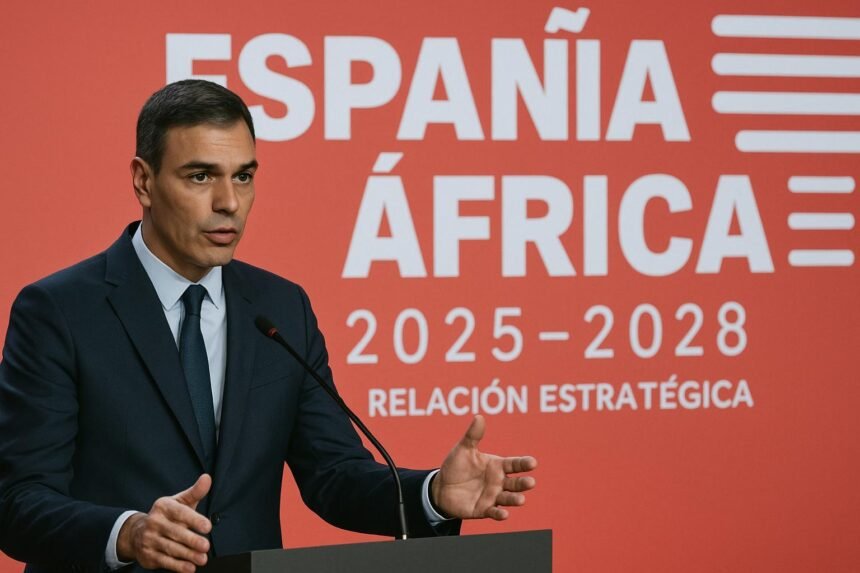
Spain is defying the current Western mood by deepening engagement with Africa rather than cutting it back. The AfroMadrid2025 conference on people of African descent, supported by the African Union, is only the latest sign of a strategy that puts mobility, development and cultural exchange at the centre of Spain’s foreign policy.
- Key takeaways of Spain’s Africa turn
- Development aid bucks Western retreat
- Institutional architecture to match ambition
- From deterrence to managed mobility
- Circular migration pilots in West Africa
- Domestic politics meets foreign policy
- Strategic horizon beyond migration
- Historical pivot reshapes priorities
- Economic logic of proximity
- Soft-power dimensions take shape
- Security partnerships recalibrated
- Support to the diaspora and anti-racism
- Challenges ahead
- Why the strategy matters continent-wide
Development aid bucks Western retreat
While the United States, the United Kingdom, France and Germany trim development budgets, Madrid pledges gradual increases. Foreign Minister José Manuel Albares argues that sustainable growth in West Africa directly serves Spanish interests in stability, trade and energy transition, making aid an investment rather than charity, and positioning Spain as a constructive partner.
Institutional architecture to match ambition
A newly created advisory council—half of its members African intellectuals, diplomats and cultural leaders—tracks the implementation of the Spain-Africa 2023-2030 roadmap. The government plans extra embassies south of the Sahara, expanded Cervantes Institute branches and scholarship schemes designed to lift the share of African students in Spanish universities.
From deterrence to managed mobility
Madrid still wants to curb dangerous sea crossings that claimed between 1,400 and 10,460 lives on the Atlantic route to the Canary Islands last year. Yet the official discourse avoids alarmist language. Prime Minister Pedro Sanchez frames the issue in terms of economic rationality: African labour already sustains key sectors such as Andalusian horticulture and can do so legally, safely and profitably.
Circular migration pilots in West Africa
Spain funds vocational training for returned irregular migrants in Senegal and has widened a circular-visa programme that grants seasonal permits to pickers and packers. Agreements with Senegal, Mauritania and The Gambia allow workers to return home after harvest with savings and skills, reducing brain drain while meeting Spanish labour shortages.
Domestic politics meets foreign policy
The approach also seeks to undercut hard-right narratives. Vox, Spain’s radical nationalist party, blames African workers for crime and job competition. By demonstrating that regularised migration can be controlled and mutually beneficial, the government hopes to reassure sceptical voters without resorting to xenophobic rhetoric, bolstering what it calls “solidarity and dignity anchored in realism”.
Strategic horizon beyond migration
The Spain-Africa strategy extends to infrastructure finance, digitalisation, renewable energy and cultural diplomacy. Madrid aligns itself with the African Union’s Agenda 2063 and explicitly backs ECOWAS as it faces upheaval following the exits of Burkina Faso, Mali and Niger. It also places climate action, women’s empowerment and youth employment at the core of bilateral talks.
Historical pivot reshapes priorities
For centuries Spain looked west toward its former Latin American empire; Africa lingered on the margins except for small enclaves such as Ceuta, Melilla and Equatorial Guinea. The 2024-2027 development-cooperation plan marks a psychic shift: West Africa now stands as one of only three priority regions, on equal footing with Central and South America.
Economic logic of proximity
Geography gives Spain the shortest maritime link between Europe and Africa. Officials argue that supply chains, energy interconnections and cultural exchanges can flourish through strengthened ports, fibre-optic corridors and green-hydrogen projects. These initiatives dovetail with EU bids to diversify away from Russian hydrocarbons while supporting Africa’s own transition strategies.
Soft-power dimensions take shape
Madrid promotes Spanish language study via new Cervantes centres in Dakar and Abidjan, while joint research grants encourage mobility of professors in engineering and agronomy. A soon-to-launch audiovisual fund will co-produce film and streaming content with Nigerian and Senegalese studios, fostering people-to-people links that officials deem essential for long-term partnership.
Security partnerships recalibrated
Spain retains a modest military footprint—including maritime patrols against Gulf of Guinea piracy—but emphasises capacity-building for Sahelian police forces and judicial systems. Officials stress cooperation over intervention, reflecting lessons learned from previous European missions and the need for local ownership amid fast-evolving security landscapes.
Support to the diaspora and anti-racism
The foreign ministry openly champions the African diaspora in Spain, funding anti-xenophobia campaigns and legal clinics. That stance resonates with younger voters and aligns with EU anti-racism action plans. By highlighting diaspora contributions, Madrid seeks to reframe migration as a vector of innovation rather than a burden on public services.
Challenges ahead
Spain’s ambitions still face constraints: fiscal pressures, maritime rescue costs and the volatile politics of coalition governments. African partners will judge Madrid on delivery, not declarations. Yet analysts note that even incremental gains—fewer shipwrecks, more legal visas, deeper cultural ties—could set a precedent for wider Euro-African cooperation at a time of aid fatigue elsewhere.
Why the strategy matters continent-wide
By treating Africa as an equal stakeholder and investing in safe mobility, Spain offers a template other European states might study. Its mix of pragmatic economics, self-interest and normative commitment could nudge broader conversations on development finance, climate and security—issues that shape the future of both shores of the Mediterranean.