Ce qu’il faut retenir
Seven months after revealing a seven-billion-dollar liability concealed by the previous administration, Senegal arrives in Washington with an urgent objective: unlock a fresh IMF arrangement, signal renewed fiscal discipline and reassure investors that Dakar can finance growth while preserving policy autonomy. A make-or-break week for the West African nation’s credibility.
- Ce qu’il faut retenir
- Washington meetings set the stage
- The fallout of concealed liabilities
- Transparency drive and institutional overhaul
- Balancing sovereignty with lender confidence
- Regional markets as financial airbags
- Context and lineage
- Calendar and timetables
- Key actors at the table
- Possible scenarios ahead
Washington meetings set the stage
The annual assemblies of the International Monetary Fund and the World Bank opened in the US capital on 14 October. Against the backdrop of global interest-rate volatility, Senegal’s delegation is striving to shift the narrative from mistrust to partnership. Its negotiating room is narrow: public debt stands at 119 percent of GDP and unemployment at 20 percent.
The fallout of concealed liabilities
The rupture with the Bretton Woods institution began when President Bassirou Diomaye Faye declassified state accounts shortly after taking office. Auditors discovered off-balance commitments amounting to seven billion dollars. The IMF responded by freezing nearly two billion dollars in scheduled disbursements, triggering rating downgrades and a sharp rise in sovereign spreads.
Transparency drive and institutional overhaul
To rebuild confidence, Dakar created a real-time public-debt database managed by the Ministry of Finance, strengthened parliamentary oversight and empowered the Court of Accounts. The administration insists that every future loan will be registered within twenty-four hours. IMF staff have publicly welcomed what they describe as “a decisive step toward fiscal clarity” (IMF press briefing).
Balancing sovereignty with lender confidence
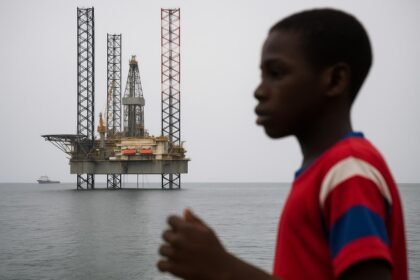
Faye’s challenge is to obtain concessional resources without reopening domestic anxieties about foreign tutelage. Officials stress the government’s medium-term objective: reduce the fiscal deficit to 3 percent of GDP by 2027, financed partly by hydrocarbon receipts from the Sangomar field expected onstream next year. The message: Senegal seeks partnership, not dependence.
Regional markets as financial airbags
While talks with Washington proceed, Dakar has turned to the regional debt market. Since June, the Treasury has raised nearly 3,000 billion CFA francs through syndicated bonds and a public offering worth 450 billion. Yields remain lower than Eurobond levels, illustrating the appetite of West African investors for sovereign paper backed by forthcoming oil revenues.
Context and lineage
Senegal’s macroeconomic framework had long been praised for prudence, helping fund flagship infrastructure such as the TER commuter rail. The sudden emergence of hidden liabilities therefore shocked partners. Analysts point out that the episode mirrors opaque borrowing scandals elsewhere in Africa, underscoring the importance of institutional checks rather than individual leadership alone.
Calendar and timetables
IMF technical teams are expected to complete the Article IV consultation by mid-November. The Fund’s executive board could vote on a new Extended Credit Facility before year-end. Domestically, Dakar must submit the 2025 budget in early December, leaving limited time to incorporate any conditionality that might emerge from Washington.
Key actors at the table
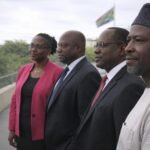
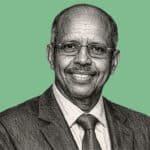
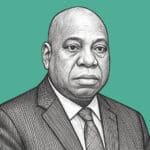
Finance Minister Oulimata Sarr leads the Senegalese delegation, accompanied by Central Bank Vice-Governor Ahmadou Al Aminou Lô. On the multilateral side, IMF Africa Director Abebe Aemro Selassie oversees discussions. Private-sector observers include major holders of CFA-denominated bonds such as the BOAD and regional pension funds, whose support remains crucial for short-term liquidity.
Possible scenarios ahead
If an agreement is reached, disbursements could resume in tranches aligned with structural benchmarks on debt disclosure and tax reform, catalysing additional budget support from the World Bank and the African Development Bank. Failure would keep Senegal reliant on regional markets, where capacity is finite, and could delay energy-sector projects by raising financing costs.