Key takeaways
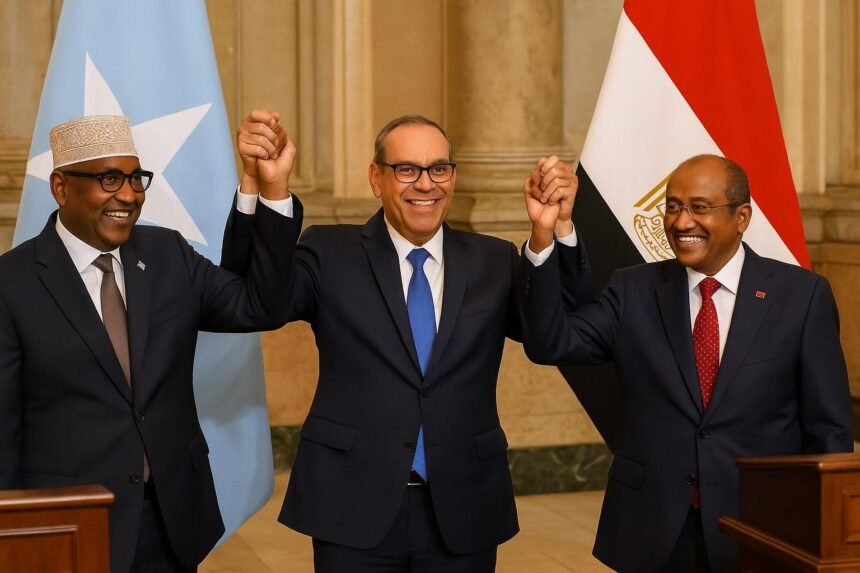
Egypt is gradually repositioning itself as a pivotal security and development actor across the Horn of Africa, an arc that runs from Port Said down to the straits of Bab el-Mandeb. Cairo presents its new activism as a protective move for Red Sea trade and Nile-basin stability.
Foreign Minister Badr Abdelatty insists that the policy is neither opportunistic nor recent, arguing that the country’s interests in the region date back to Queen Hatshepsut’s expeditions. Yet the timing, amid Somali insecurity, Sudan’s war and Ethiopia’s naval aspirations, gives the initiative unmistakable strategic urgency.
Cairo’s Strategic Arc
Geography underpins Cairo’s calculus. A glance at regional maps shows a seamless corridor linking the Nile delta, the Suez Canal, the Red Sea and the Horn’s littoral states. Safeguarding that corridor, Egyptian officials argue, is as vital to national security as domestic water management.
Security Pressures in the Red Sea
The confluence of Al-Shebab raids in Somalia and Houthi missile strikes in the Red Sea has alarmed shipping insurers and multinationals rerouting cargo around the Cape. Cairo views the two movements’ reported coordination as a harbinger of an archipelago of insecurity stretching across both shores.
Egyptian naval officers openly worry that unchecked attacks could normalise a private-tax system on maritime traffic, undermine Suez Canal earnings and complicate the planned expansion of Port Said’s industrial zone. Hence the call for collective, preferably African-led, security arrangements rather than ad-hoc coalitions involving distant powers.
Ethiopia’s Naval Aspirations
Addis Ababa’s announcement that it seeks sea access through a prospective agreement with Somaliland has sharpened Egyptian anxieties. Cairo considers any land-locked state’s attempt to secure a permanent naval base on the Red Sea a precedent that could redraw maritime governance structures and upset delicate regional balances.
Sudan’s Turmoil
Khartoum’s conflict has meanwhile spilled over supply chains and refugee flows. Egyptian diplomats fear a prolonged war could fragment Sudan into patronage zones vulnerable to resource mercenaries. In that scenario, the Nile Basin would face overlapping crises of food, energy and cross-border militancy that Cairo could scarcely firewall.
Egypt’s AU Peacekeeping Return
Responding to a request from Mogadishu, Egypt has pledged troops, police and an air component to the African Union Transition Mission in Somalia. The decision ends a three-decade hiatus since Egypt last donned a UN blue helmet there and signals a willingness to pair rhetoric with military assets.
Soft Power and Economic Outreach
Beyond troop deployments, Cairo is reviving scholarships at Al-Azhar University, offering Arabic language media training and extending electricity interconnection studies to Djibouti and Kenya. Officials pitch these programmes as a counter-narrative to extremist messaging and as proof that security and human development must be advanced together.
State-linked construction firms are simultaneously bidding for port modernisation contracts, while EgyptAir explores additional routes to Hargeisa and Bosaso. The overt objective is commerce; the sub-text is influence through connectivity. This echoes Cairo’s long-held view that infrastructure corridors can be geopolitical sinews as potent as frigate deployments.
Scenarios Ahead
If the Somali theatre stabilises under a stronger AU mandate, Egypt could leverage its presence to promote a broader Red Sea security architecture anchored in existing African institutions. Alternatively, an escalation between Addis Ababa and Mogadishu over sea lanes could compel Cairo to seek firmer defence understandings with Gulf allies.
A worst-case scenario would see Houthi-Shebab operations proliferate, pushing international navies deeper into Red Sea chokepoints and reducing African agency. Egyptian planners therefore frame their interventions as pre-emptive conflict prevention rather than containment, arguing that the region still holds the levers to set its own security terms.
Diplomatic Calendar
Cairo hosts the annual Red Sea Forum this July, where coastal states are expected to debate a draft maritime code of conduct circulated by Egypt’s foreign ministry. Observers will gauge whether Ethiopia attends and, if so, how firmly Cairo presses Addis Ababa on the scope of acceptable naval activities.
Later in the year, President Abdel Fattah al-Sisi plans a joint tour of Djibouti, Eritrea and Kenya, accompanied by a business delegation tasked with fast-tracking power-grid deals. The itinerary will also test how Egypt harmonises security offers with development incentives, a balance that could define its Horn of Africa footprint.
Key Regional Actors
Kenya, which chairs the IGAD Council this cycle, could emerge as a swing state. Nairobi’s appetite for deeper ties with Cairo has grown since its Lamu Port ambitions stalled. If Egypt channels financing toward that corridor, it may secure a crucial ally in upcoming maritime talks.