A Showcase Interrupted
On the eve of its grand opening, the Museum of West African Art watched visitors drift away from its gates. Months of rehearsed tours and calibrations suddenly felt premature as a terse state notice revoked the six-hectare plot the institution had cultivated into a futuristic cultural campus (BBC, 2024).
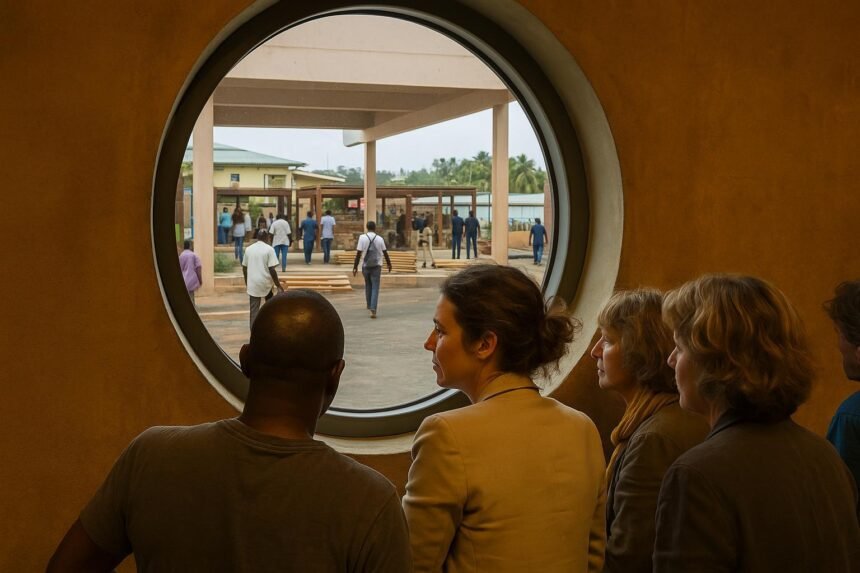
The setback undercut five years of fundraising and construction led by Nigerian investor-philanthropist Phillip Ihenacho. Designed by British-Ghanaian architect Sir David Adjaye, the complex melds terracotta walls with shaded courtyards, framing laboratories, an amphitheatre and an archaeological dig meant to reconnect Benin City with its imperial past.
Behind the Closed Doors
Hours before officials arrived, conservators had been unpacking canvases and bronzes, logging humidity levels and plotting traffic flows for school visits. Their disappointment was visceral, yet a quiet resolve spread through the workrooms: the vision of a globally competitive African museum would not be surrendered to legal paperwork.
Local Rivalries Exposed
Edo State’s new administration justified the land seizure by noting that the museum had quietly shortened its original name, dropping the word “Edo”. Critics read the move differently, linking it to political distance from former governor Godwin Obaseki, an early champion of the project, and to the influence of the revered Oba of Benin, Ewuare II.
Sunday protests amplified that tension. Demonstrators demanded the site be renamed the Benin Royal Museum and placed under the monarch’s direct control. Foreign guests, drawn for the launch, were hurried out under police escort as chants rang through the campus boulevard (BBC, 2024).
The Benin Bronzes Question
Custody of the fabled Benin Bronzes, looted by a British expedition in 1897 and now dispersed across Western museums, sits at the heart of the drama. Abuja decreed in 2022 that any returned bronzes belong to the palace, complicating earlier expectations that they would crown the new museum’s galleries.
Ihenacho’s team stresses that Mowaa was conceived as a platform for modern creativity, not a warehouse for contested heirlooms. Yet each mention of restitution rekindles public expectation, forcing the institution into a diplomatic balancing act between federal policy, royal prerogative and donor aspirations.
Economic Stakes for Benin City
Beyond symbolism, the museum projects an $80 million annual contribution to the regional creative economy and more than 30,000 direct and indirect jobs through exhibitions, residencies and supply chains. Hoteliers, artisans and tour operators had already begun marketing packages that now hang in limbo.
Residents, especially youth, see the campus as a gateway to global networks. Sculpture graduate Eweka Success recalled finally studying bronze-casting techniques up close during a pre-opening tour and imagined local workshops rising to international demand once doors officially open.
Artists Reframe Restitution
The inaugural show, Homecoming, waits in its crates. It gathers diaspora stars Yinka Shonibare, Toyin Ojih Odutola, Precious Okoyomon and Tunji Adeniyi-Jones, all interrogating absence and memory. Shonibare’s centrepiece—a pyramid of 150 clay copies of the bronzes—invites audiences to mourn, heal and reimagine ownership.
Curator notes describe clay as both fragile and rooted, a metaphor for African institutions still solidifying foundations while negotiating centuries-old wounds. For many artists, the exhibition’s delay reinforces the installation’s thesis: restitution is meaningless without local structures capable of sustaining mind and soul.
Federal Mediation and Soft-Power Optics
President Bola Tinubu has empanelled a high-level committee led by Culture Minister Hannatu Musawa to broker a compromise. Abuja’s priority is to calm fears abroad that Nigeria lacks the capacity to safeguard repatriated artefacts, a narrative that could slow ongoing negotiations with European museums.
Musawa publicly reiterated that modern institutions and traditional custodians must coexist, signalling room for a hybrid governance formula. Diplomats tracking soft-power capital note that Nigeria’s credibility in multilateral cultural forums now hinges on resolving the Benin impasse without alienating royal authorities or civil society.
Lessons for African Heritage Diplomacy
The Mowaa saga illustrates how domestic politics can ricochet across international restitution debates. Successive governments may alternately champion or sideline cultural infrastructure, leaving projects vulnerable unless governance models align state, federal and traditional interests from inception.
Across West and Central Africa, other capitals planning new museums—whether in Abidjan, Libreville or Brazzaville—are watching carefully. The policy takeaway is clear: architectural grandeur must be matched by legally watertight frameworks and inclusive stewardship to withstand electoral cycles and chieftaincy dynamics.
Road Ahead for the Museum of West African Art
For now, security guards patrol silent galleries, climate systems hum over empty plinths, and the staff retreat to training sessions while lawyers draft counter-arguments. Ihenacho remains circumspect but optimistic, arguing that the vision was always larger than one opening date or one collection.
If a settlement is reached, Benin City could yet emerge as a continental hub where contemporary ingenuity dialogues with ancestral mastery. In that possibility lies a message that resonates far beyond Nigeria: Africa’s creative renaissance will be shaped as much by the politics of place as by the power of art.