Ce qu’il faut retenir
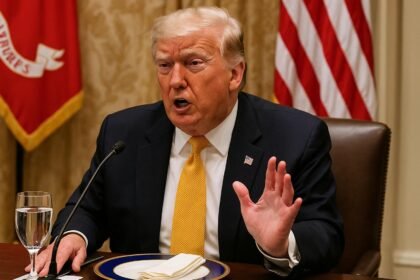
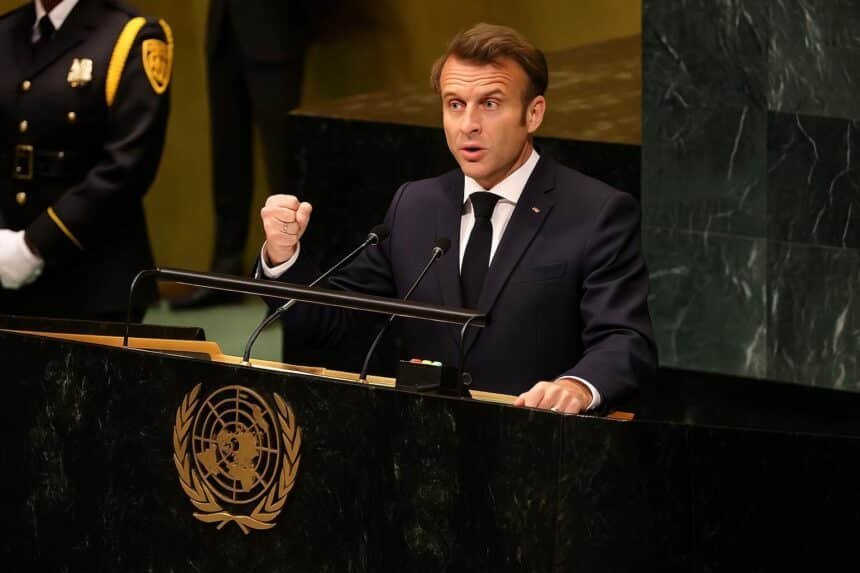
Speaking before the United Nations General Assembly on 25 September, French President Emmanuel Macron warned that the humanitarian and security crisis in eastern Democratic Republic of Congo risks deepening unless the international community acts swiftly. He promised to convene a high-level conference in Paris in October to mobilise relief and align peace initiatives.
Reiterating that “the sovereignty and territorial integrity of the DRC must be respected,” Macron framed the gathering as both a humanitarian lifeline and a diplomatic lever designed to restore hope for populations across North and South Kivu who have endured displacement, violence and uncertainty for three decades.
Humanitarian urgencies in the Kivus
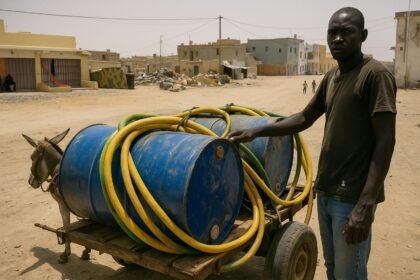
Decades of conflict have left a patchwork of armed groups, damaged infrastructure and chronic displacement in the resource-rich eastern provinces. The United Nations estimates hundreds of thousands of civilians remain uprooted, with basic services overstretched and local economies stalled, compounding food insecurity and exposing communities to health and protection risks.
Aid organisations working in Goma and Bukavu warn that the humanitarian corridor could close if front lines shift again, making Macron’s Paris appeal more than symbolic. Donor fatigue is palpable after successive crises, yet field actors insist that targeted funding for water, shelter and trauma care could still prevent further mass exodus.
M23 rebellion back in the spotlight
The renewed prominence of the March 23 Movement, or M23, has reshuffled an already volatile security puzzle. After resurfacing in 2021, the rebels seized Goma in January and Bukavu in February, capitalising on alleged support from neighbouring Rwanda. Each takeover amplified regional mistrust and underscored Kinshasa’s challenge in exerting authority over the borderlands.
Under Qatari mediation, Kinshasa and M23 agreed to a 19 July cease-fire in Doha, building on a separate late-June accord between the DRC and Rwanda signed in Washington. The ink had barely dried before sporadic clashes flared, suggesting that battlefield incentives still outweigh diplomatic pledges for commanders on the ground.
Uvira: a strategic domino
Observers now fear that Uvira, a trading hub of half a million residents opposite Burundi’s commercial capital Bujumbura, could become the next target. The city sits along Lake Tanganyika and remains under Congolese army and pro-Kinshasa militia control. An M23 advance would threaten regional supply routes and ignite cross-border anxieties.
Military officials in Kinshasa accuse the rebels of regrouping on nearby hills despite the July truce. Humanitarian planners consequently include Uvira in worst-case scenarios, fearing urban combat akin to previous battles for Goma. Macron’s Paris summit aims to map contingencies, lest relief agencies be caught off-guard by a sudden shift.
Calendar toward the Paris conference
Elysée advisers indicate that the October meeting will gather United Nations agencies, African Union representatives, donor governments and select civil-society organisations. Although the guest list is still being finalised, Paris intends to couple pledges for emergency aid with a review of existing peace tracks in Doha, Washington and regional capitals.
French diplomats argue that coordination fatigue can be reversed if actors share a single, time-bound matrix linking humanitarian benchmarks to security milestones. Analysts, however, caution that without local legitimacy even the most sophisticated template risks remaining a paper exercise. Congolese authorities have yet to outline their own delegation’s composition.
Actors navigating a crowded stage
Macron’s initiative places France at the confluence of humanitarian action and conflict diplomacy in Central Africa. While Paris no longer enjoys the automatic influence it once wielded, the president positions his country as a convener capable of forging pragmatic coalitions focused on immediate relief rather than protracted geopolitical debates.
For Kinshasa, the announcement offers a platform to reaffirm sovereignty while appealing for resources. The M23 leadership, by contrast, may interpret the conference as another attempt to internationalise pressure without addressing their core grievances. Regional neighbours will watch closely, calculating how outcomes might affect trade, security commitments and diplomatic standing.
Possible scenarios after Paris
Should the October summit secure a robust funding envelope and reaffirm the Doha cease-fire, humanitarian corridors could stabilise long enough for displaced families to consider returning. Conversely, if commitments remain vague, a renewed M23 push toward Uvira might unfold against a backdrop of diplomatic fatigue, further complicating any subsequent mediation.
Either outcome will resonate beyond the Great Lakes. A credible humanitarian response could bolster multilateralism at a time of competing global crises, whereas failure would erode trust in collective mechanisms and embolden armed actors who calculate that the spotlight soon moves elsewhere. Paris therefore becomes not just a venue, but a test.