Niamey Pivots on Uranium Exports
In a televised address on 30 November, General Abdourahamane Tiani announced that uranium from the Société des mines de l’Aïr would henceforth be marketed internationally, ending five decades during which French-controlled entities set the commercial rhythm of Niger’s nuclear ore.
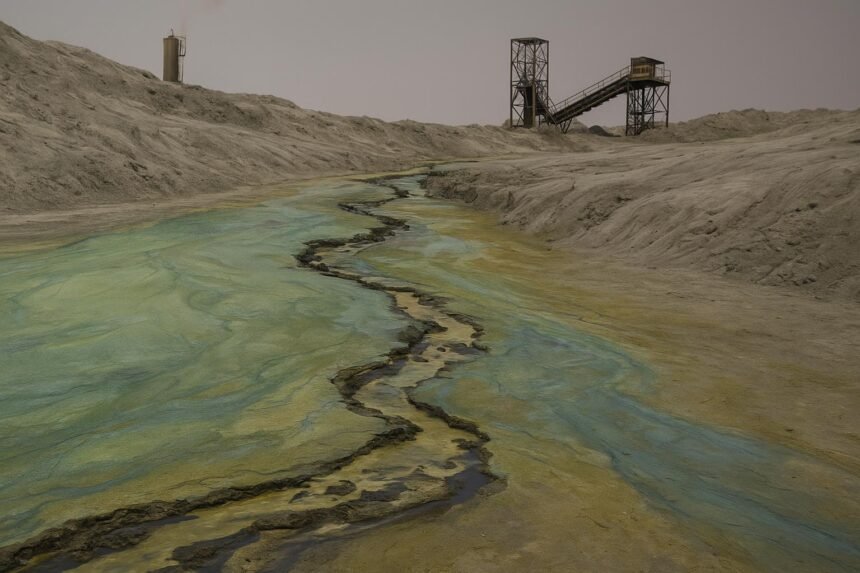
The declaration came five months after the military government nationalised Somaïr, stripping Orano of its 63.4 percent operating stake, and only weeks after an arbitration panel ordered Niamey not to dispose of roughly 1 300 tonnes of concentrate already stockpiled at the Arlit site.
A Convoy Tests Legal Boundaries
According to regional investigative outlets LSI Africa and Wamaps, a heavily guarded convoy carrying almost 1 000 tonnes of uranium departed Arlit in mid-November, threading through northern Burkina Faso toward Lomé, where Togolese port facilities offer discreet maritime loading options beyond France’s traditional logistics chain.
Neither the Nigerien Ministry of Mines nor the Togolese authorities have formally confirmed the shipment, yet social-media images showing containerised drums under escort have reinforced the perception that Niamey is testing the practical limits of the arbitration ruling.
New Strategic Suitors for Niger’s Ore
At the heart of the dispute lies a broader recalibration of Niger’s external partnerships since the July coup, during which the junta has ordered French troops to depart and opened overt channels to Moscow and Tehran, both eager to secure long-term uranium supplies for their civilian nuclear programmes.
Russian state firm Rosatom publicly declared interest in the vast Imouraren deposit—holding an estimated 200 000 tonnes—shortly after the coup, while Iranian envoys have multiplied visits to Niamey, seeking what one diplomat calls a “strategic inroad in francophone Sahel”.
Corporate Pushback and Price Volatility
For Orano, 90 percent owned by the French state, Niger represented roughly a quarter of its uranium output before Cominak’s 2021 closure. Company lawyers argue that the takeover violates bilateral investment treaties and that any sale of Somaïr ore risks depressing already volatile spot prices.
Niamey counters that previous offtake agreements granted an effective monopoly to the former colonial power, limiting revenue for a country where the World Bank estimates per-capita GDP at just 833 dollars. By forcing open bidding, the government hopes to capture what it terms a “fairer rent” from global utilities.
Commodity traders in London and Singapore say spot uranium quotes have nudged past 85 dollars per pound on speculation that Niger’s material may bypass long-term contracts, injecting short-term liquidity into a market already tightening due to Kazakh production hiccups and Canada’s Cigar Lake maintenance season.
Transit and Security Concerns
Security analysts, however, warn that moving radioactive material through the tri-border Sahel corridor heightens risks of jihadist ambush or environmental incident. A previous 2013 attack on the Arlit mine by MUJAO militants served as a grim reminder of how uranium infrastructure can become a symbolic target.
Togo’s deep-water port, designed primarily for phosphates, lacks specialised nuclear handling infrastructure, meaning any transfer must rely on chartered vessels certified under the International Maritime Organization’s Code for radioactive cargo. Shipping brokers in Lomé say insurance premiums are already edging upward in anticipation of politically exposed consignments.
Diplomatic Calculus for France and ECOWAS
European utilities, which sourced 25 percent of their uranium needs from Niger in 2022 according to Euratom Supply Agency figures, are watching closely. Some have discreetly signalled willingness to bid provided transaction structures bypass contested Somaïr inventories and comply with future arbitration outcomes.
Paris, for its part, has few painless options. A cut in development aid would push Niamey further toward alternative patrons, yet acquiescence could embolden other producers in West Africa to reopen mining contracts. French diplomats insist dialogue is ongoing, but concede that “trust has evaporated since the coup”.
Within ECOWAS, hardliners who once advocated military intervention now view the uranium dispute through an economic lens, arguing that collective sanctions should not obstruct a member state’s right to market its natural resources. The regional body’s fractured stance complicates any coordinated response beyond routine declarations.
What Next for Sahelian Uranium?
The coming months will therefore test whether Niger can translate its assertion of sovereignty into sustained bargaining power or whether protracted litigation will chill investment in the Aïr and Imouraren basins, leaving both sides locked in an expensive stalemate long after the convoy reaches the Gulf of Guinea.