Ce qu’il faut retenir
The High Court of Kenya has deferred to 15 January its judgment in the class action filed by victims of the 7 August 1998 bombing of the U.S. embassy in Nairobi. The decision leaves more than 5 000 Kenyan survivors without clarity on whether Washington will be asked to indemnify them, even as U.S. victims were compensated years ago.
- Ce qu’il faut retenir
- Delayed verdict stirs fresh anguish
- A dossier deemed “too voluminous”
- Survivors’ legal strategy
- Political calendar and J.D. Vance visit
- Unequal compensation question
- Personal costs behind the statistics
- Government silence amplifies pain
- Calendrier : next steps toward 15 January
- Scénarios pour la suite
- Contexte
- Acteurs clés
Delayed verdict stirs fresh anguish
The courtroom disappointment was immediate. After studying the file for two years, the presiding judge said the dossier’s sheer volume prevented a well-grounded decision by 6 November. For the plaintiffs it was a gut-punch, reopening wounds from an attack that killed 213 people and injured thousands in the Kenyan capital.
A dossier deemed “too voluminous”
Blind since the blast shattered his life, Douglas Sidialo called the explanation an affront. He argues that administrative convenience cannot outweigh decades of suffering. His outrage echoes through survivor networks that have lobbied successive governments with little success, only to meet another procedural hurdle at the eleventh hour.
Survivors’ legal strategy
Frustrated by Washington’s decision to compensate only U.S. nationals and embassy staff, the claimants chose to sue their own state. The petition seeks a declaratory order compelling Nairobi to request full reparations from the United States. Lawyers say the approach relies on Kenya’s constitutional duty to protect citizens abroad and at home.
Political calendar and J.D. Vance visit
Consortium chairman Justus Kimathi links the adjournment to the upcoming late-November visit of U.S. Vice-President J.D. Vance. He suspects the court wishes to avoid a ruling that could complicate bilateral optics. Legal observers note that Kenyan courts are formally independent, yet history shows sensitive judgments sometimes skirt diplomatic flashpoints.
Unequal compensation question
The United States disbursed millions of dollars to American families under domestic victim assistance laws. No such channel exists for Kenyan citizens, despite their numerical majority among the dead and wounded. Plaintiffs argue that parity of treatment is a moral imperative and point to precedents where Washington compensated foreign nationals in other incidents.
Personal costs behind the statistics
The economic fallout remains stark. Ruth Githuji, who lost her mother, left school to support siblings. Some peers drifted into precarious labour or sex work. Without the restitution they seek, these families struggle to fund healthcare for blast-related injuries that still require medication or surgery twenty-five years later.
Government silence amplifies pain
Survivors complain that successive Kenyan administrations mark memorial anniversaries with lofty speeches yet provide no structured assistance. They fear the state’s muted stance in court may signal reluctance to challenge a strategic ally. For many, recognition is as crucial as money; both still feel out of reach.
Calendrier : next steps toward 15 January
Counsel must file any supplementary submissions within four weeks, after which the bench will finalise its opinion. If the ruling compels diplomatic engagement, Nairobi would have to decide on the tenor and timing of a formal request to Washington, potentially opening a new negotiation track early next year.
Scénarios pour la suite
If the court sides with the victims, Kenya could press for a bilateral settlement, possibly mediated by a special envoy. A partial victory—recognition without enforcement—might still strengthen public advocacy. Conversely, an unfavourable judgment could push survivors toward regional human-rights tribunals, prolonging the litigation treadmill they hoped to exit.
Contexte
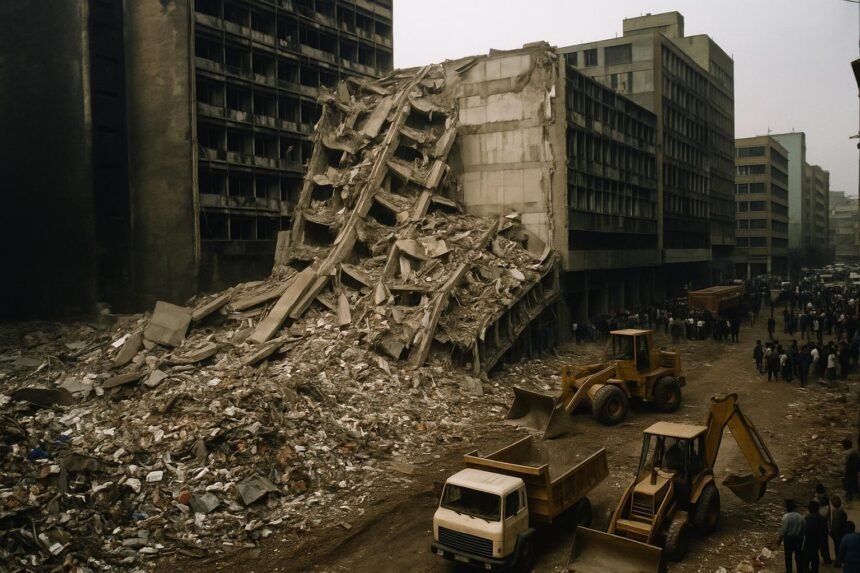
On 7 August 1998, coordinated al-Qaida truck bombs struck U.S. embassies in Nairobi and Dar es Salaam. The Nairobi blast levelled adjacent buildings, trapping office workers and passers-by in debris. International attention focused on counter-terrorism, yet local recovery received scant financing, entrenching a perception that Kenyan lives were undervalued.
Acteurs clés
Key figures in the legal push include Douglas Sidialo, whose blindness has made him a public face of resilience; Justus Kimathi, steering the consortium’s strategy; and Justice-designate J.D. Vance, whose Nairobi agenda may now intersect with the compensation debate. Behind them stand thousands whose stories seldom reach the diplomatic cables.