A Trump-Branded Multilateral Experiment Takes Shape
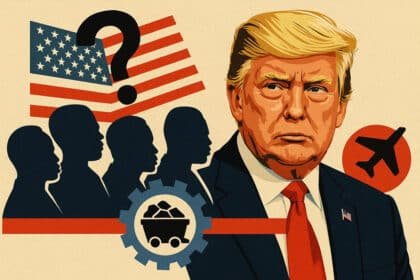
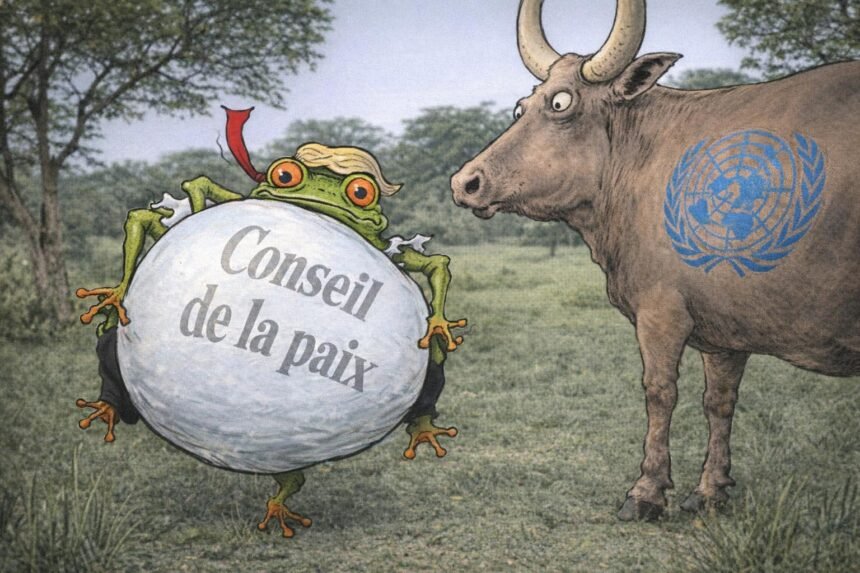
In both diplomacy and economics, Donald Trump’s latest institutional idea has been described by observers as increasingly improvisational. Initially presented as a “Peace Council” focused narrowly on stabilisation and reconstruction in Gaza, the project now appears, according to a newly surfaced charter, to have expanded into a body with ambitions well beyond its original theatre.
- A Trump-Branded Multilateral Experiment Takes Shape
- UN-Like Architecture, With a Political Message
- A Founding President, Handpicked Members, and a Price Tag
- Morocco Moves First as African Capitals Weigh Options
- Abraham Accords, Western Sahara, and the Diplomatic Backdrop
- What the New Council Means for Africa’s Multilateral Calculus
The document assigns the Council a mission to “promote stability, restore reliable and legitimate governance and guarantee lasting peace” across the world, with a particular emphasis on “areas affected by or threatened by conflict”. That broadened scope is one reason the initiative is being read, in several diplomatic circles, as a UN-style structure—though with an unmistakably personal political signature.
UN-Like Architecture, With a Political Message
The similarities are not merely rhetorical. The charter outlines member states, a rotating presidency, and seats reserved for permanent members—an institutional vocabulary that mirrors familiar multilateral templates. The preamble adds a sharper undertone, calling for a break with “approaches and institutions that have too often failed”, a line widely interpreted as a veiled critique of existing global governance mechanisms, without naming them directly.
Trump has, in previous remarks, branded the United Nations as “inactive”. The new Council’s framing thus invites comparison with the UN while positioning itself as an alternative instrument—one that promises speed, focus, and political clarity to its backers. For many diplomats, that duality will be central: an organisation that borrows multilateral form while advertising distance from multilateral practice.
A Founding President, Handpicked Members, and a Price Tag
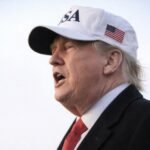
If the initiative looks like a copy, critics argue it may be a constrained one. The charter’s design concentrates authority around Trump himself. He is presented as the founding president, with the power to select and, after a three-year mandate, revoke the status of invited member states. This is a governance model that prioritises central direction over collective decision-making, aligning with a more transactional view of international cooperation.
Trump has also moved quickly to appoint personalities to the organ, including his son-in-law Jared Kushner, former UK prime minister Tony Blair, and American billionaire Marc Rowan. The profile of these names signals a preference for figures considered politically compatible with Trump’s worldview, reinforcing the perception that the Council would operate close to its creator’s strategic instincts rather than through a neutral secretariat.
In a businessman’s logic, the charter also makes permanent membership a matter of contribution. A permanent seat would be negotiated at more than one billion US dollars in annual funding. For capitals assessing participation, this sets the Council apart from universalist institutions: entry, influence and status appear closely tied to payment capacity and political alignment.
Morocco Moves First as African Capitals Weigh Options
Against the UN’s current 193-member universality, the new Council would begin with a far smaller circle. Around a hundred states—many described as political allies of the United States—are reported to have received invitations to join. In the Middle East, Jordan and Pakistan are among those that have received the offer, underscoring the Council’s initial concentration on countries already accustomed to US-centric security and diplomatic frameworks.
On the African continent, Egypt has indicated it will examine the proposal “from all angles”, signalling caution and due diligence. Morocco, by contrast, has already accepted. According to the information provided, King Mohammed VI formally agreed on 19 January to join as a founding member, making Rabat the first African capital to step into the new inter-state structure.
For Africa’s diplomatic community, Morocco’s choice will be read through the lens of strategic positioning. Joining early can shape agendas, secure privileged access, and widen channels to Washington. At the same time, the Council’s hybrid nature—multilateral in appearance, personalised in governance—will likely encourage other African governments to move carefully, calibrating benefits against uncertainty over rules and durability.
Abraham Accords, Western Sahara, and the Diplomatic Backdrop
Morocco’s decision also fits into a longer arc of US-Morocco political exchange. At the end of Trump’s first term, Washington recognised Morocco’s sovereignty over Western Sahara in parallel with Rabat’s signature of the Abraham Accords, whose goal is to advance a rapprochement between Moroccan and Israeli diplomacy, notably on security issues. That earlier bargain remains a defining reference point in how Morocco’s foreign policy choices are interpreted.
From that perspective, accepting a founding seat in Trump’s new Council can be viewed less as a sudden pivot than as another step within an established diplomatic portfolio: deepening ties with a key partner, keeping channels open to influential US networks, and sustaining a posture of proactive engagement on security-linked initiatives. For other African states, the lesson may be less about imitation than about timing and leverage in evolving US frameworks.
What the New Council Means for Africa’s Multilateral Calculus
The emergence of an additional peace-and-governance platform—especially one marketed as a corrective to existing institutions—inevitably raises questions for African diplomacy. Many African governments value predictable multilateralism, but also seek forums where their priorities are heard and resourced. A body promising reconstruction, stabilisation and “legitimate governance” could attract interest, particularly where funding and political sponsorship are tangible.
Yet the charter’s concentration of authority and the monetisation of permanent status also suggest a selective club rather than a universal table. In practice, African capitals may assess the Council as a supplementary channel rather than a substitute for established organisations. Morocco’s early entry will therefore be closely watched: as a test of whether the Council becomes an influential arena—or remains an emblematic, Trump-centred experiment with limited global uptake.