
Ce qu’il faut retenir
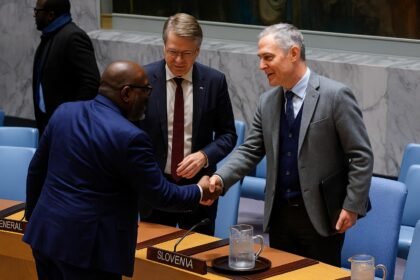
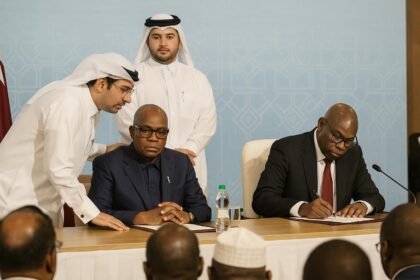
Delegates from the Democratic Republic of Congo and Rwanda sit down this Friday in Washington for the first session of the Joint Oversight Committee created on 27 June. The mechanism, shepherded by the United States, is mandated to log complaints, investigate alleged breaches and design confidence-building steps.
The talks unfold against a backdrop of entrenched mistrust. Kigali claims Kinshasa has hired foreign mercenaries and tolerates anti-Rwandan rebels, while Congolese authorities insist Rwandan troops remain on their soil and that the M23 coalition, renamed AFC, still receives Kigali’s backing. The committee must sift fact from allegation without derailing an already fragile accord.
Contexte géopolitique
The eastern provinces of the DRC sit at the fault line of Great Lakes security, where mineral wealth, porous borders and historic grievances intersect. Since late 2021, the resurgence of the M23 has displaced hundreds of thousands and complicated regional integration efforts championed by bodies such as the Economic Community of Central African States.
Rwanda, citing its own security imperatives, views the presence of the Democratic Forces for the Liberation of Rwanda (FDLR) across the border as an existential threat. Kinshasa, for its part, frames the M23 advance as a proxy incursion undermining its sovereignty and hampering state authority in North Kivu.
Calendrier diplomatique serré
The 27 June agreement demanded that the oversight committee meet within 60 days, a deadline that coincides with rising battlefield rhetoric. Recent Congolese operations in Walikale to coax FDLR combatants into surrender were announced just a week before the Washington rendezvous, allowing both sides to arrive with fresh talking points.
Failure to de-escalate swiftly would jeopardise a planned regional economic framework, whose signature was already postponed once because of security objections voiced by Kinshasa. Donor patience is not indefinite: several international partners have hinted that development financing hinges on measurable progress in stabilisation.
Acteurs et intérêts
In Washington, the DRC delegation is expected to highlight drone footage and intercepted communications it says prove Rwandan troop presence near Bunagana. Kigali counters with satellite images it claims show Colombian ex-military contractors training FARDC units, and a 14 000-strong Burundian contingent allegedly operating in South Kivu (statement by Rwanda’s foreign minister).
The United States, wary of a wider regional conflagration that could upset strategic mineral supply chains, has positioned itself as arbiter. Its diplomats quietly remind both capitals that the African Growth and Opportunity Act preferences many Congolese and Rwandan exports enjoy are ultimately at congressional discretion.
Neighbouring governments hold vested stakes, too. Burundi seeks regional legitimacy for its deployments, Uganda eyes trade corridors through North Kivu, and Congo-Brazzaville—currently emphasising mediation within ECCAS—monitors proceedings closely, conscious that prolonged instability would reverberate throughout Central African security architectures.
Scénarios de sortie
Optimists envisage the committee establishing joint verification patrols, potentially under African Union observation, that could corroborate or dismiss claims about foreign troops and mercenaries. Such a step would reopen the door to the suspended economic accord and deflate militant recruitment narratives on both sides.
A more modest yet achievable outcome would be parallel confidence gestures: Kinshasa expanding its disarmament campaign beyond Walikale and Kigali tightening border controls against any M23 resupply. Even symbolic concessions—such as synchronized press statements—could shift perceptions of bad faith and give the oversight mechanism a tangible win.
The cost of stalemate remains high. Continued accusations would likely prompt fresh sanctions debates at the UN Security Council and deepen humanitarian distress in North Kivu. Washington’s meeting, therefore, is less a routine check-in than a litmus test for whether the 27 June accord can survive its first contact with hardened realities on the ground.