Key Takeaways
In the early hours of 7 December, gunfire in Cotonou signalled an organised attempt to unseat President Patrice Talon. ECOWAS reacted in less than twelve hours, fast-tracking a four-nation force that entered Beninese territory before midnight and restored control of key sites without prolonged combat, according to regional officials.
- Key Takeaways
- Gunfire Before Dawn in Cotonou
- Emergency Lines Go Hot Across West Africa
- Abuja’s Bid to Restore Leadership
- Abidjan Insists on Credible Action
- Freetown Frames the Stakes
- Building a Four-Nation Spearhead
- The Quiet French Contribution
- Lessons for ECOWAS Crisis Response
- What Next for Benin and the Region
Speed, political resolve and discreet intelligence sharing were decisive. Abuja sought to reclaim strategic leadership after its stalled Niger operation, Abidjan insisted that a green light must translate into boots on the ground, while Sierra Leone’s Julius Maada Bio framed the showdown as a credibility test for the entire West African architecture.
Gunfire Before Dawn in Cotonou
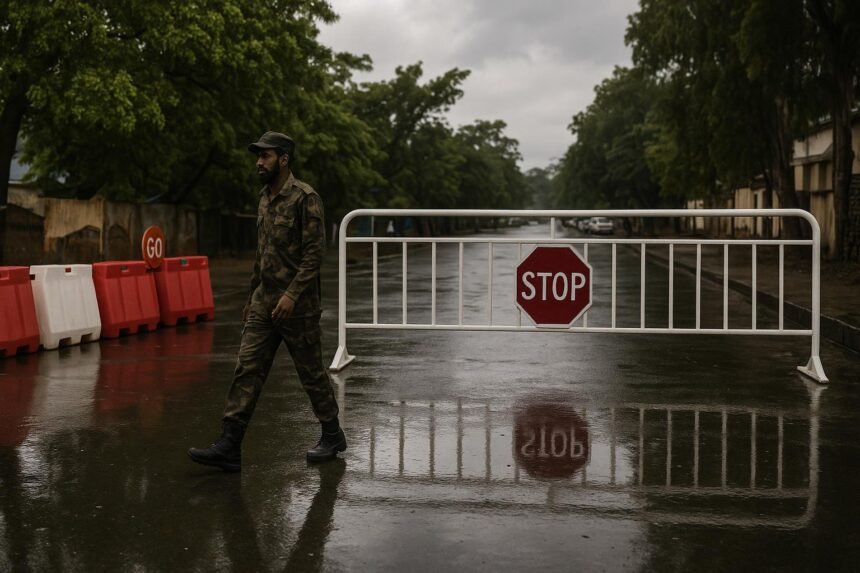
According to security sources in Cotonou, the putschists—mostly junior officers from an artillery battalion—fired on the Akpakpa barracks at 04:10. They hoped to seize the national broadcaster and isolate the presidency by sunrise. Loyalist units contained the assault but could not be certain of wider allegiance splits, prompting an immediate request for external support.
Emergency Lines Go Hot Across West Africa
Within minutes of the SOS from Cotonou, President Talon phoned Nigeria’s Bola Tinubu and Côte d’Ivoire’s Alassane Ouattara. Both leaders convened an encrypted video call that included Ghana’s Nana Akufo-Addo, Sierra Leone’s Bio and ECOWAS Commission Chair Omar Touray. One participant summarised the mood as “no room for another Sahel-style drift”.
Abuja’s Bid to Restore Leadership
Nigeria, facing domestic criticism for announcing but never executing an intervention in Niger, positioned itself as first responder. Defence Minister Mohammed Badaru assured peers that two airborne battalions could be over the border in three hours. An adviser admitted that “failure twice in a row would have damaged Abuja’s regional stature beyond repair”.
Abidjan Insists on Credible Action
Côte d’Ivoire’s military chief Lassina Doumbia warned colleagues that half-measures would embolden coup networks from Ouagadougou to Conakry. Ouattara backed him, stressing that any communiqués must be matched with immediate deployment. Abidjan contributed one armoured company and tactical transport aircraft, signalling that the Ivorian calculus linked Benin’s stability to the Gulf of Guinea’s economic corridor.
Freetown Frames the Stakes
Chairing the virtual summit, Sierra Leone’s President Bio, himself a former brigadier, hammered the credibility argument. An official present quoted him: “If we blink today, our mutual-defence clauses will read like hollow words.” His intervention swung hesitant voices and secured the unanimous invocation of Article 25 of the ECOWAS Mechanism on Security and Mediation.
Building a Four-Nation Spearhead
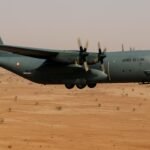
Operational planning coalesced around Nigerian air mobility, Ghanaian special forces familiar with urban raids, Ivorian armour for deterrence and a Sierra Leonean signals unit. The composite brigade crossed the Benin border at 19:00, secured Cotonou’s radio-television centre and the port by 22:15, and detained the insurgent officers before midnight, officials later confirmed.
The Quiet French Contribution
While Paris avoided any public spotlight, French liaison officers supplied satellite imagery and intercepted communications that mapped rebel positions. A senior ECOWAS diplomat acknowledged the input, stating that “actionable intelligence shaved precious hours off our timetable and minimised collateral damage”. France thus reinforced its role as a behind-the-scenes enabler rather than a visible frontline actor.
Lessons for ECOWAS Crisis Response
The Benin episode illustrates that political will, rapid communication and pre-identified force packages can outpace coup dynamics. It also shows that ECOWAS is prepared to act south of the Sahel where jihadist threats are less acute but institutional resilience is equally vital. Analysts note, however, that such momentum must now be institutionalised, not improvised ad hoc.
What Next for Benin and the Region
Benin’s government has announced a judicial inquiry limited to military courts, signalling confidence in internal cohesion. ECOWAS, buoyed by success, is considering a standby roster of battalion-level units on 72-hour notice. Whether this model can be replicated against better-armed juntas remains uncertain, yet the Cotonou precedent has undeniably reset the cost-benefit calculus for would-be plotters.