Lomé high-level meeting on eastern DR Congo peace process
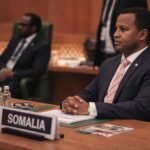
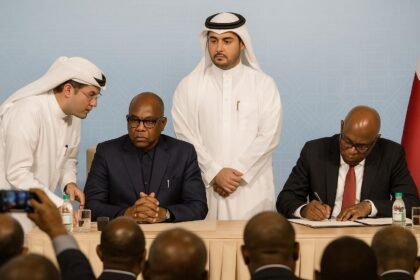
A so-called high-level meeting was held in Lomé on Saturday 17 June 2026, focusing on coherence and consolidation of peace efforts in eastern Democratic Republic of the Congo and across the Great Lakes region. According to RFI, participants did not launch any new peace initiative at the end of the discussions (RFI).
- Lomé high-level meeting on eastern DR Congo peace process
- African co-facilitators’ regional tour ahead of AU summit 2026
- AU leadership handover: meetings with João Lourenço and Évariste Ndayishimiye
- Obasanjo-led panel: clearer structure for African mediation
- Thematic role-sharing: security, humanitarian, armed groups, civil society
- Regional integration portfolio: energy and minerals in the Great Lakes
- Washington process meetings pending; notable absences in Lomé
Instead, the emphasis fell on method: reinforcing African mediation during 2026 by relying on the five co-facilitators already appointed, all of them former African heads of state. The message coming out of Lomé was less about a new diplomatic “track” than about making existing ones more legible, coordinated, and politically supported (RFI).
African co-facilitators’ regional tour ahead of AU summit 2026
According to RFI, an action plan was presented first around the calendar. In the coming weeks, the designated co-facilitators are expected to begin a regional tour, with planned stops in Kinshasa, Kigali, Kampala, and Bujumbura (RFI).
These visits are meant to take place before the African Union heads of state summit scheduled for February 2026. In diplomatic terms, the sequencing matters: it suggests a push to consult key capitals early, gather positions, and reduce procedural delays before the AU moment concentrates attention and authority (RFI).
AU leadership handover: meetings with João Lourenço and Évariste Ndayishimiye
RFI reports that, on the margins of the February 2026 AU summit, the co-facilitators are expected to meet two central figures in the continental calendar: the outgoing AU chairperson, President João Lourenço, and the incoming chairperson, President Évariste Ndayishimiye (RFI).
This planned interface with AU leadership appears designed to align mediation messaging with the Union’s political steering. It also signals that the panel wants its field engagement and its summit-level reporting to be connected, rather than operating as parallel lanes that compete for legitimacy (RFI).
Obasanjo-led panel: clearer structure for African mediation
Another important element coming out of Lomé is the structuring of the co-facilitators’ panel itself. The panel is now chaired by former Nigerian president Olusegun Obasanjo, with former Ethiopian president Sahle-Work Zewde serving as deputy, according to RFI (RFI).
For observers of African conflict mediation, such internal architecture is not cosmetic. A clearer chain of coordination can make external engagements more predictable for states and partners, and can help shape a single narrative—especially in a crisis environment where multiple initiatives often move at different speeds (RFI).
Thematic role-sharing: security, humanitarian, armed groups, civil society
Lomé also endorsed a thematic division of labour to “energise” the effort, according to RFI. Olusegun Obasanjo is tasked with defence and security questions, while Sahle-Work Zewde is responsible for humanitarian issues (RFI).
Former Kenyan president Uhuru Kenyatta will lead dialogue with armed groups, including talks between the M23 and the Congolese government. Former Central African president Catherine Samba-Panza takes responsibility for the civil society component—an attempt to institutionalise societal perspectives rather than treating them as an afterthought (RFI).
Regional integration portfolio: energy and minerals in the Great Lakes
Former Botswana president Mokgweetsi Masisi is assigned the regional integration dimension, notably questions related to energy and minerals, RFI reports (RFI). The choice reflects how economic interdependence is increasingly viewed as a stabilisation tool, not merely a development agenda.
In practice, this portfolio implicitly acknowledges that the Great Lakes security dilemma is entangled with cross-border value chains and resource governance. Framing energy and minerals as part of “integration” suggests an effort to move discussions beyond crisis management toward incentives that can underpin durable political bargains (RFI).
Washington process meetings pending; notable absences in Lomé
In parallel, RFI notes that no date has yet been set for the next meetings of mechanisms linked to the Washington processes (RFI). The absence of scheduling can be read as an open variable in the broader diplomatic ecosystem surrounding eastern DR Congo.
Finally, the meeting also featured a noticeable absence: the American Massad Boulos and the Qatari Mohammed bin Abdulaziz Al-Khulaifi were not physically present in Lomé, according to RFI (RFI). Even without overinterpreting it, their non-attendance highlights how coordination among external interlocutors remains, at minimum, uneven.