Ce qu’il faut retenir
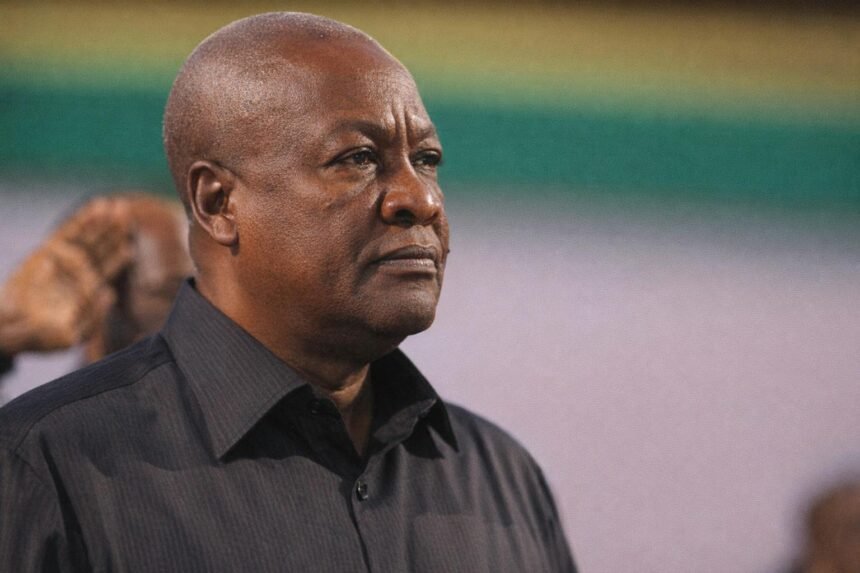
One year after his inauguration, John Dramani Mahama has anchored Ghana’s diplomacy in two parallel tracks: a strategic opening toward the Alliance of Sahel States (AES) and an intensive, interest-driven dialogue with the United States.
- Ce qu’il faut retenir
- Context: A presidency framed by regional fractures
- Sahel diplomacy: The inauguration signal that set the tone
- Ghana and the AES: Special envoy and a March 2025 Sahel tour
- ECOWAS mediation ambitions: A bridge role with limits
- US–Ghana relations: Visa restrictions lifted, a pragmatic win
- Tariffs, AGOA, and a Venezuela vote: The next test with Washington
- Acteurs: The key players shaping this first-year record
- Calendrier: The milestones that defined the diplomacy reset
- Scénarios: What Ghana’s posture could produce next
- Cartes et graphiques sourcés; photos légendées (à prévoir)
Accra’s posture signals a recalibration from the previous administration’s more oppositional line toward the AES, while aiming to retain Ghana’s role as a credible, rules-minded partner for Western capitals.
The coming months will test whether Ghana can convert symbolism and shuttle diplomacy into measurable outcomes, particularly on West African reintegration debates and on trade arrangements with Washington.
Context: A presidency framed by regional fractures
In Accra, the first anniversary of Mahama’s investiture offers a clear lens on how Ghana is navigating a West Africa reshaped by political ruptures and competing security doctrines. The new presidency quickly presented foreign policy as a tool to stabilize Ghana’s neighborhood and protect economic interests.
The diplomatic record, as described by correspondent Victor Cariou, rests on a double bet: engaging Sahelian transitional authorities through direct channels while also rebuilding leverage with the United States through negotiated deliverables (Victor Cariou).
Sahel diplomacy: The inauguration signal that set the tone
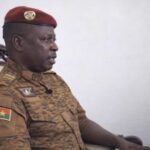
The most visible early marker of rapprochement with the AES was the presence of Burkina Faso’s junta leader, Captain Ibrahim Traoré, at Mahama’s inauguration ceremony. In West African protocol, such attendance is rarely neutral; it communicated openness to dialogue at the highest level.
That moment also differentiated the new administration from its predecessor’s posture toward the Sahelian bloc. Without theatrical messaging, the inauguration scene functioned as a diplomatic shorthand: Accra would talk, even when regional politics are tense (Victor Cariou).
Ghana and the AES: Special envoy and a March 2025 Sahel tour
Accra then moved from symbolism to institutional machinery by appointing a special envoy to the AES. The post signaled that Ghana intended to treat the AES not as a temporary irritant but as a structured counterpart requiring sustained engagement.
In March 2025, Mahama undertook a tour to Mali, Niger and Burkina Faso, with an explicit objective: positioning Ghana as a preferred intermediary between the Sahel states and the Economic Community of West African States (ECOWAS). The sequencing—envoy first, tour second—suggested a planned diplomatic architecture (Victor Cariou).
ECOWAS mediation ambitions: A bridge role with limits
Mahama’s diplomacy seeks to make Ghana a convening platform between ECOWAS and the Sahelian authorities. Yet the file remains politically constrained. Reintegration of Bamako, Niamey and Ouagadougou into ECOWAS is not on the agenda for now, despite Accra’s efforts, according to the same reporting.
Some analysts nonetheless expect the issue to become a Ghanaian priority in 2026. For Accra, the challenge is to remain useful to both sides: sufficiently engaged to earn Sahelian trust, and sufficiently aligned with ECOWAS norms to preserve credibility within the regional bloc (Victor Cariou).
US–Ghana relations: Visa restrictions lifted, a pragmatic win
On the US track, the Mahama administration can point to a concrete outcome in 2025: Ghana was reportedly among the few African countries to secure the lifting of US visa restrictions. In a climate where mobility policy is often used as diplomatic leverage, that result carries practical and symbolic value.
The reporting links this outcome to a controversial migration agreement. In diplomatic terms, the episode illustrates Mahama’s preference for transactional problem-solving: accepting politically delicate bargaining in order to recover room for maneuver with a key partner (Victor Cariou).
Tariffs, AGOA, and a Venezuela vote: The next test with Washington
The bilateral agenda now turns to the harder files: negotiations with Washington on tariff exemptions and the continuation of AGOA-related arrangements. These are high-stakes issues for Ghana’s economic diplomacy, where market access is both a growth tool and a signal of confidence.
A new variable has entered the equation: Accra’s recent condemnation of a US operation in Venezuela. The question is less about rhetoric than about how this political divergence may affect ongoing technical talks. In a relationship shaped by both values and interests, even distant theaters can carry diplomatic costs (Victor Cariou).
Acteurs: The key players shaping this first-year record
On the Sahel file, Mahama’s counterpart set includes the AES leaderships, notably Burkina Faso’s Captain Ibrahim Traoré, whose presence at the inauguration crystallized the opening. ECOWAS remains the essential institutional reference point for any reintegration discussion.
On the US file, the relevant actors are the Mahama administration and Washington’s decision-making ecosystem on visas, migration cooperation, tariffs and AGOA. Media reporting, including Victor Cariou’s dispatch from Accra, frames these interactions as persistent and negotiation-driven (Victor Cariou).
Calendrier: The milestones that defined the diplomacy reset
The first milestone was the inauguration ceremony, where AES outreach became publicly legible. The second was the appointment of a special envoy to the AES, translating intent into a dedicated diplomatic channel.
A third milestone arrived in March 2025, with Mahama’s tour of Mali, Niger and Burkina Faso, designed to institutionalize Ghana’s intermediary role. In parallel, 2025 also marked progress with Washington through the lifting of visa restrictions, linked to a migration agreement that sparked debate (Victor Cariou).
Scénarios: What Ghana’s posture could produce next
One scenario is incremental mediation: Ghana sustains dialogue and helps reduce misperceptions between ECOWAS and the AES without forcing premature reintegration. That would make Accra a steady facilitator rather than a headline-chaser, a role valued in regional diplomacy.
A second scenario is friction management with Washington: Accra maintains cooperation on migration and trade while asserting selective foreign policy autonomy, as reflected in the Venezuela stance. Success would depend on keeping disagreements compartmentalized so that tariff and AGOA talks remain insulated (Victor Cariou).
Cartes et graphiques sourcés; photos légendées (à prévoir)
Map suggestion: Ghana’s March 2025 diplomatic route to Mali, Niger and Burkina Faso, plus ECOWAS member states and AES countries, sourced from official ECOWAS and national geographic basemaps. Chart suggestion: timeline of key diplomatic milestones—investiture, envoy appointment, Sahel tour, US visa restrictions lifted—based on the reported sequence (Victor Cariou).
Photo suggestion: Official image from Mahama’s inauguration featuring visiting delegations; caption highlighting Captain Ibrahim Traoré’s attendance as an early signal of AES engagement. Photo suggestion: Mahama meeting Sahelian leaders during the March 2025 tour; caption emphasizing Accra’s intermediary ambition (Victor Cariou).