Ce qu’il faut retenir: Benin Coup Attempt and ECOWAS Deployment
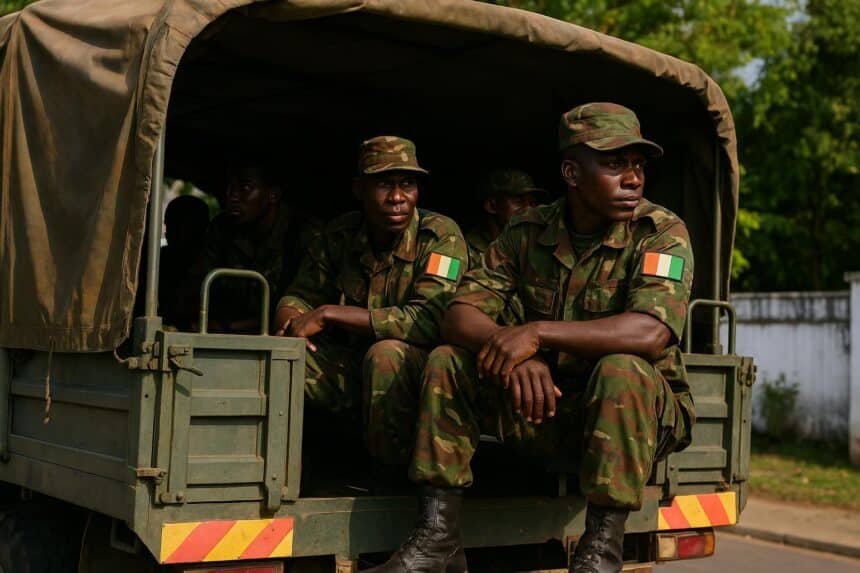
On 7 December West Africa’s security architecture pivoted quickly: ECOWAS ordered troops from Nigeria, Sierra Leone, Côte d’Ivoire and Ghana into Benin after an attempted coup against President Patrice Talon.
Nigerian jets, acting at Cotonou’s request, struck rebel-held positions at the national television station before ground forces pushed in. By nightfall, Talon declared the plotters neutralised and constitutional order intact (Africa Radio)(Business Insider Africa).
Contexte régional et démocratique
Since 2020, five ECOWAS member states have experienced coups, eroding the bloc’s prestige. The Benin scare, following turmoil in Guinea-Bissau on 26 November, threatened to deepen that reputational wound (Observateur Paalga).
Benin had long marketed itself as a democratic showcase. Critics, however, argue that Talon’s centralised style, bans on key opposition parties and arrests of rivals have narrowed civic space, creating latent frustration (Le Pays)(Washington Post).
Calendrier d’une crise fulgurante
The mutiny erupted before dawn on 7 December, when armed units seized the Office de Radiodiffusion et Télévision du Bénin. Loyalist commanders requested Nigerian air support within hours, and precision strikes cleared the compound by mid-afternoon.
ECOWAS chiefs of defence, meeting virtually the same evening, approved an immediate multinational deployment. Advance elements crossed the border from Nigeria before midnight, underscoring the bloc’s new rapid-reaction resolve.
Acteurs clés et motivations
President Talon, 67, is scheduled to leave office next year under constitutional term limits, yet sections of the military feared post-electoral uncertainty. ECOWAS, led by Nigeria’s Bola Tinubu in his role as rotating chair, saw a chance to reaffirm zero tolerance for putsches.
Troops contributed by Sierra Leone, Ghana and Côte d’Ivoire bolster the show of solidarity. Abuja’s air and land assets remain the backbone, reflecting Nigeria’s doctrine that instability on its western flank threatens its own national security.
Scénarios de sortie de crise
Short term, the deployment aims to deter any second wave of mutiny until investigations identify masterminds and financiers. ECOWAS officials signal that forces will stay “as long as necessary, but not a day longer”, pending an agreed timetable for withdrawal.
Medium term, observers foresee two pathways: an inclusive dialogue addressing political grievances, or a hard-security approach focused on arrests without reform. The former could widen political participation ahead of 2025 polls, the latter risks perpetuating a cycle of repression and resistance.
Sub-regional security stakes
For coastal states, the Benin episode revives fears of a domino effect spreading south from the Sahel. Piracy in the Gulf of Guinea and jihadist incursions toward northern Benin already stretch defence budgets; another internal crisis would divert scarce resources.
ECOWAS planners argue that quick joint action demonstrates learning from slower responses in Mali and Niger. A senior official noted that “speed is the new deterrent”, hinting that similar playbooks could be activated in other capitals if warning signs appear.
Benin’s domestic political fault lines
Civil society groups caution that military hardware cannot mend underlying socio-political rifts. Economist Chrystel Houénou points to growing urban-rural inequality despite headline GDP growth, fuelling what she calls a “silent impatience” among youth.
Human-rights advocate Alioune Tine warns that the failed coup “reveals a deep democratic malaise” and urges Talon to “open political space before frustration migrates back to the barracks”. Whether the president opts for dialogue or discipline will shape Benin’s trajectory beyond his tenure.
Regional diplomacy outlook
Diplomats in Abuja and Accra frame the mission as a litmus test for ECOWAS sanction mechanisms ahead of a planned extraordinary summit early next year. Success in Benin could embolden calls for a standing force funded through community levies rather than ad-hoc contributions.
Yet funding constraints, divergent national interests and public skepticism toward foreign boots on domestic soil will complicate that aspiration. For now, Cotonou’s restored calm offers ECOWAS a momentary reprieve—and a reminder that democratic consolidation in West Africa remains a work in progress.