Ce qu’il faut retenir
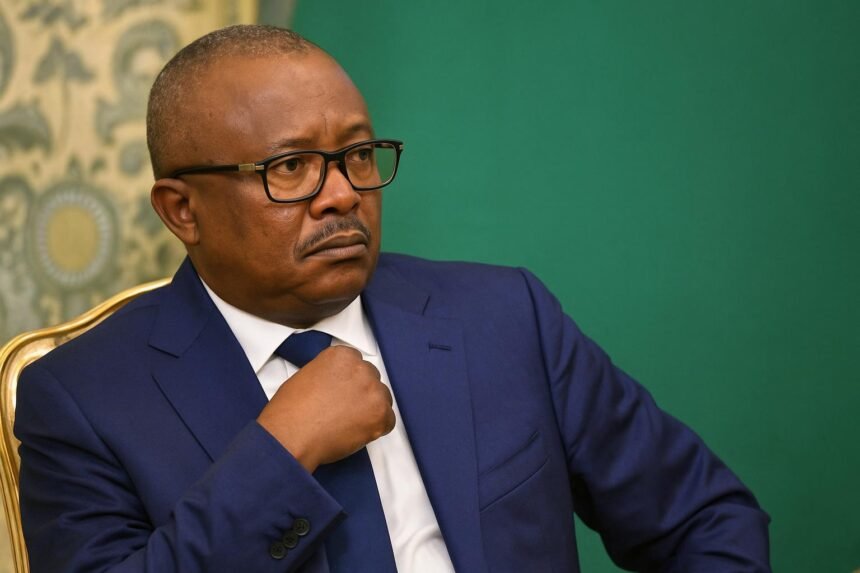
The lightning transfer of Guinea-Bissau’s ousted president Umaro Sissoco Embalo to Dakar on an ECOWAS chartered flight, hours after General Horta N’Tam’s investiture as transitional head of state, signals a fast-moving realignment in Bissau politics and places West Africa’s foremost regional bloc at the center of an unfolding constitutional reset.
Contexte
According to a communiqué issued by Senegal’s Ministry of Foreign Affairs on 27 November, Embalo arrived in the capital aboard a special jet arranged by the Economic Community of West African States. The note framed the reception as a logistical facilitation requested by unspecified authorities following the change of leadership in Bissau.
Only hours earlier in Bissau, General Horta N’Tam, until then chief of the army’s land forces, had been sworn in as president of the transition and head of the High Military Command. The ceremony instantly re-ordered the chain of authority and left Embalo’s political future subject to regional diplomatic choreography.
Calendrier
The sequence unfolded in a single day: removal in the morning, military investiture by midday, airlift by evening. No public timetable for the transition, elections, or constitutional consultations has yet emerged from Bissau, and the ECOWAS communiqué stopped short of detailing the duration of its logistical or political engagement.
Acteurs
Three actors now dominate the picture. First, Embalo himself, whose decision to accept evacuation rather than contest the takeover could influence his domestic following. Second, General Horta N’Tam, whose dual civilian-military mandate situates him as both arbiter and executor of the transition. Third, ECOWAS, whose aircraft signaled high-level involvement.
Senegal emerges as the immediate host, though Dakar’s statement underscored that its role was strictly facilitative. The communiqué did not specify whether Embalo would remain under state protection, pursue asylum, or merely transit through. Its cautious wording implies a diplomatic effort to balance non-interference with regional solidarity obligations.
Scénarios
In the absence of an official roadmap, several scenarios are conceivable. A short caretaker phase could lead to elections supervised by a joint civilian-military council. Alternatively, the armed forces may prolong stewardship, citing security or administrative gaps. Each option carries distinct implications for accountability, donor support and public legitimacy.
A negotiated settlement brokered by ECOWAS is another possibility, yet the bloc has not released any mediation calendar. Its swift extraction of Embalo may be read as a first confidence-building measure aimed at defusing immediate clashes and preserving regional stability while leaving space for internal consultations in Bissau.
For Embalo, residence in Senegal might provide personal security and diplomatic distance while allowing him to monitor developments. Whether he seeks an international platform, mounts legal challenges, or pursues quiet negotiation remains unclear. The speed of his departure, however, suggests a calculated decision to avoid escalating tensions at home.
Implications régionales
Within West Africa’s security architecture, the episode revives debate over ECOWAS’s crisis-management tools, from preventive diplomacy to collective defense. Chartering an aircraft for a deposed leader is logistically minor yet symbolically potent, underscoring the bloc’s capacity to act quickly while sidestepping accusations of direct interference in sovereign affairs.
Dakar’s involvement also illustrates Senegal’s traditional role as an entry point for diplomatic troubleshooting in the sub-region. By framing its assistance as humanitarian and procedurally neutral, the government reinforces its reputation as a reliable staging ground for ECOWAS operations without jeopardising bilateral ties with Bissau’s new authorities.
Considérations juridiques
Jurists in the region will likely scrutinise the constitutional clauses invoked to justify both the dismissal of Embalo and the elevation of Horta N’Tam. The absence of public decrees leaves open whether the military relied on emergency powers, a parliamentary motion, or a declaratory communique, each pathway bearing different precedential weight.
International partners, from development agencies to private investors, will consequently weigh the legal opacity before releasing funds or resuming projects. Prolonged uncertainty could freeze disbursements, whereas a clearly articulated transitional charter might stabilise expectations. For now, statements from Dakar and ECOWAS serve as the primary semi-official texts guiding external risk assessments until clearer domestic notices emerge.
Perspectives
All eyes now turn toward Bissau for clarity on the legal basis of the transition and the promised timeline for restoring civilian governance. Until written decrees, electoral calendars, or multilateral communiqués surface, the contours of Guinea-Bissau’s next chapter will remain defined less by public documents than by regional shuttle diplomacy and tacit bargaining.