A Mutualism Rooted in Hard Numbers
Trade still tells the tale. Europe absorbed thirty-six per cent of African exports in 2023, virtually unchanged since 2010 and ahead of Asia’s thirty-two per cent (Afreximbank, June 2025). By contrast, Beijing’s sovereign lending to Africa collapsed from USD 28.5 billion in 2016 to just under USD 1 billion in 2022 as risk appetite waned. Europe therefore remains Africa’s largest remunerative market precisely when both partners confront a fracturing global order.
Supply Chains, Hydrogen and the New Geoeconomics of Decarbonisation
Brussels’ Critical Raw Materials Act, in force since 2024, designated thirteen strategic extraction or processing projects this June—many in, or reliant on, African jurisdictions. The €500 million European Investment Bank credit now in final negotiation with Windhoek for Namibia’s green-hydrogen backbone cements the shift: African electrons and molecules will power Europe’s green industrial plan (HydrogenFuelNews, 31 July 2025; The Brief, 30 July 2025). Meanwhile, the Africa Finance Corporation’s USD 320 million facility with Italy to develop the U.S.-backed Lobito Corridor promises a copper-and-cobalt artery outside Chinese orbit. On energy security, the International Energy Agency projects EU LNG imports hitting an all-time high this year as African cargoes from Mozambique and Senegal displace Russian pipeline gas.
Security, Migration and the Limits of Outsourcing
The partnership’s most fragile flank lies south of the Mediterranean. Earlier this month the Council extended its Regional Advisory and Coordination Cell within EUCAP Sahel Mali to 2026, conceding that Russian private security deployments have failed to stabilise post-coup juntas. Moscow’s own Africa Summit in 2023 delivered rhetoric but, after the Kremlin’s withdrawal from the Black Sea grain deal, little grain. Europe’s controversial 2023 migration memorandum with Tunisia is being renegotiated to emphasise regular mobility schemes rather than cash-for-containment, acknowledging Africa’s projected population of 2.2 billion by 2054 (United Nations, 2025) and Eurostat’s warning of a shrinking European workforce.
From Demography to Diplomacy: A Converging Future
Global Gateway, the EU’s €300 billion connectivity plan, lists 138 African flagship projects between 2023 and 2025 alone, from subsea cables to vaccine hubs. Washington’s Prosper Africa summit in June produced USD 2.5 billion in commercial deals, yet US diplomats concede that “security first” is what West African governments actually request (U.S. State Department, 25 June 2025; Atlantic Council, 21 July 2025). In this realpolitik environment the Africa–Europe bond is more than a legacy of geography and history; it is a hedge against an increasingly transactional international system.
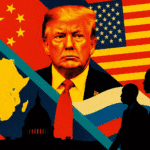
A decade ago analysts spoke of an emerging triangle—Africa caught between Beijing’s chequebook, Washington’s soft power and Moscow’s opportunism. By 2025 that geometry looks more like a corridor running from the port of Lobito, through Dakar’s LNG jetties and across the Mediterranean to Rotterdam’s hydrogen terminals. Europe needs Africa’s resources, demography and diplomatic heft to secure its green transition and strategic autonomy. Africa, in turn, needs Europe’s patient capital, regulatory predictability and multilateral leverage to escape the extract-and-export trap. The question is no longer whether the two regions require each other more than they do China, the United States or Russia; it is whether they can institutionalise that interdependence before the next shock makes the choice for them.